The Truth Layer
A published thesis on trust infrastructure for AI analytics, a site of interactive pages that argue it, and the operating repo that runs the work.
- 2026-03 to present
- live
- private, walkthrough on request
What I decided
- One launch a week, three artifacts, one hub. The Substack essay carries the argument. An Explore page lets the reader work it, and a LinkedIn post is the only distribution event.
- Every Explore page is a literal mock of the surface it argues about. A reader spends clicks on the point rather than reading a diagram of it.
- Rather than keep decisions in chat, I moved the learning system onto the repo. A session decides, a card records it, and a ledger of rulings fails CI when one is reworded.
- The Instrument restyle. Grotesk for content, mono for the frame, square corners, and signal green reserved for verified and nothing else.
What shipped
- Thirty Substack essays and thirty-one site routes since March 2026.
- Eleven weekly launches from The Cost of Distrust to Obey between July and September 2026, each with its Explore page.
- The Instrument restyle on 2026-09-27, every color a token, light by default with a visitor toggle for dark.
- A decision ledger of 214 rulings, indexed by mechanism, with a canon sweep that primes each session so nothing is rediscovered.
Proof
Captures
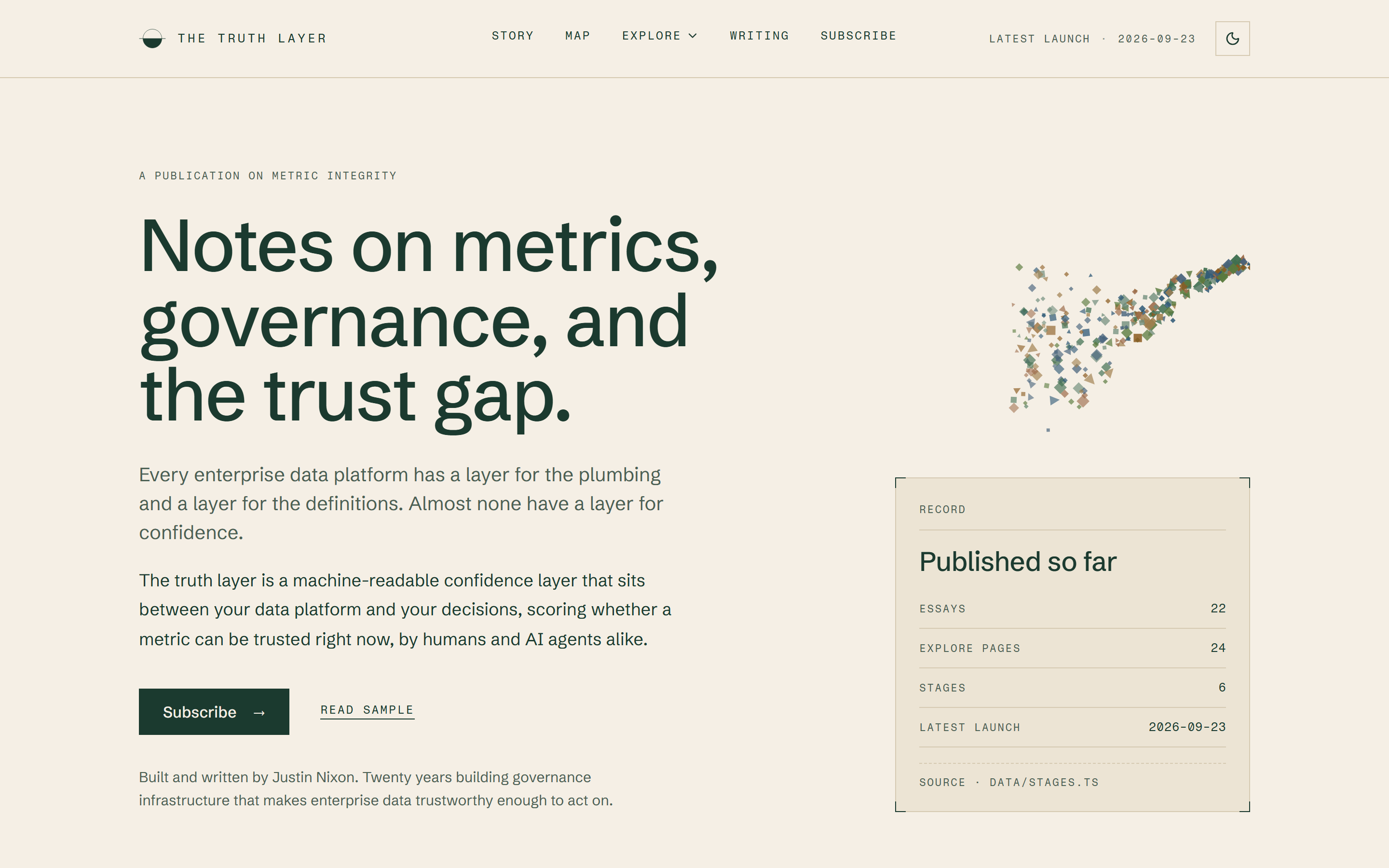
The Truth Layer home in the Instrument restyle, October 2026. A record panel counts what is published so far, with the latest launch dated. 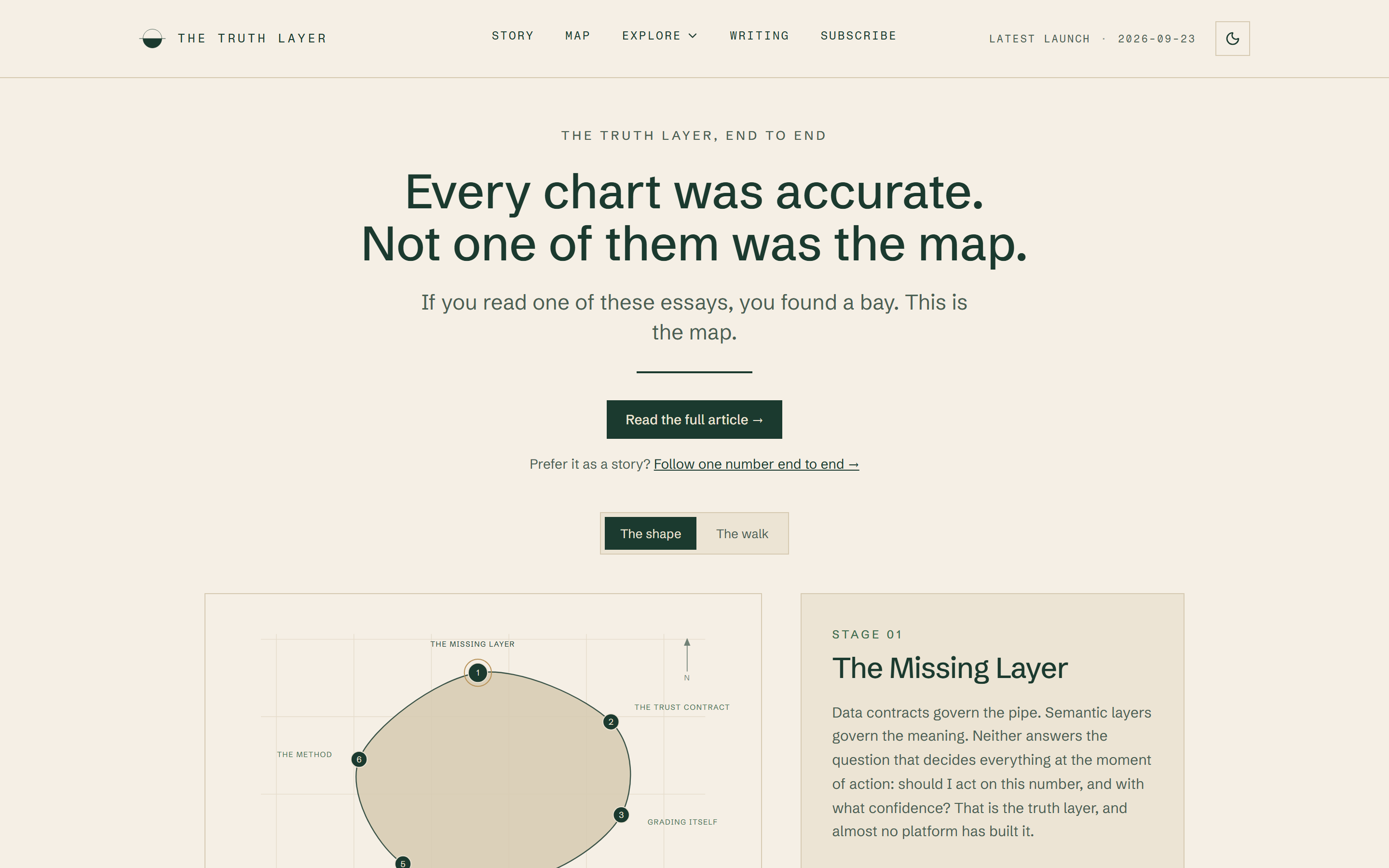
The map page. Six stages drawn as a shape you can walk, with the first stage, The Missing Layer, open on the right. 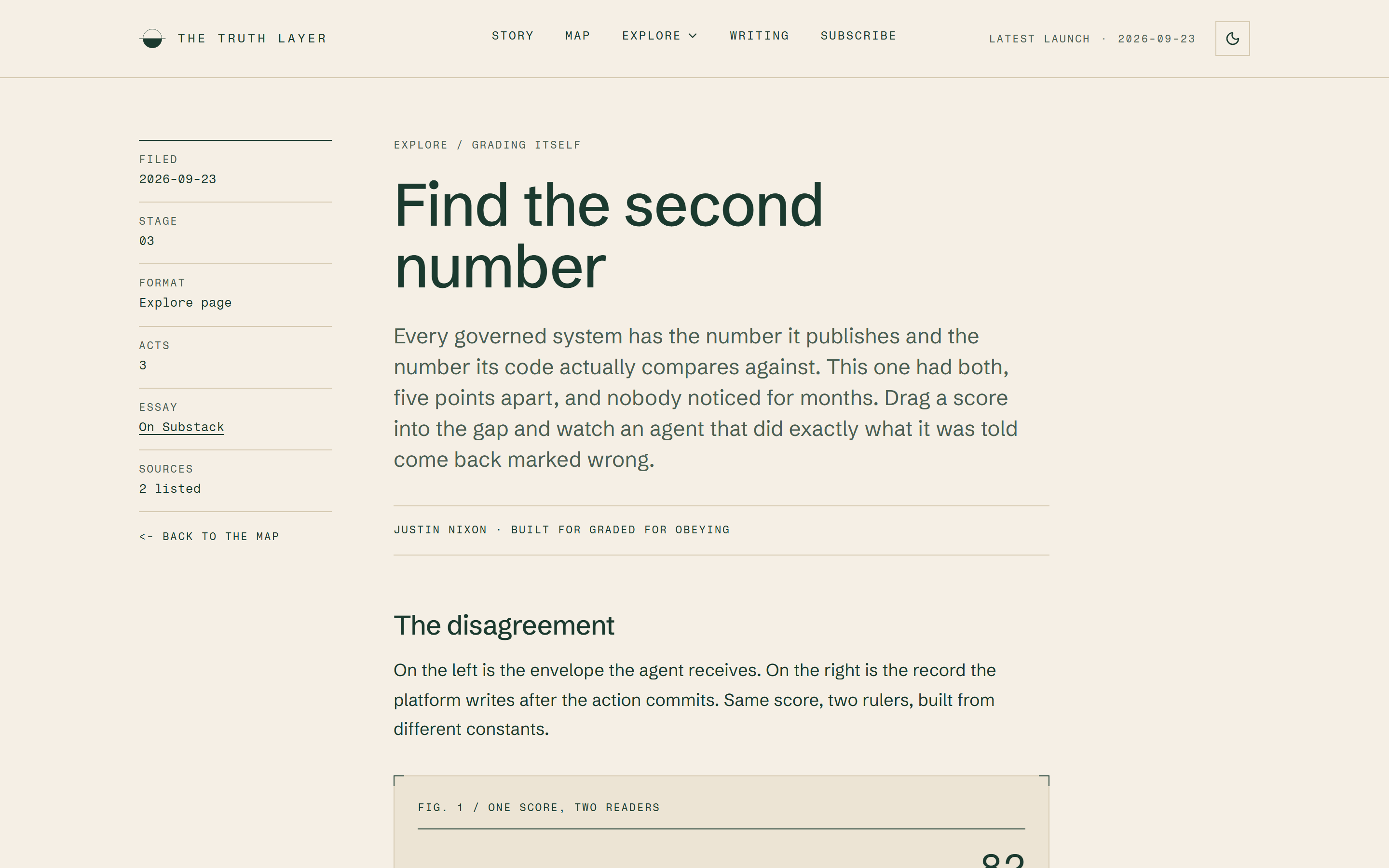
The Find the second number page, the September 2026 launch. One trust score read by two sets of constants, five points apart. 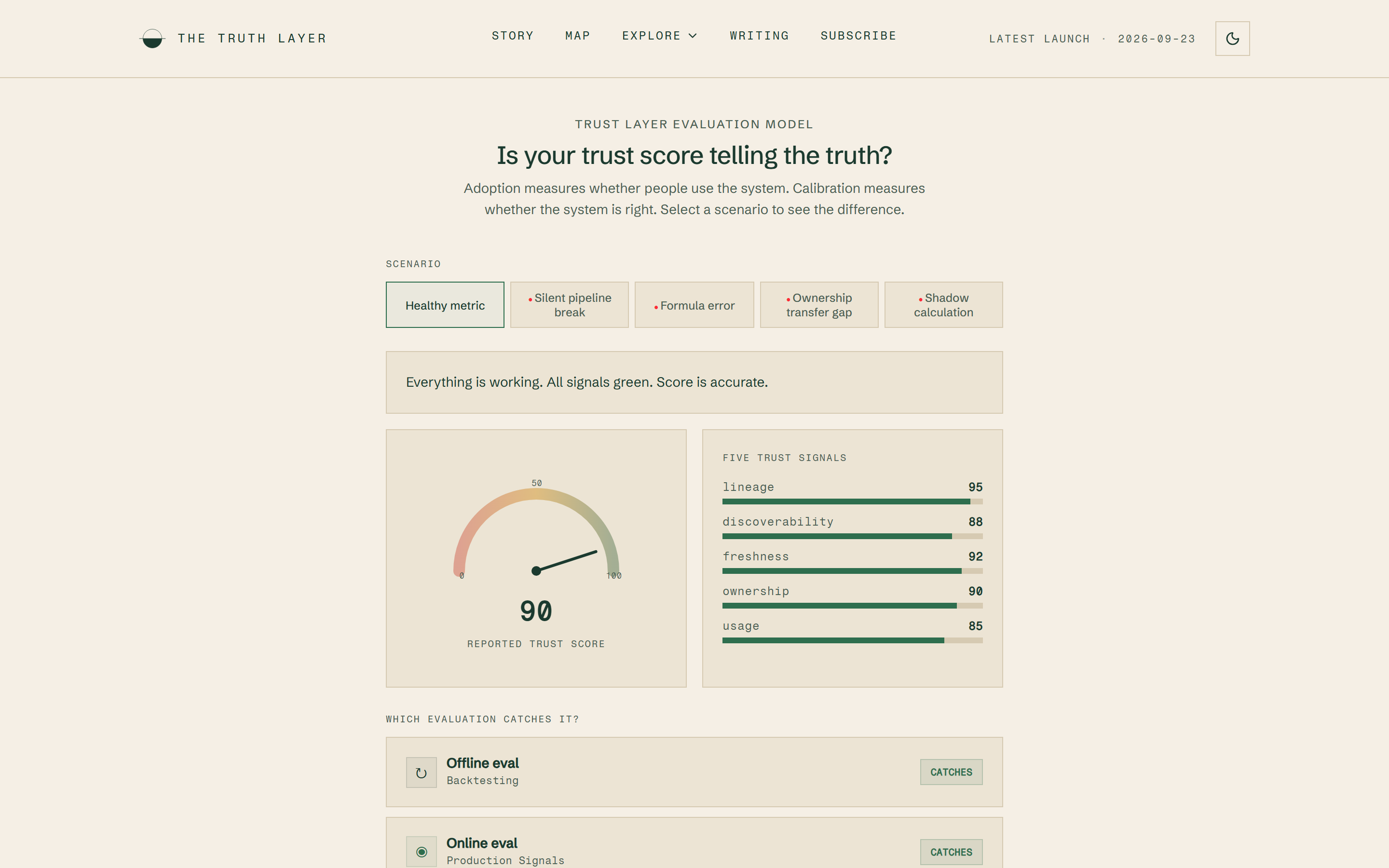
The trust eval simulator. Pick a scenario and see whether the reported score still tells the truth, and which evaluation catches it.