March 2026 to October 2026
One bet, run across five surfaces. A number should carry its own warrant, so that a person or an agent can act on it without re-checking it. Everything on this page is derived from the event record, and the parts that went wrong are in it too.
The arc by surface
Trust Inspector Live v3.0: governance loop, dispute repricing, observed signals
Phases 17 to 23 took the prototype from a seeded demo to a live system: RBAC and governance persistence, the ingestion funnel and declared trust signals, live database and API connectors with observed signals, an agent in the loop, dispute repricing (exclude, do not discount) and the v3.0 tech-debt close, tagged 2026-08-05. The magnitude includes the GSD planning corpus under .planning/ that drove every phase.
Week 31 sessions
Subjects: Post-Commit Correction Gate, and Sessions That Start From Canon; Lineage Comes From the Pipeline, and Unknown Counts Against; Friday W31. Two sessions decided, and the build batch drained the queue from 34 unbuilt rows to 11..
The commute learning system
A standing daily/weekly learning ritual (AI/ML, architecture, industry trends, case studies, Friday synthesis) run on the commute that compounded into real capability: sharper systems thinking, a durable body of synthesized notes, and the architecture-and-writing reasoning behind the public Truth Layer thesis. The habit, not any single session, is the win.
thetruthlayer.dev site and the published truth-layer corpus
Originated the claims and vocabulary for the public thesis and stood up the external presence: the thetruthlayer.dev interactive explainer and a published corpus mirrored as 41 entries (15 LinkedIn posts, 13 Substack pieces, 13 site updates) spanning March to June 2026. This project owns claim origination and vocabulary; publishing execution runs in the separate Cowork project. The standing constraint is distribution reach, not production.
Rendered the brand-locked visual library for every piece
Built the signature eyebrow + named-author quote + literal-metaphor + bridging-caption visuals in the locked Truth Layer brand, rendered with real fonts to PNG. Includes hero variant sets and contact sheets (10 cost-of-distrust heroes), supporting diagrams, and re-renders of pre-brand-lock article art.
Show the work
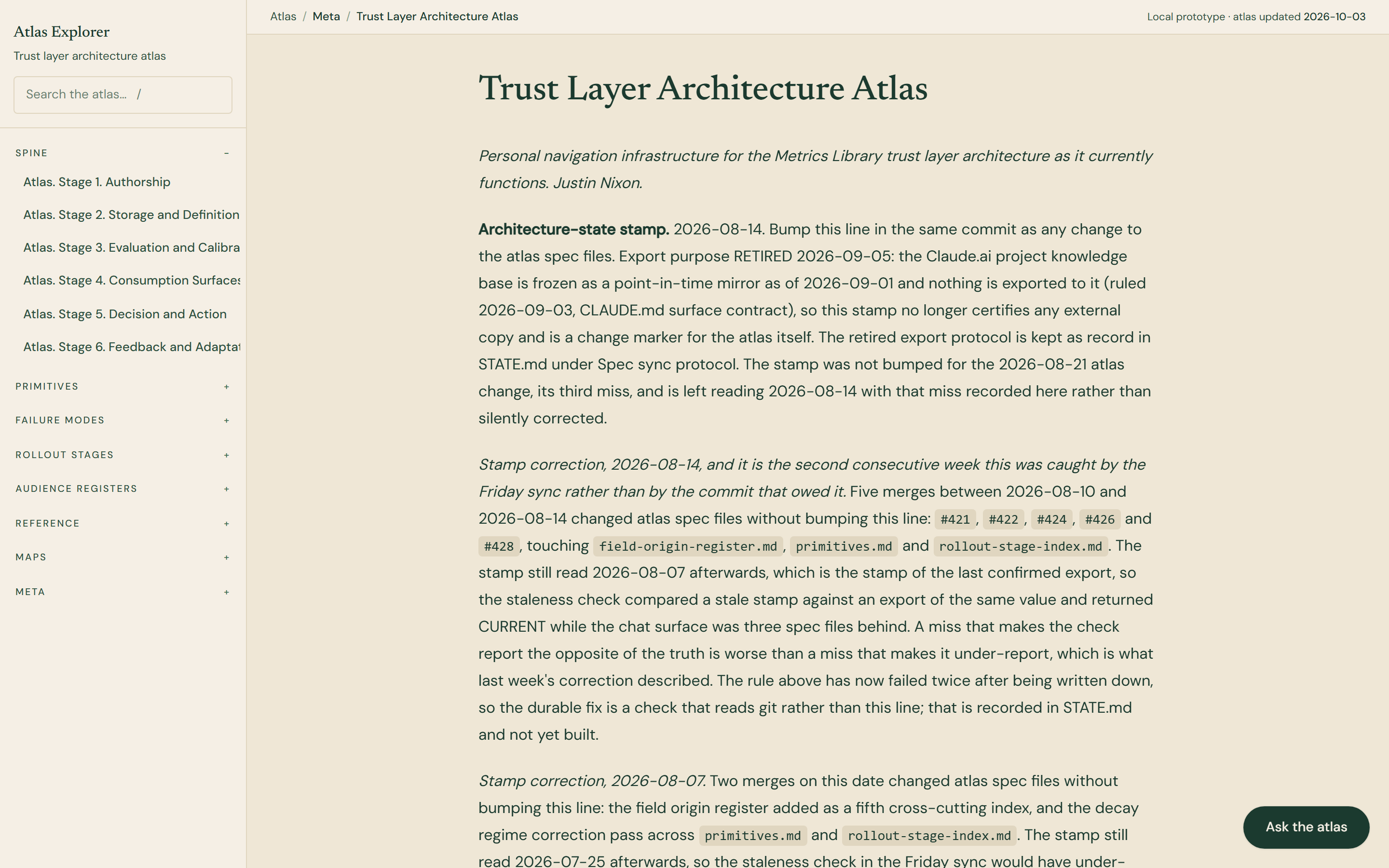
Atlas Explorer. The trust layer architecture atlas with a searchable spine, primitives, failure modes and an ask the atlas button. 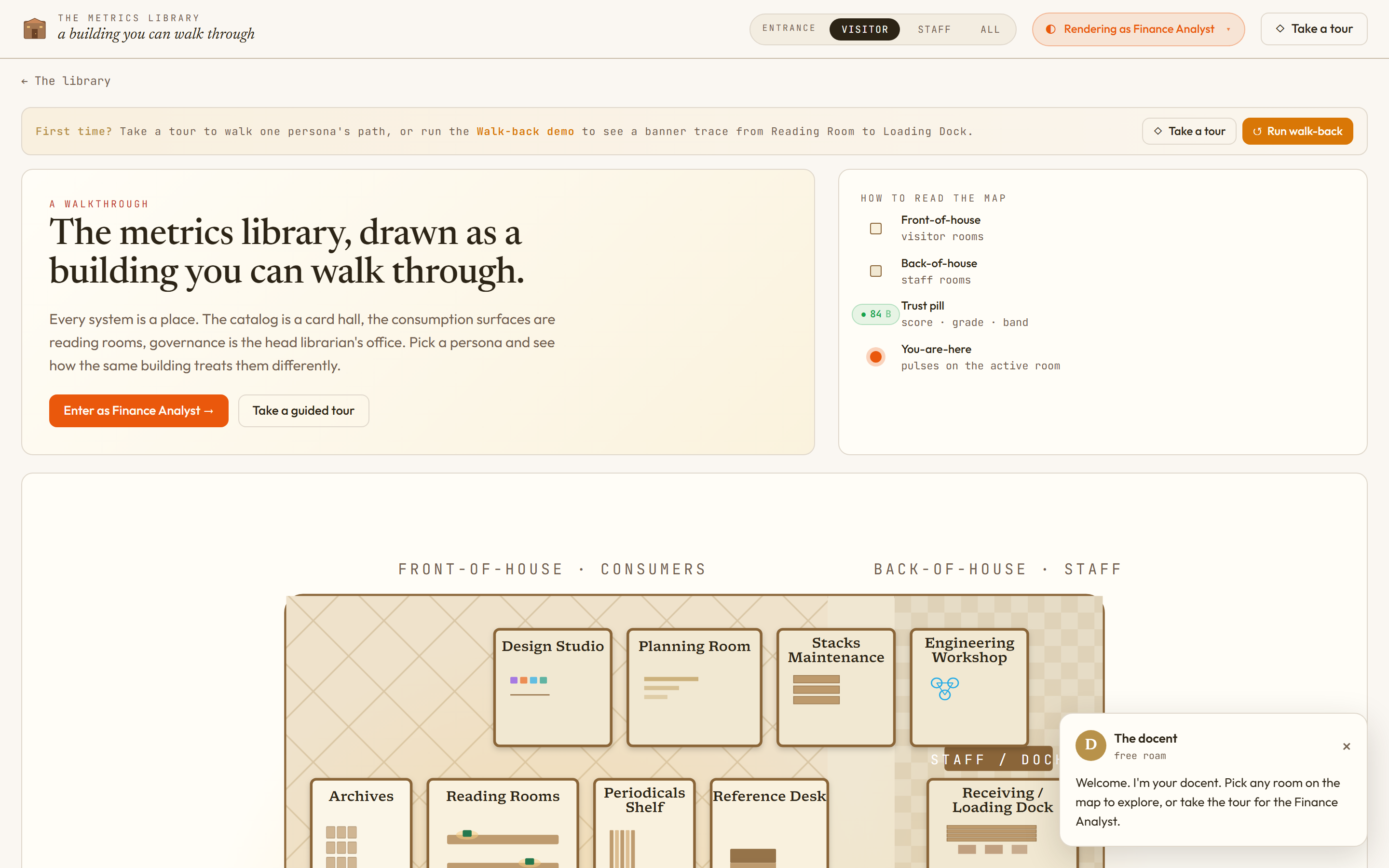
The metrics library drawn as a building. Pick a persona and see how the same rooms treat them differently. 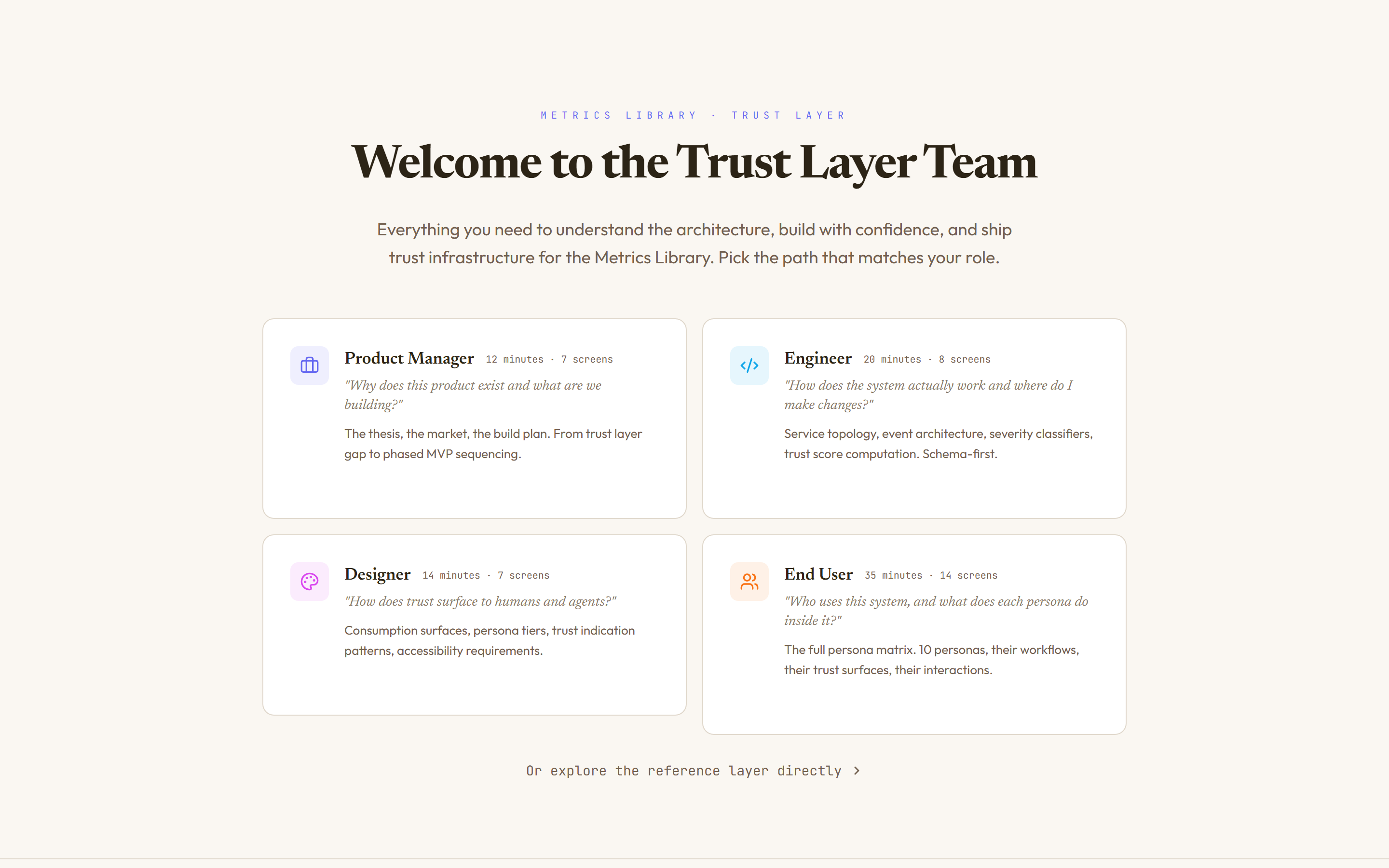
Trust layer onboarding prototype. Four role based paths into the same architecture, each with a time and screen count. 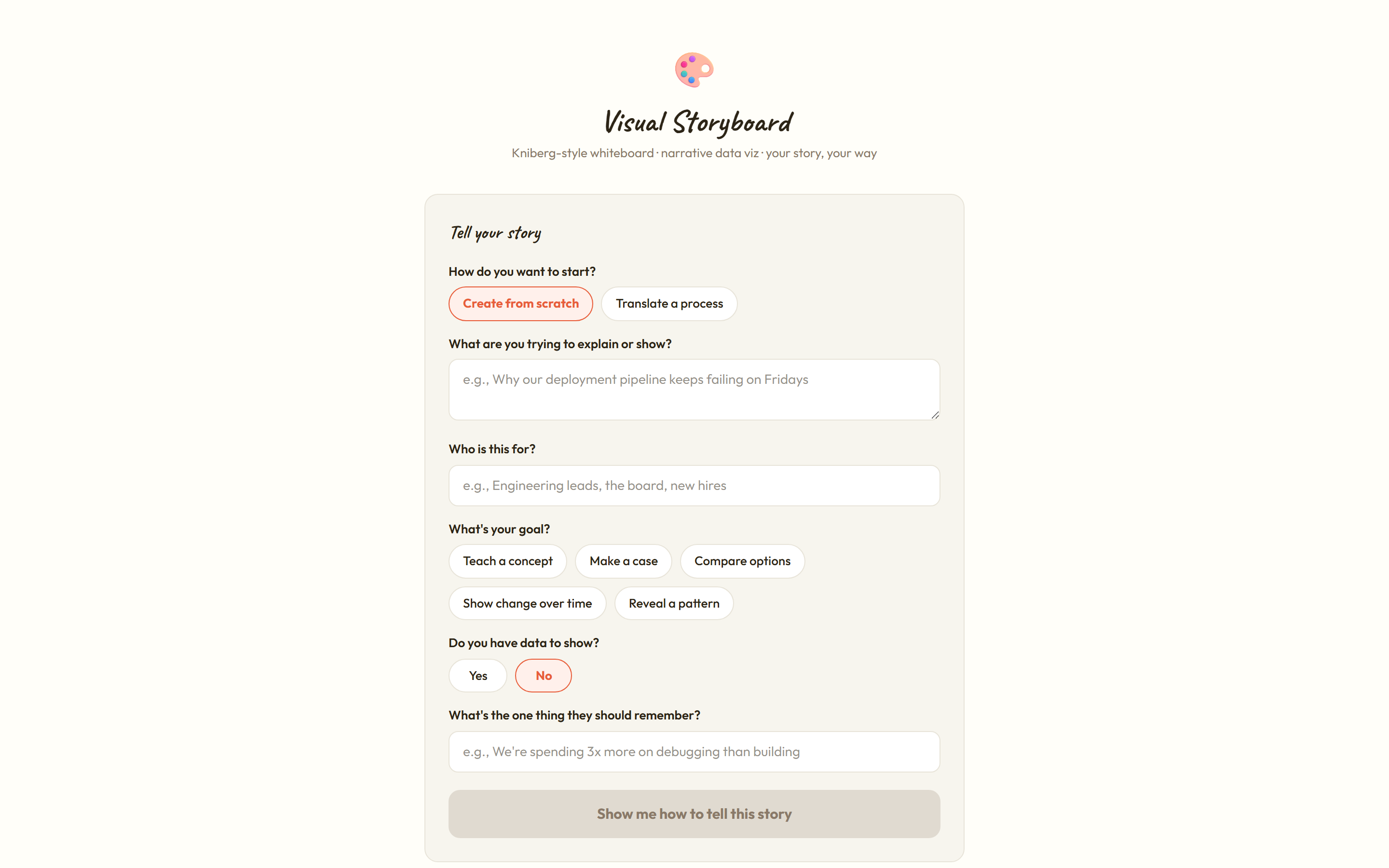
Visual Storyboard prototype. A short intake form that turns a story to tell into a Kniberg style whiteboard. 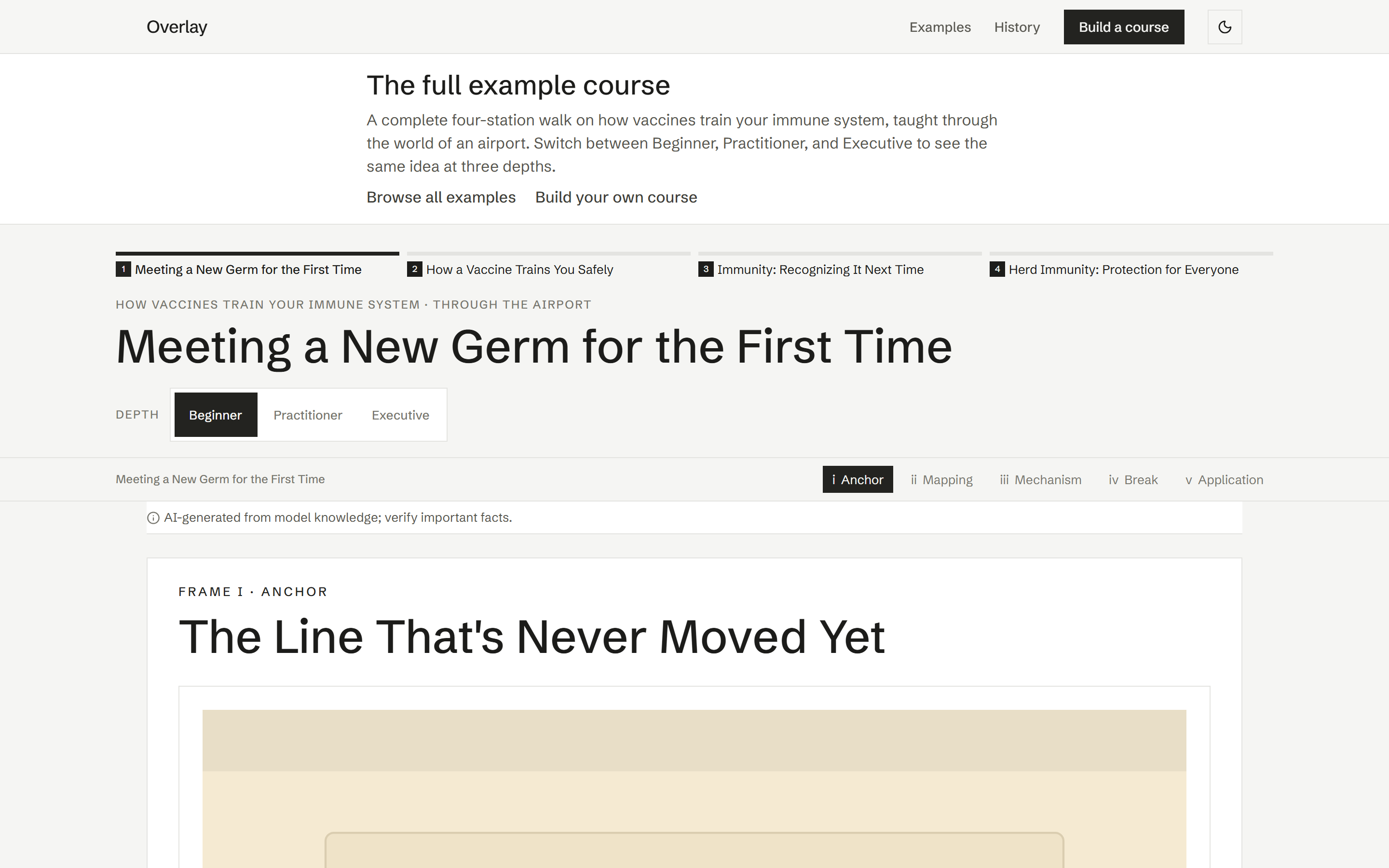
The full Overlay example course. Four stations on how vaccines train the immune system, taught through an airport, at three depths. 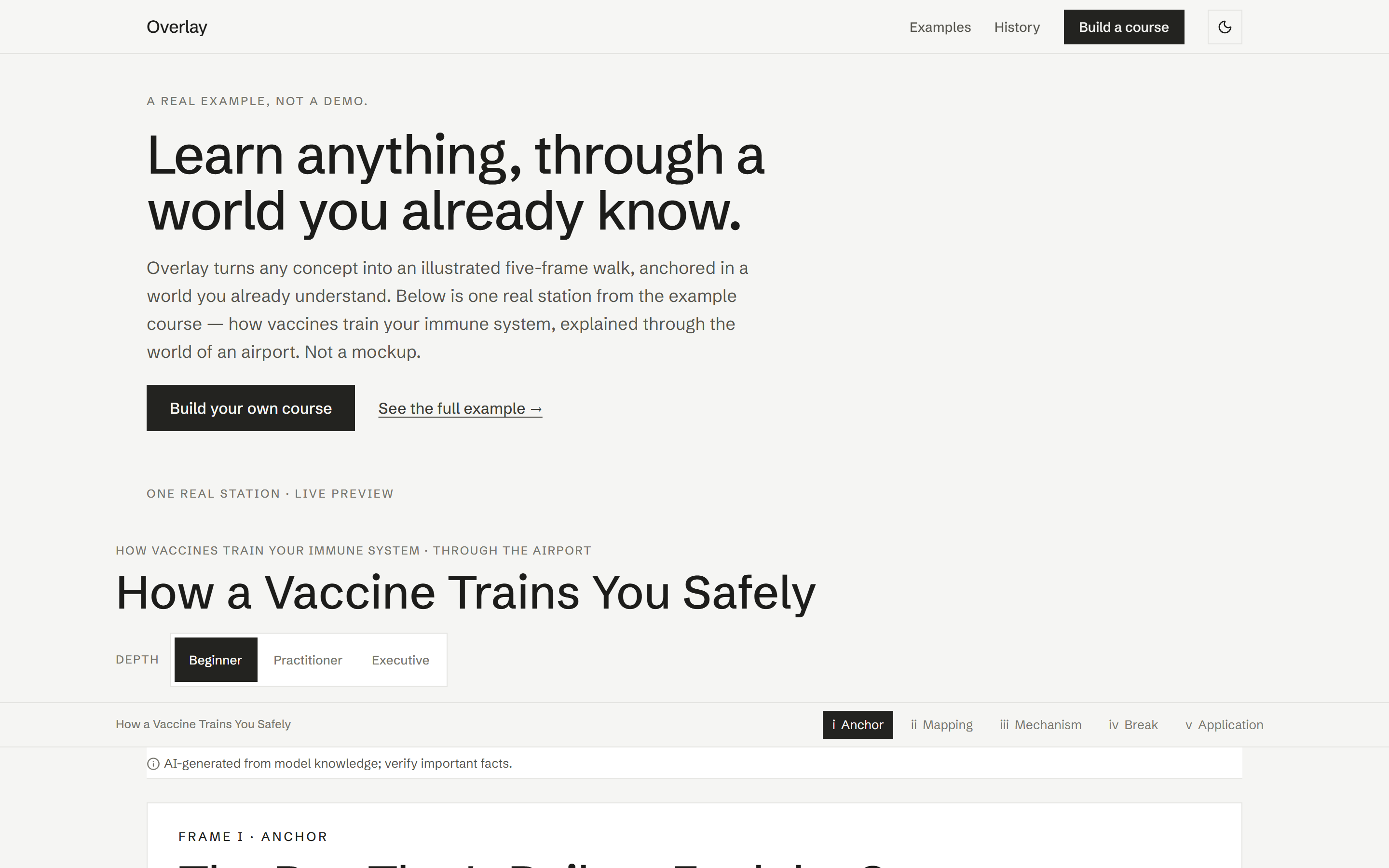
Overlay landing page, October 2026. One real station from the example course runs live below the fold. 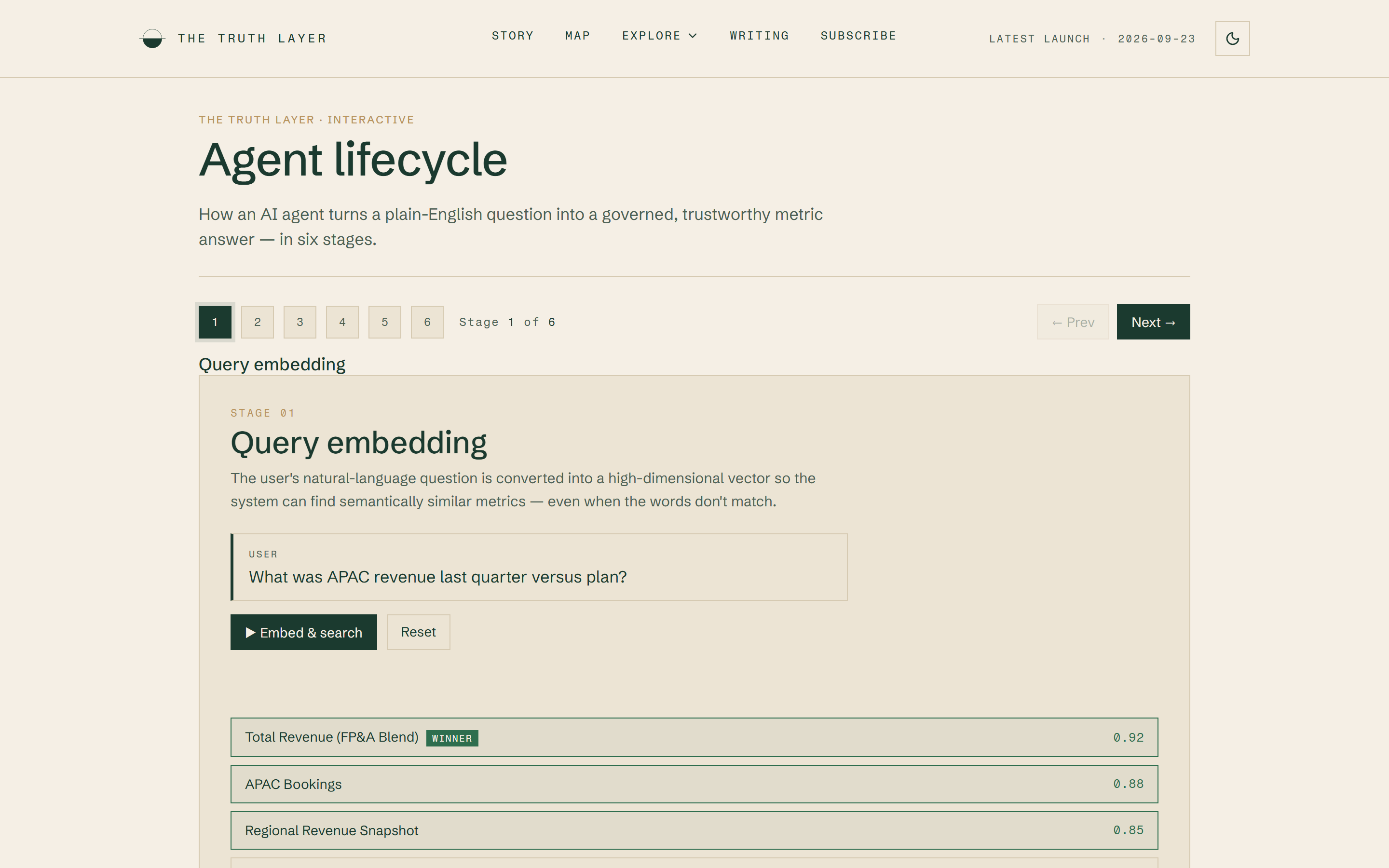
The agent lifecycle walkthrough, stage one of six. A plain English question becomes a query embedding and the candidates are ranked. 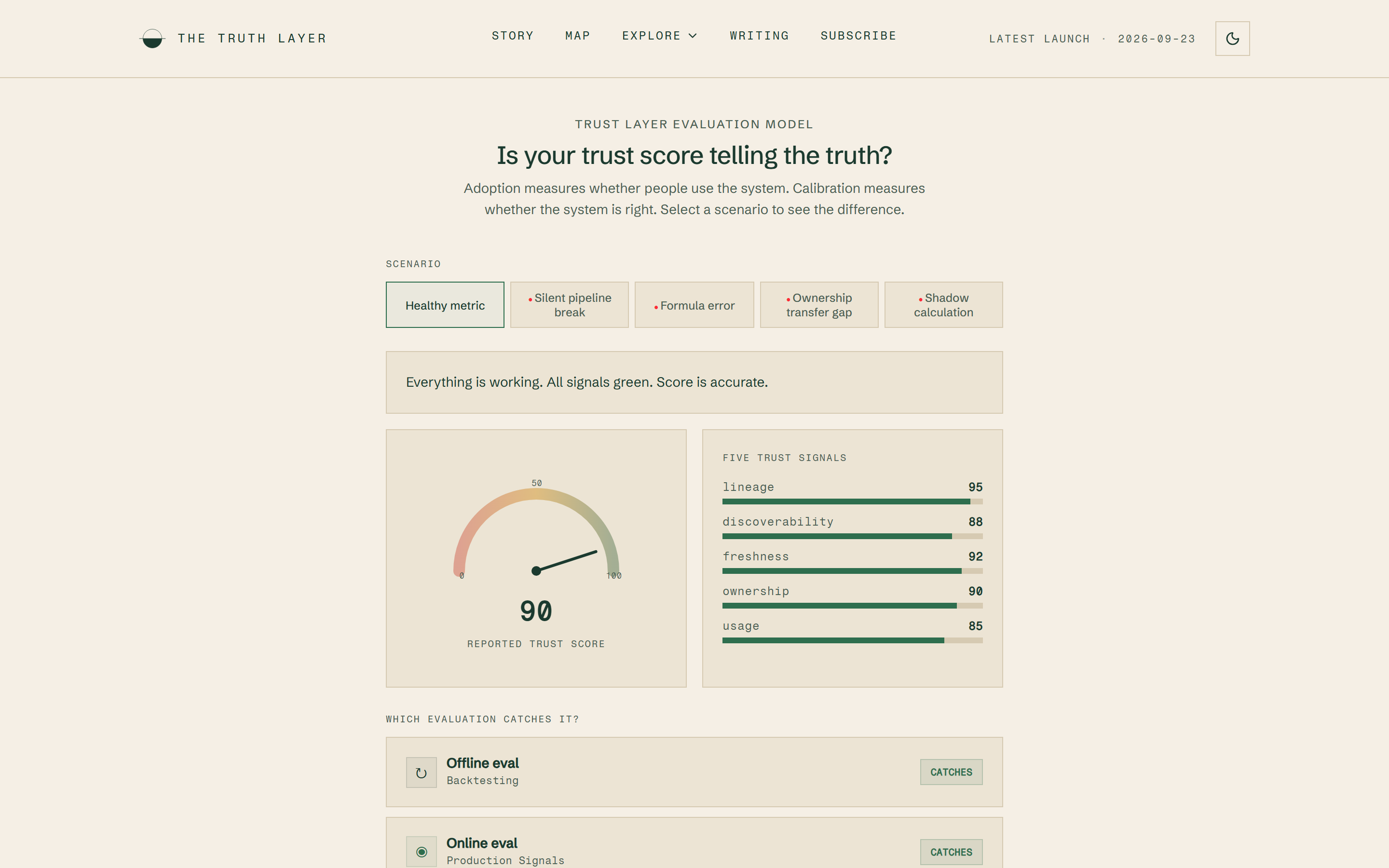
The trust eval simulator. Pick a scenario and see whether the reported score still tells the truth, and which evaluation catches it. 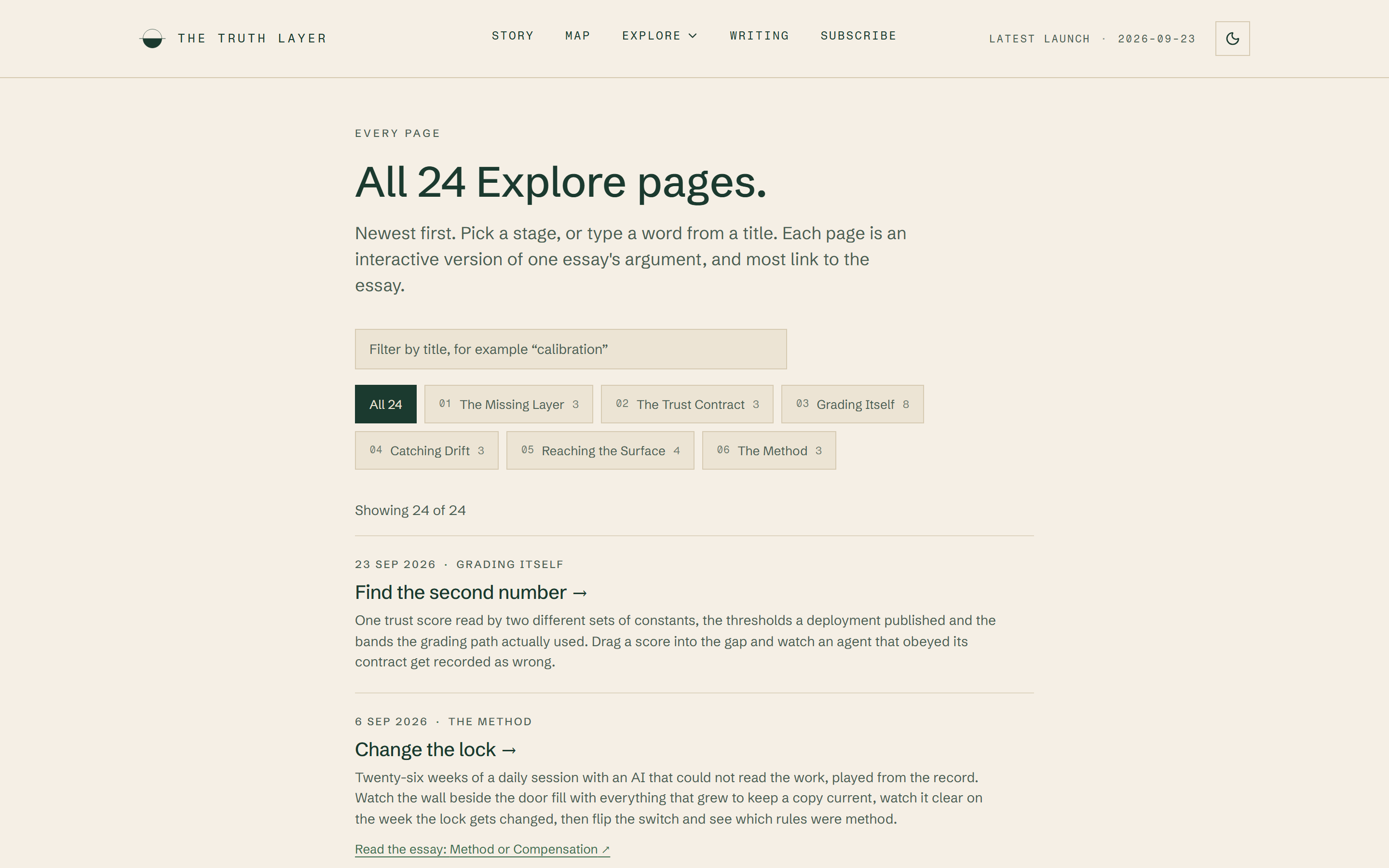
The Explore index, every interactive page newest first, filterable by stage or by a word from the title. 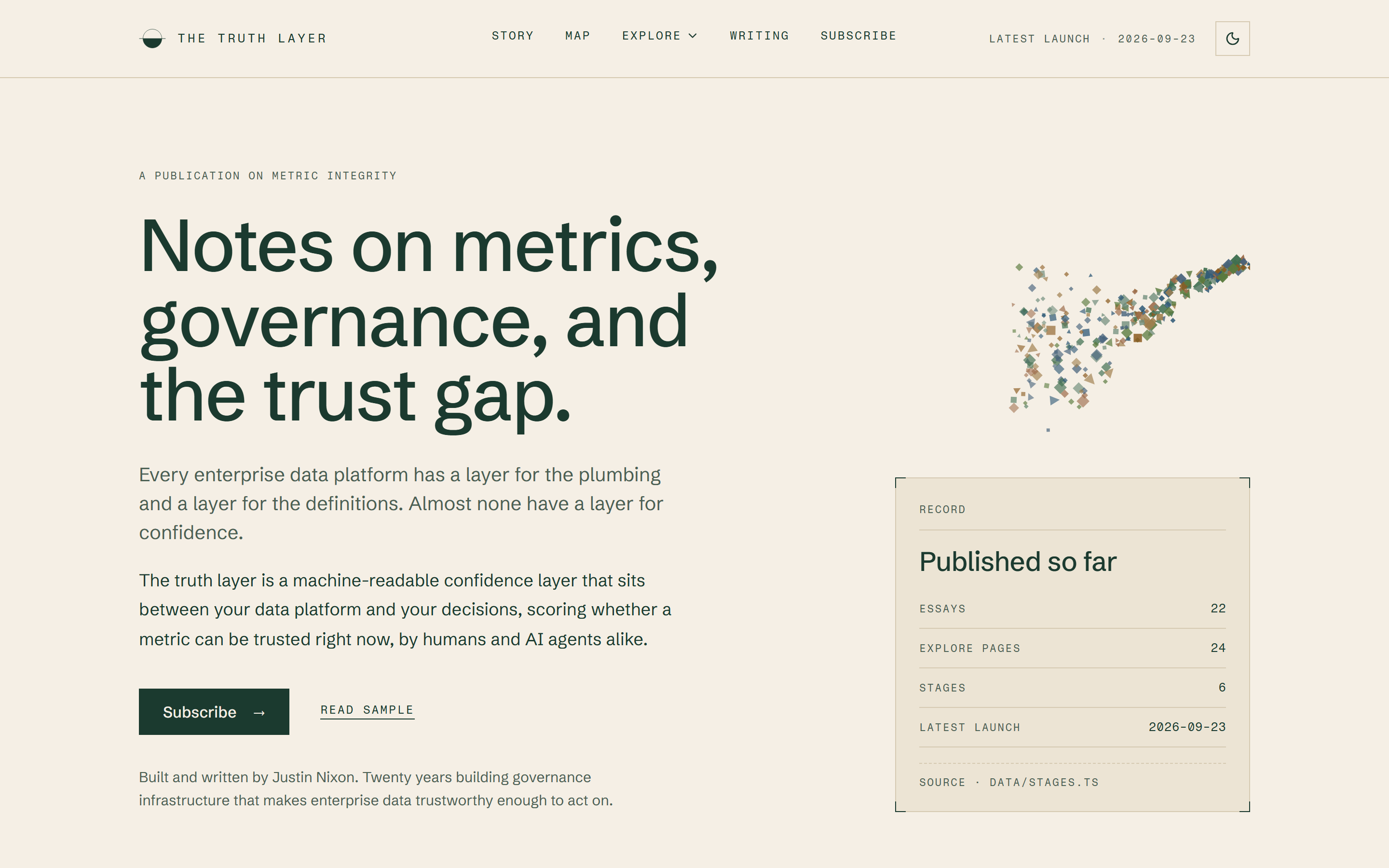
The Truth Layer home in the Instrument restyle, October 2026. A record panel counts what is published so far, with the latest launch dated. 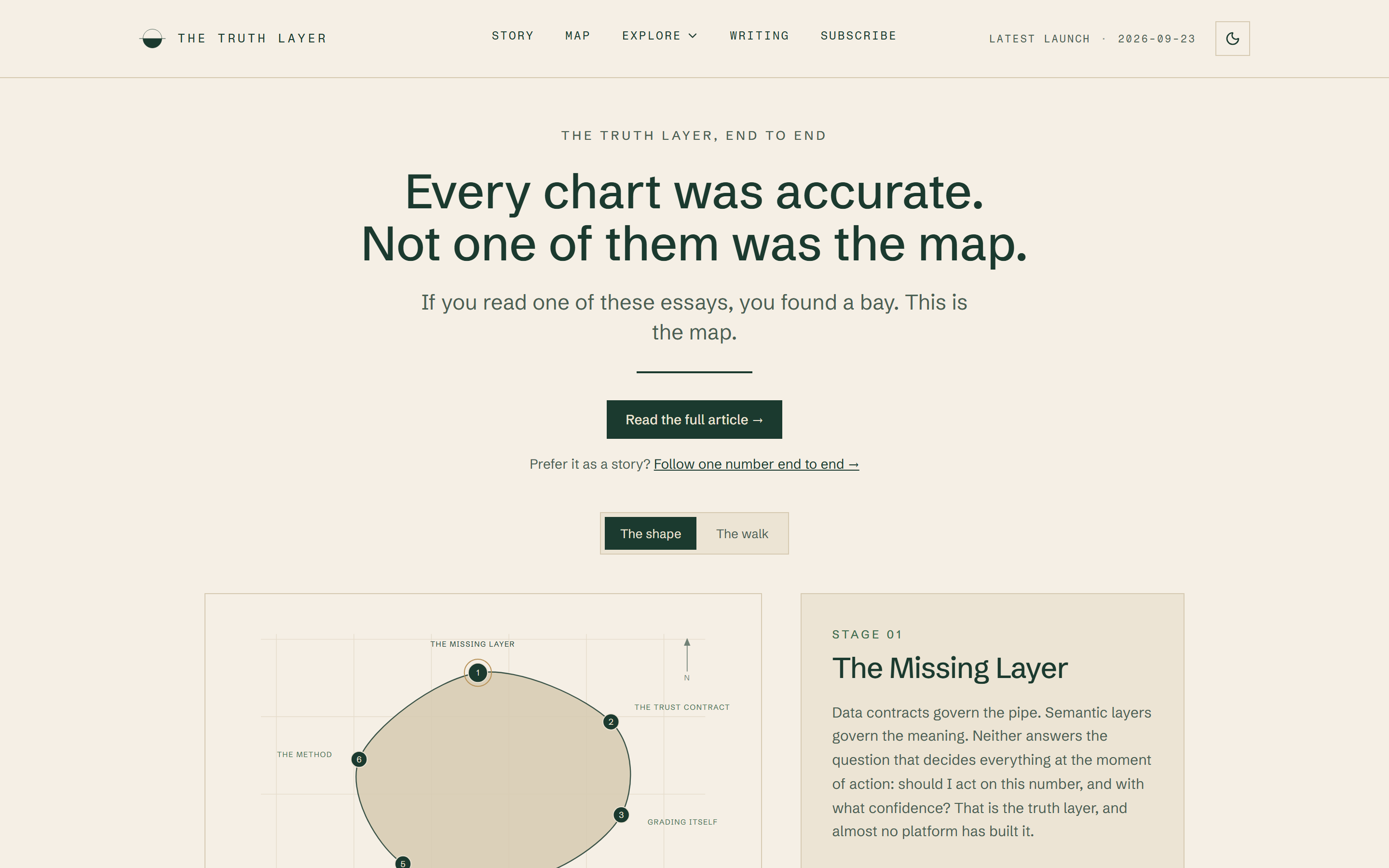
The map page. Six stages drawn as a shape you can walk, with the first stage, The Missing Layer, open on the right. 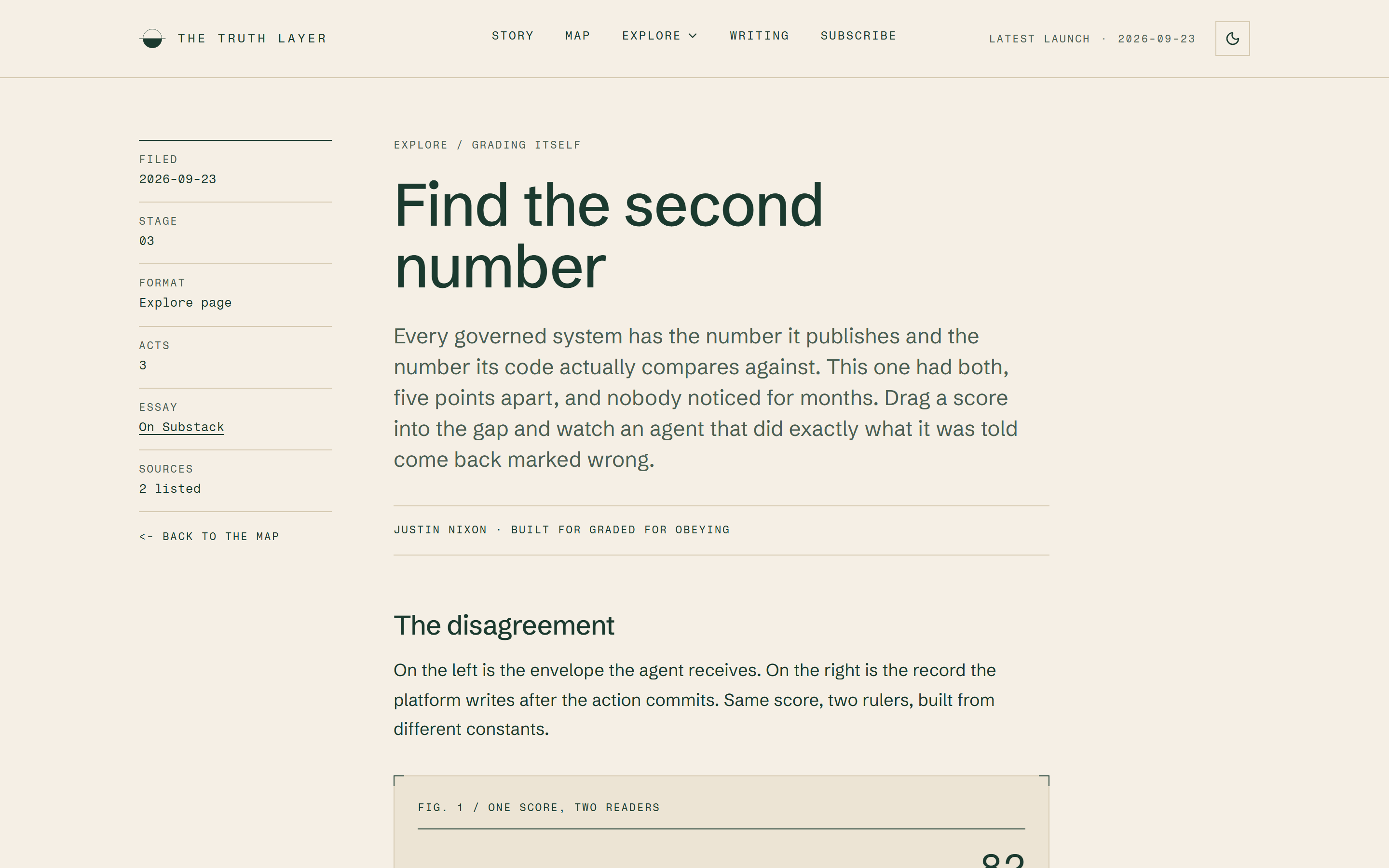
The Find the second number page, the September 2026 launch. One trust score read by two sets of constants, five points apart. 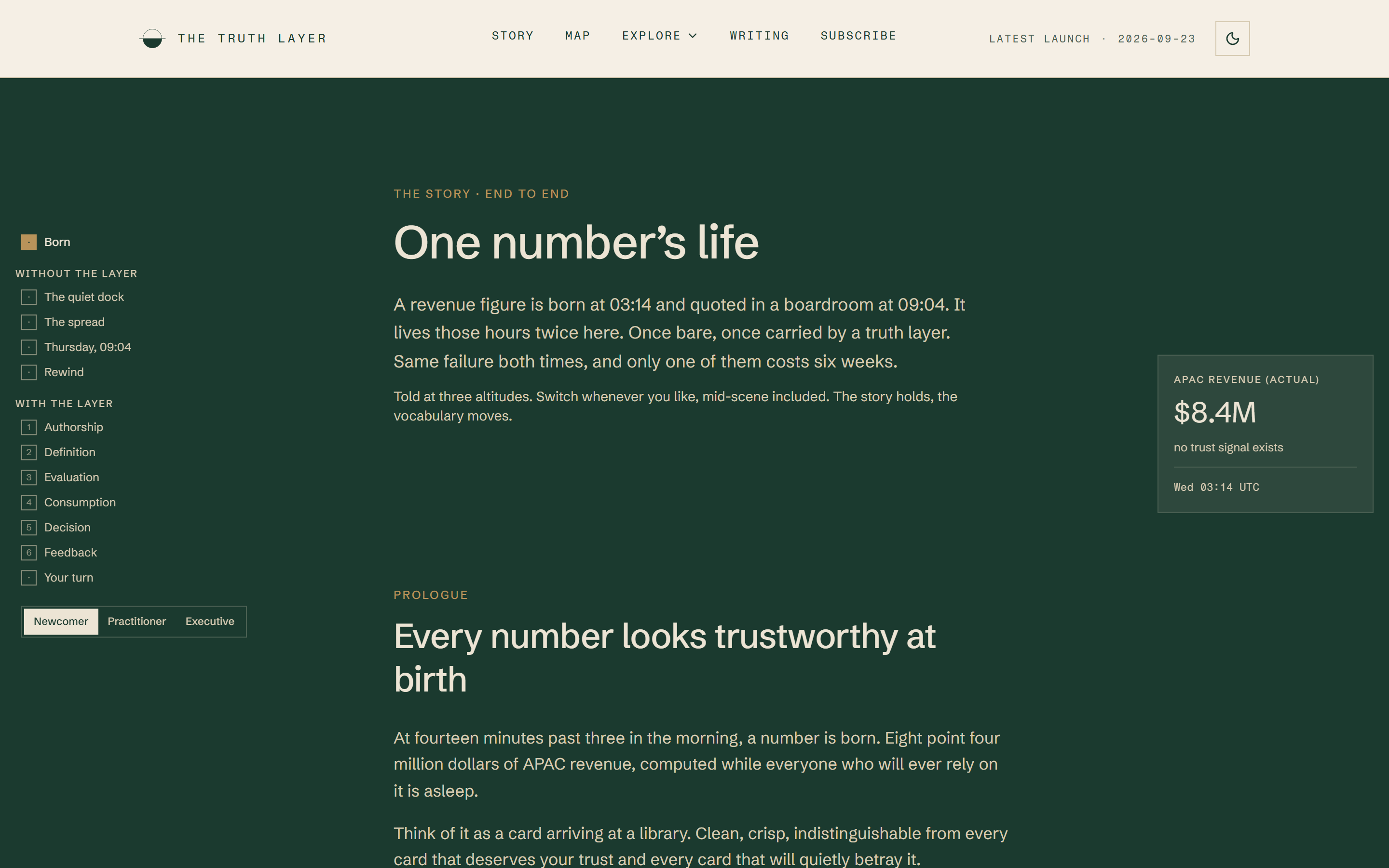
The story page, One number’s life. A revenue figure born at 03:14 and quoted in a boardroom at 09:04, told twice, once bare and once carried by a truth layer. 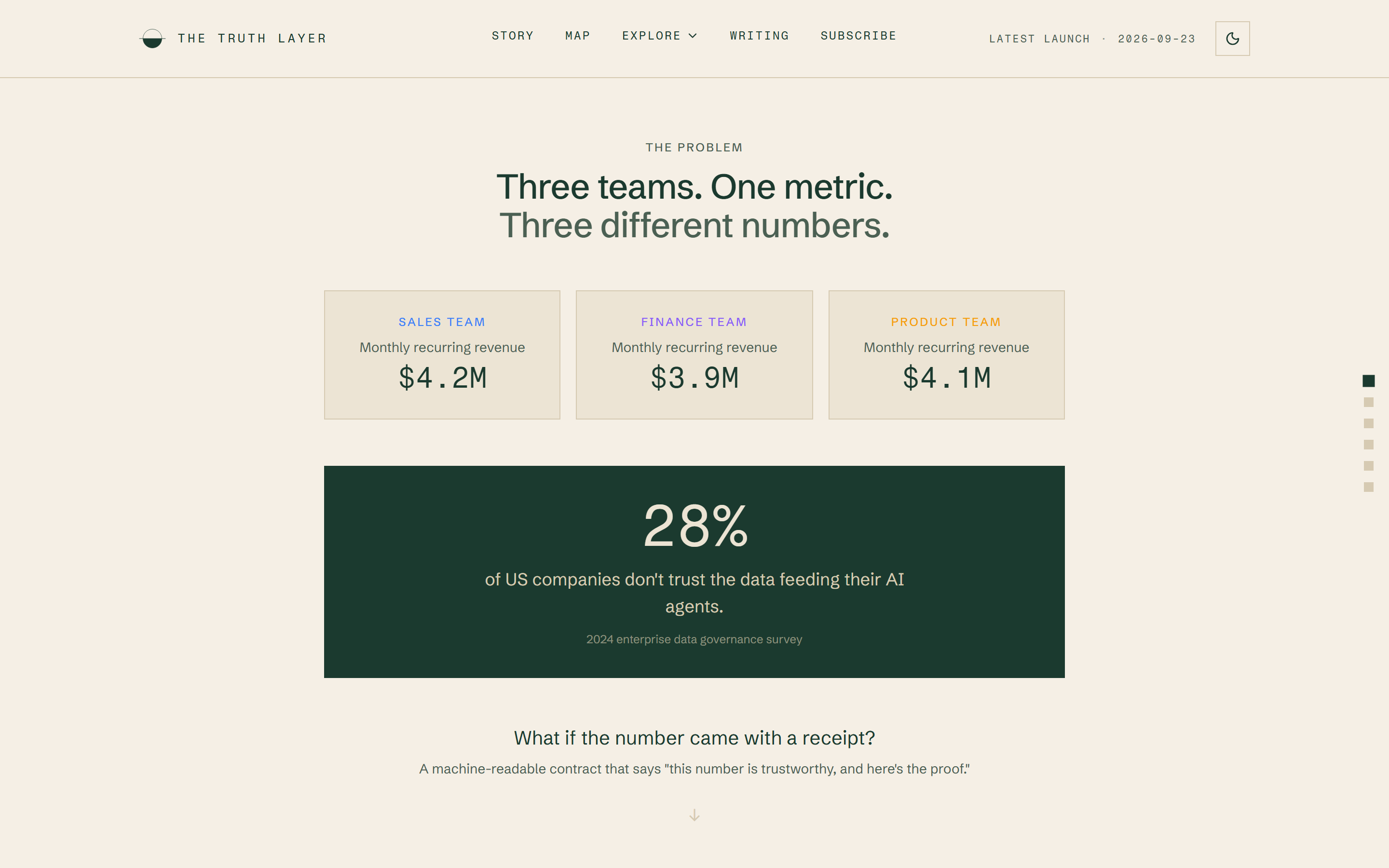
The trust contract explainer opens on the problem. Three teams, one metric, three different numbers. 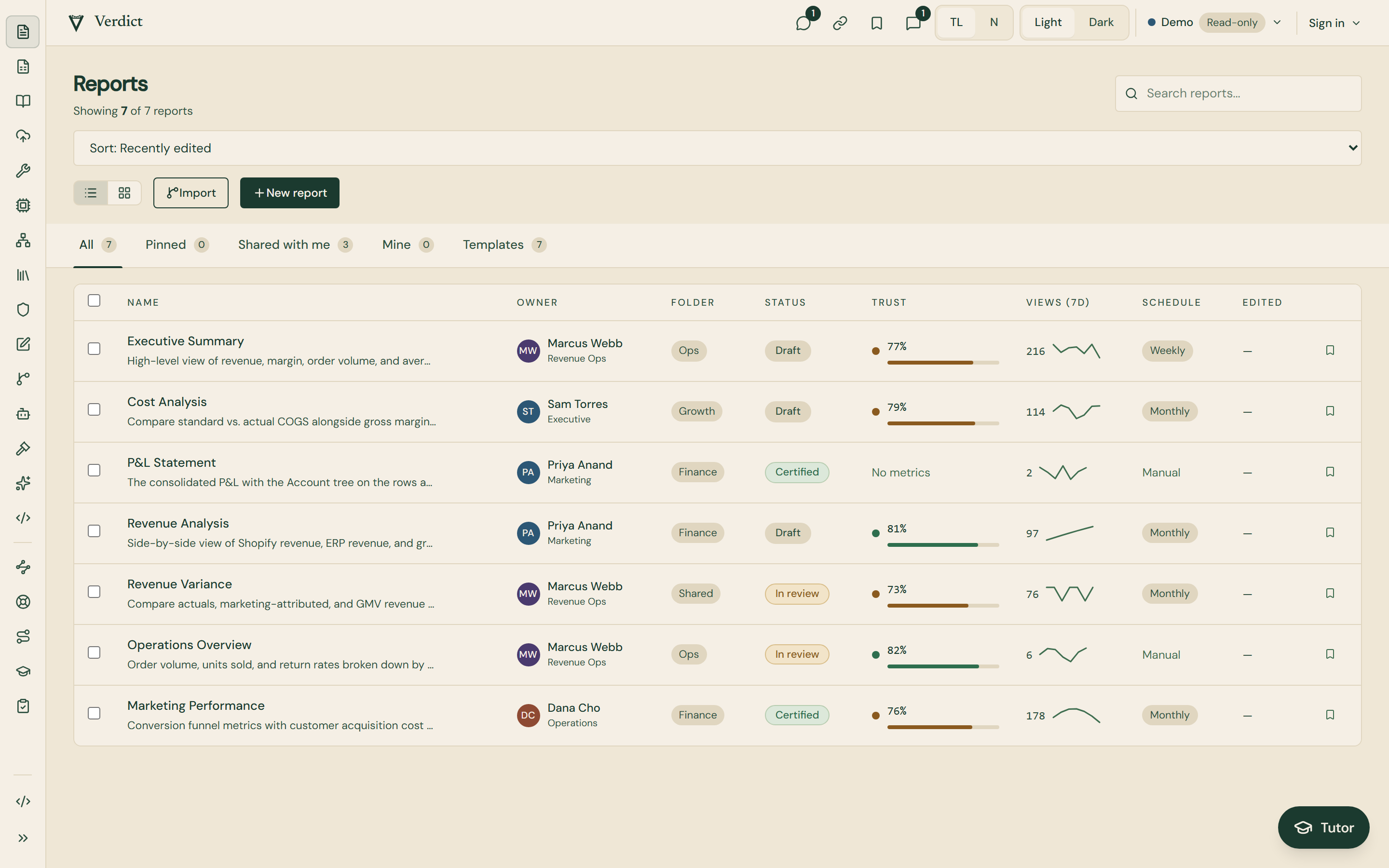
Verdict, local seeded demo, October 2026. The Reports list with a trust score beside every report that has metrics. 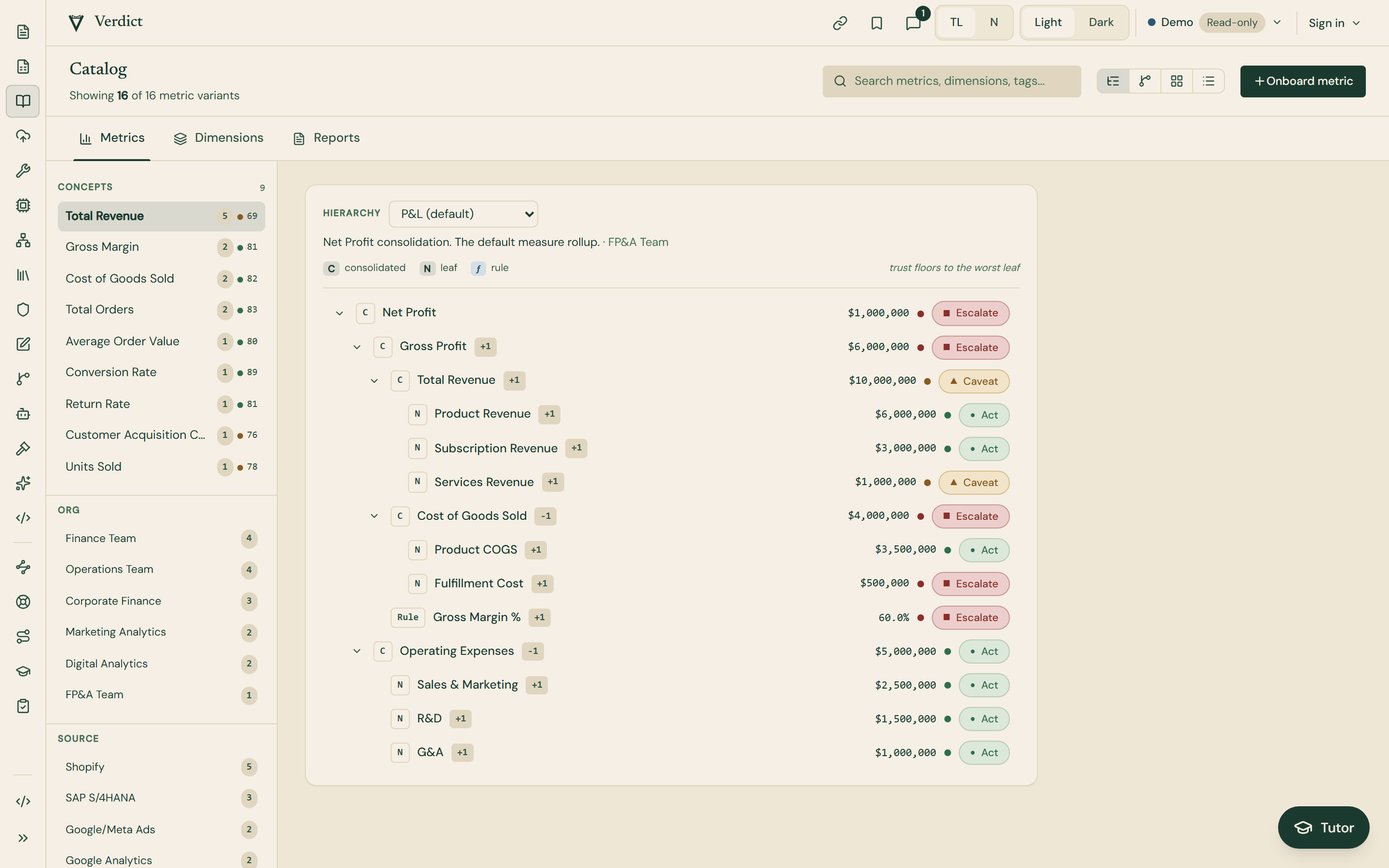
The Catalog in hierarchy view. Net Profit rolls up from leaves, and the trust floor is the worst leaf. 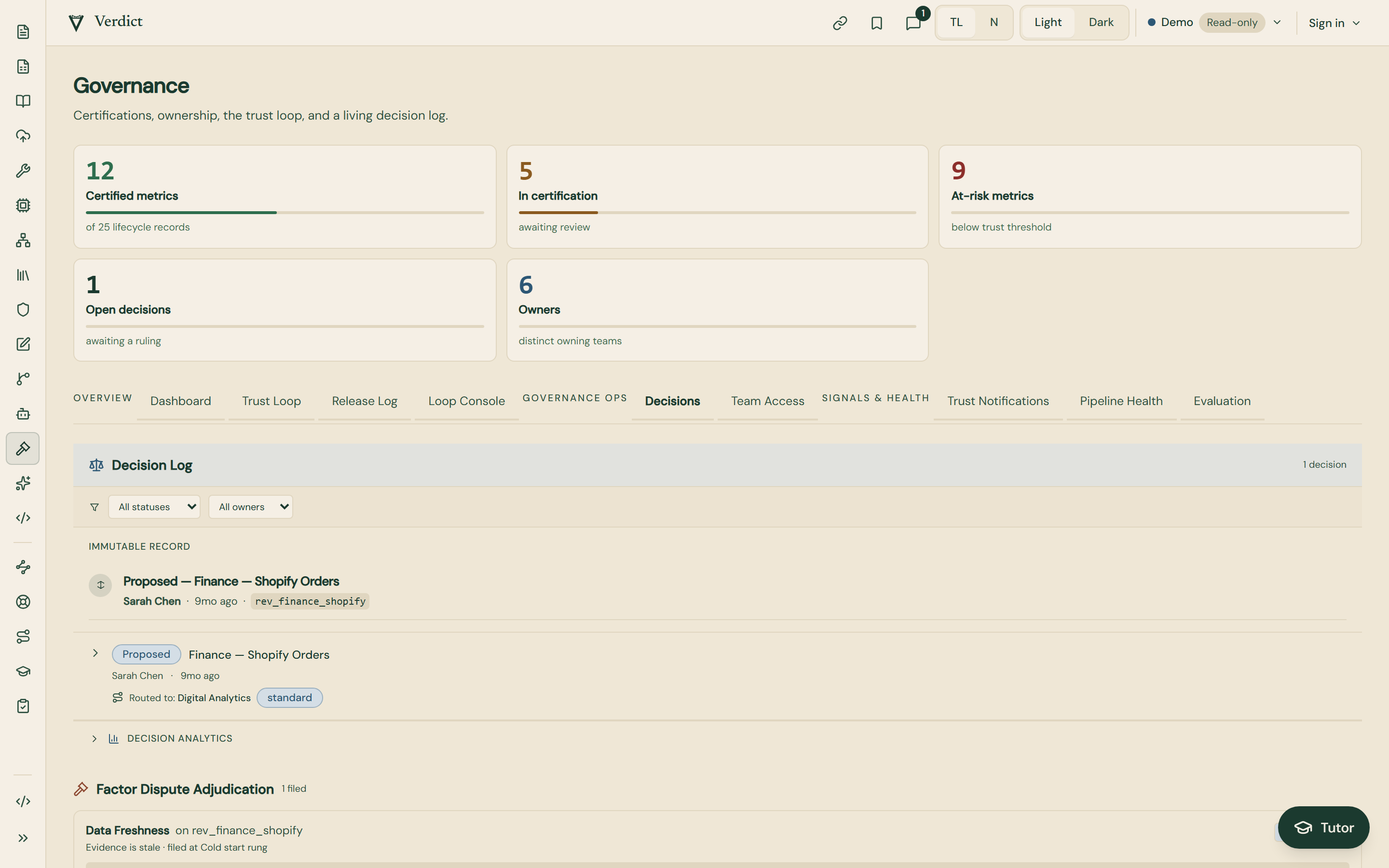
The Decision Log, an immutable record of rulings, with a factor dispute filed beneath it. 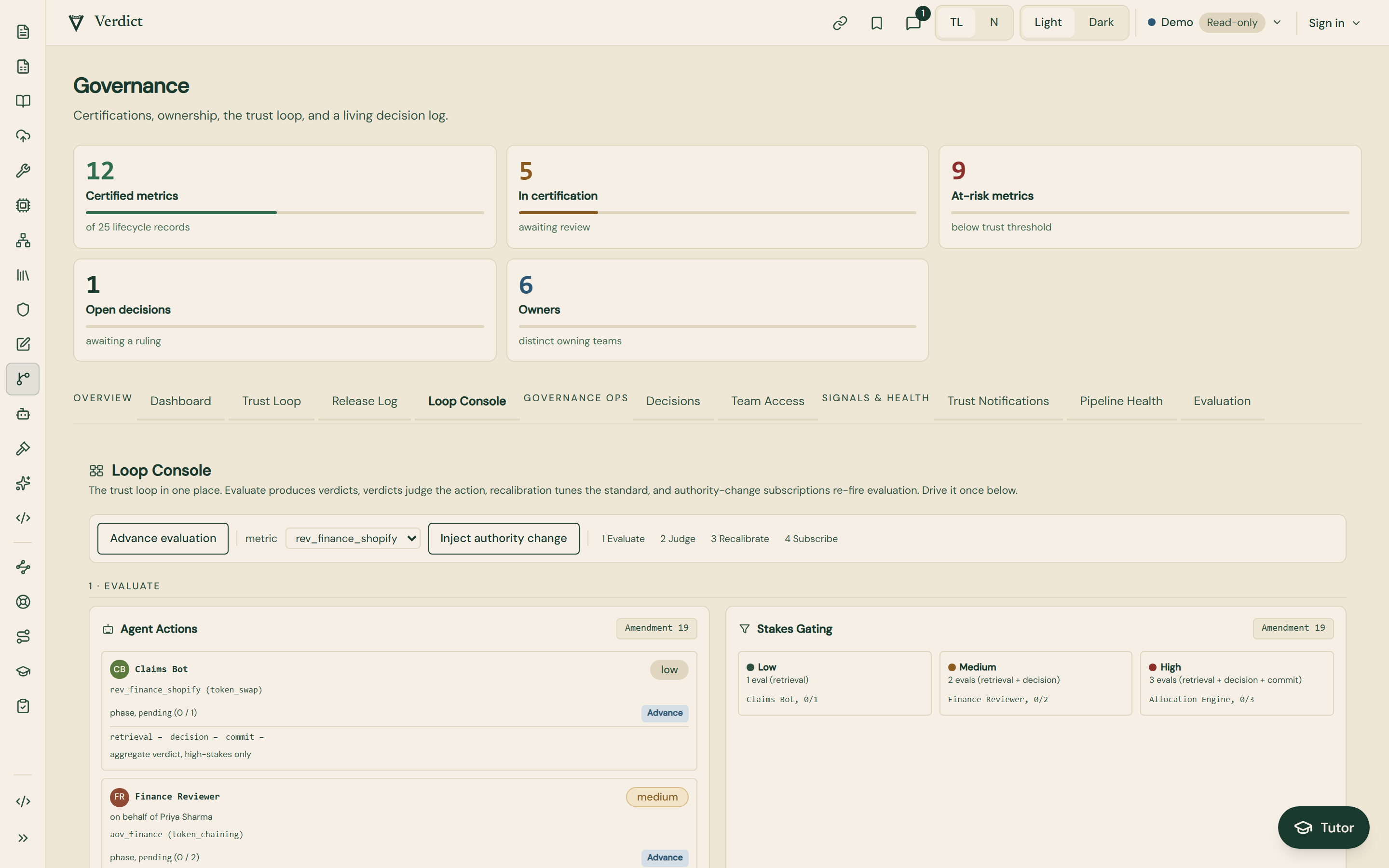
The Loop Console. Evaluate, judge, recalibrate and subscribe in one place, with agent actions gated by stakes. 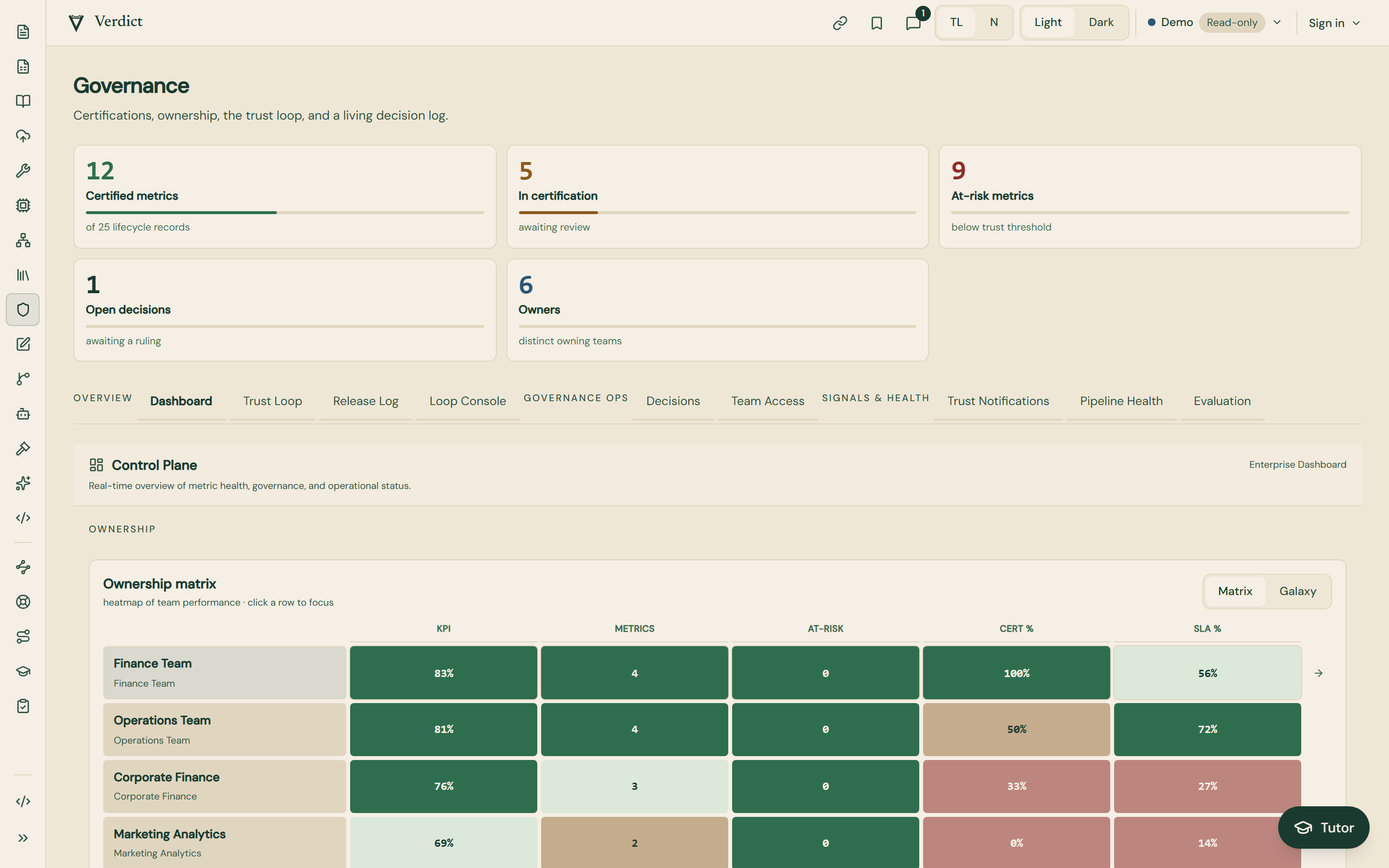
Verdict Governance dashboard. Certification counts at the top, the control plane and an ownership heatmap by team below. 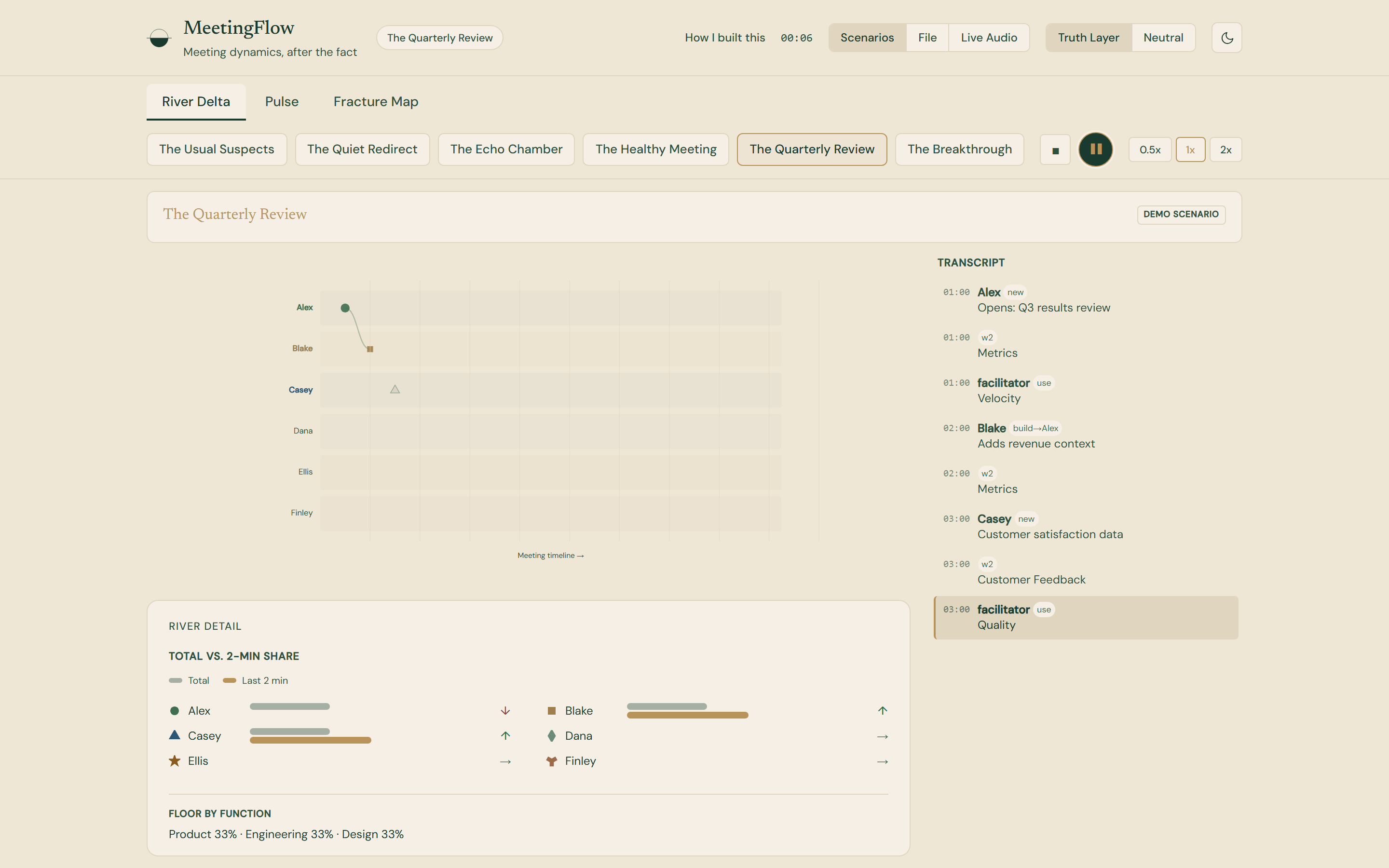
MeetingFlow live at meetingflow.thetruthlayer.dev, October 2026. The Quarterly Review scenario playing in the River Delta view. 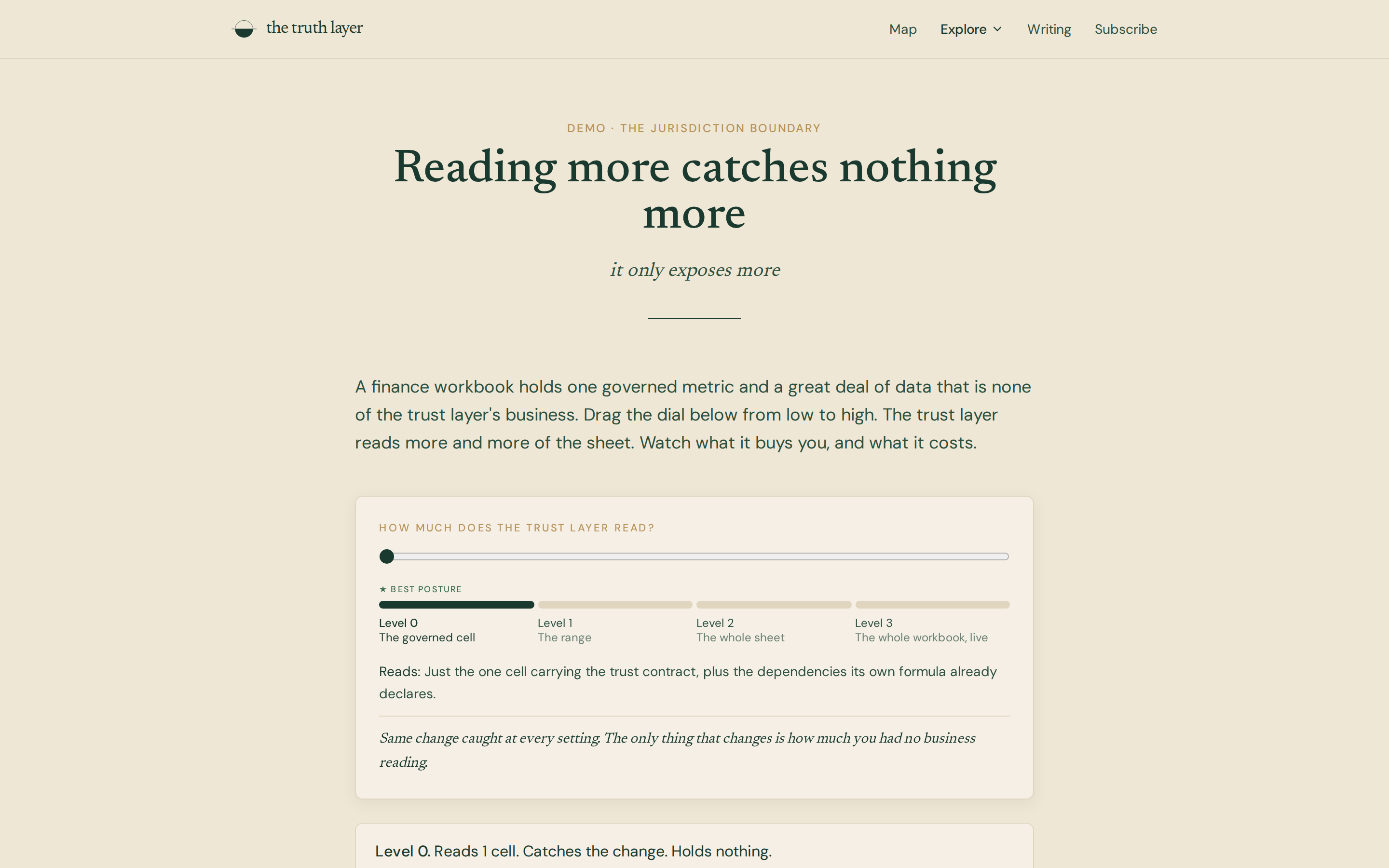
The jurisdiction boundary page. A dial sets how much of a finance workbook the trust layer reads, from the one governed cell to the whole workbook. 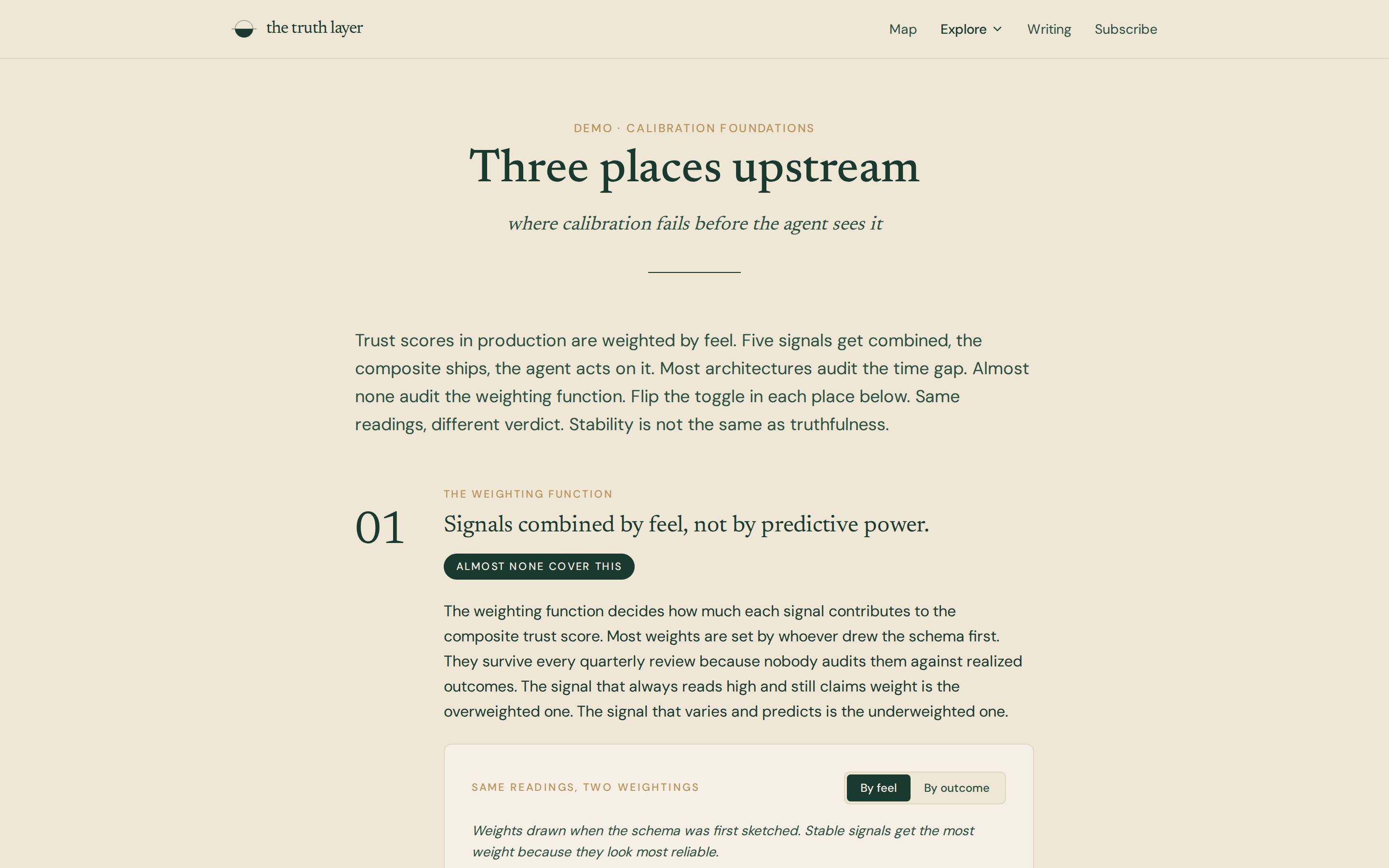
Calibration foundations. Three places upstream where a trust score goes wrong before an agent ever sees it, each with a toggle between by feel and by outcome. 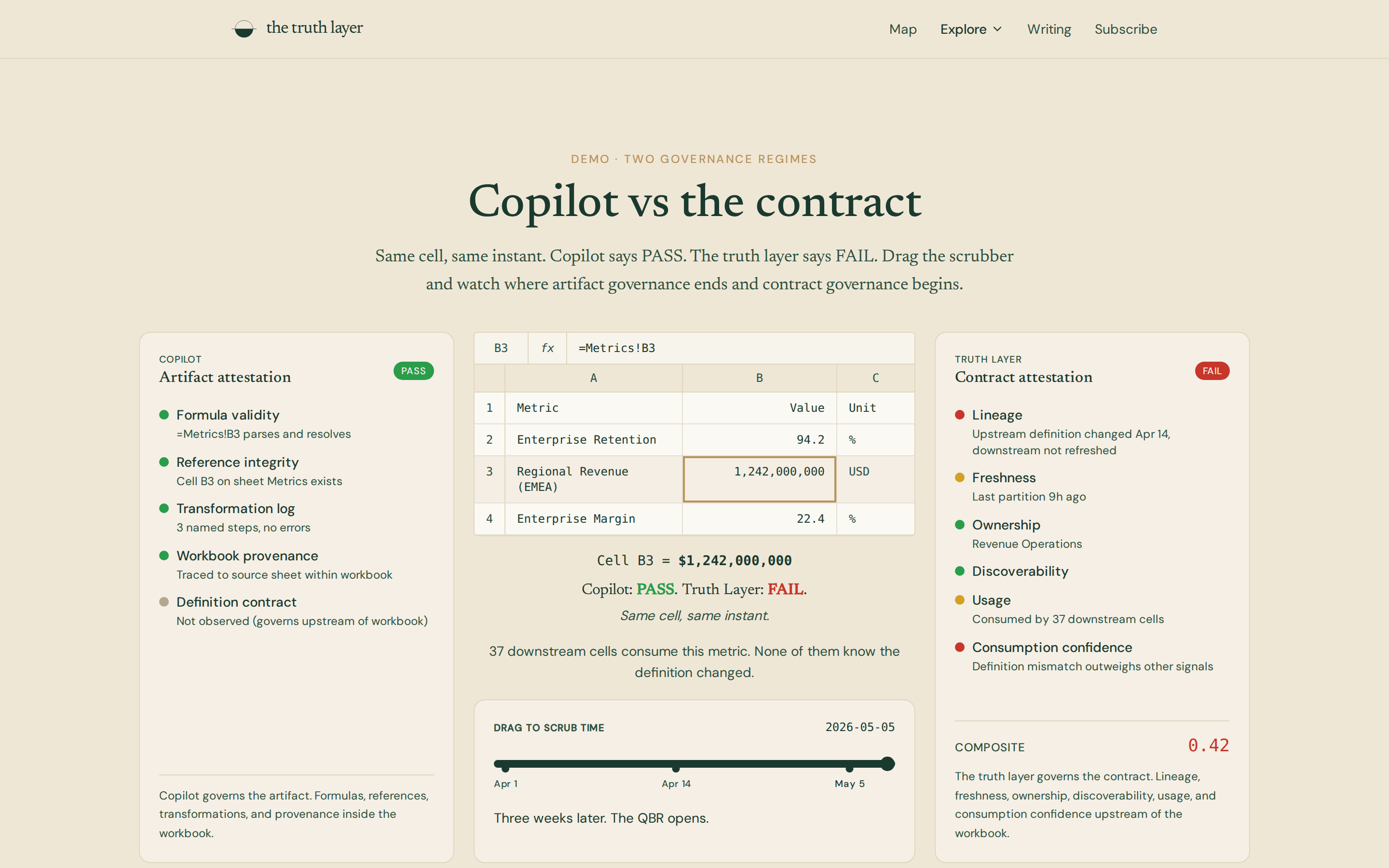
Copilot versus the contract. The same spreadsheet cell at the same instant passes artifact governance and fails contract governance, with a time scrubber across three weeks. 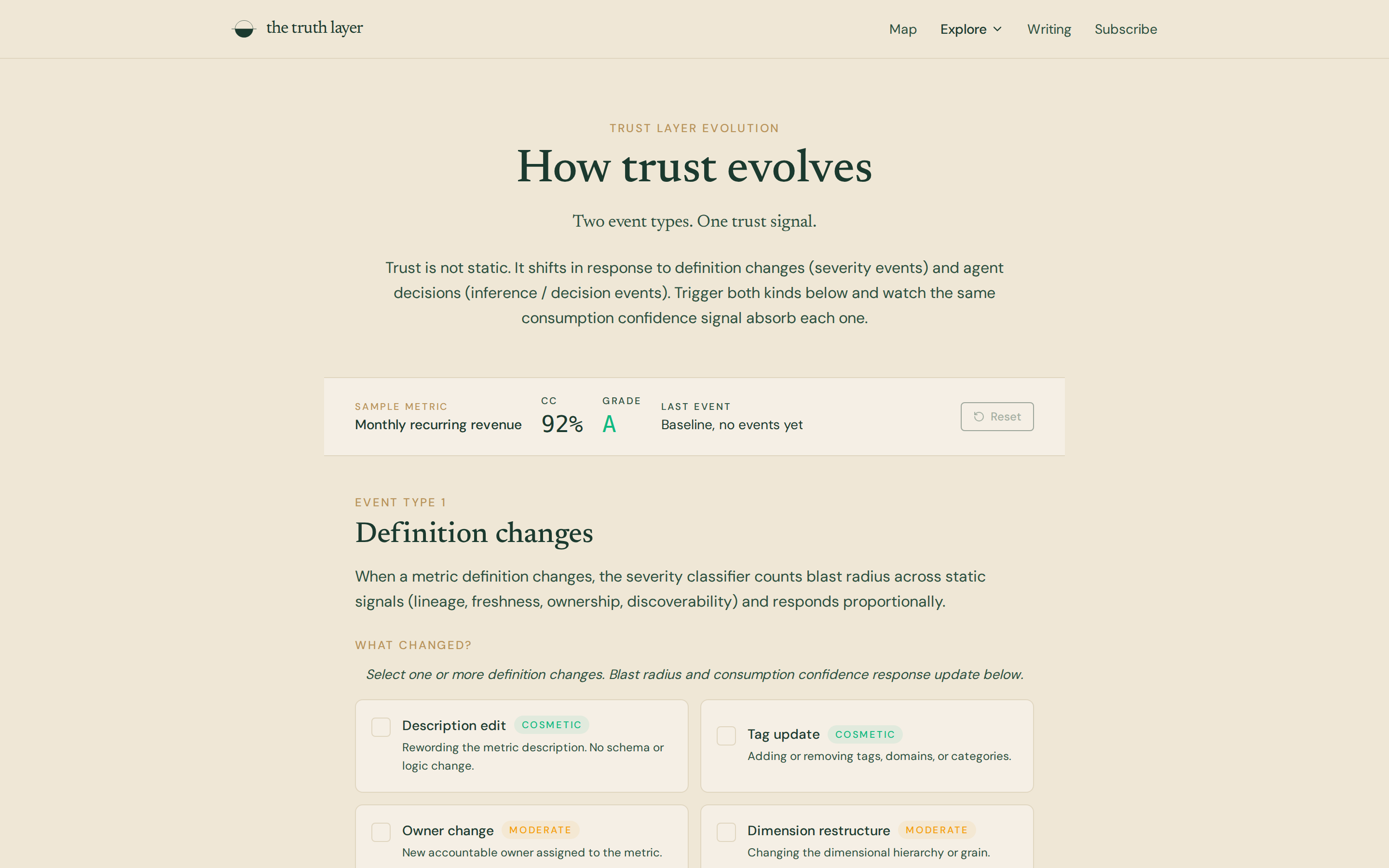
How trust evolves. Definition changes and agent decisions move one consumption confidence signal, starting from a sample metric at 92 percent and grade A. 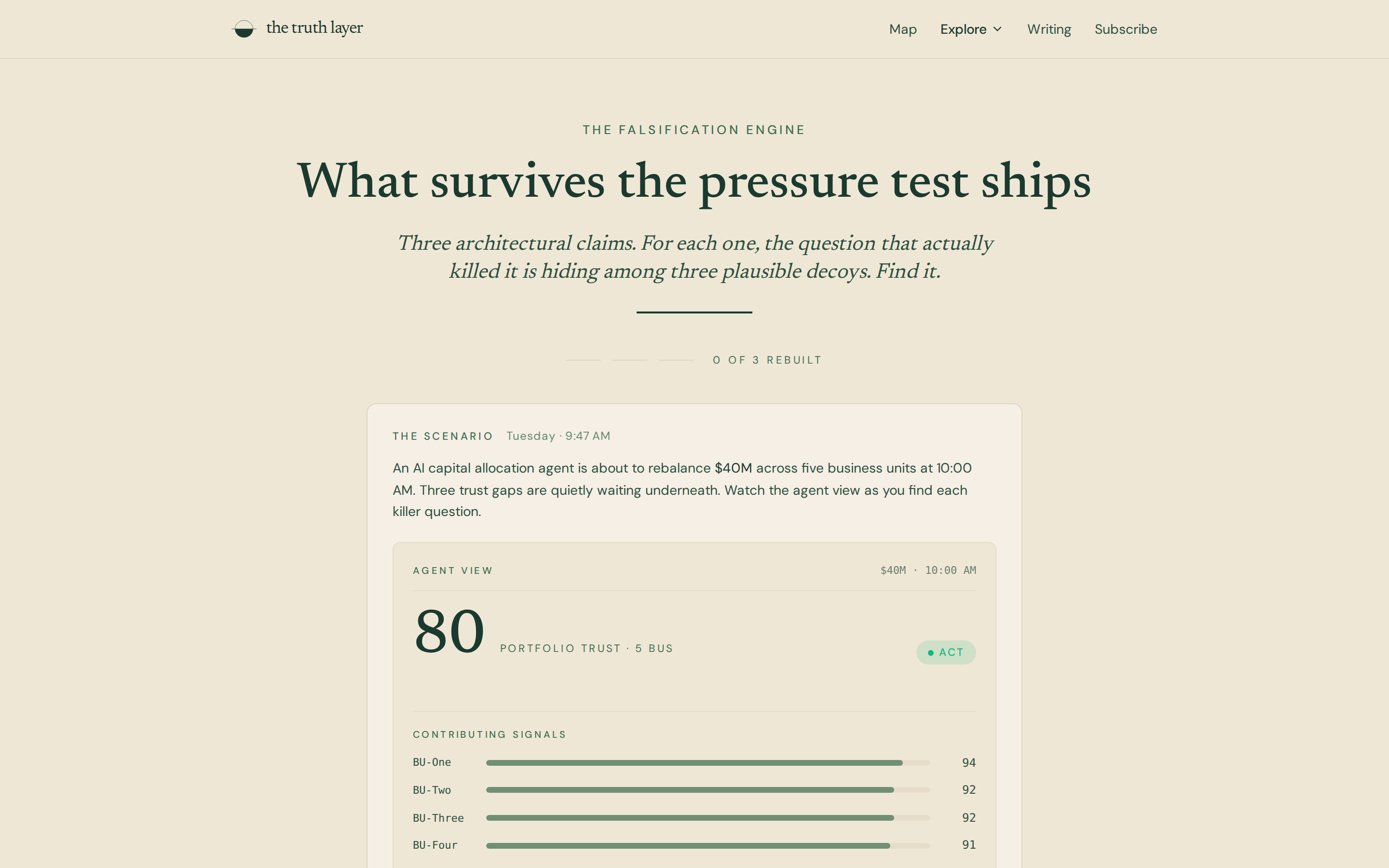
The falsification engine. Three architectural claims, each hiding the question that killed it among three decoys, with an agent view scoring portfolio trust at 80. 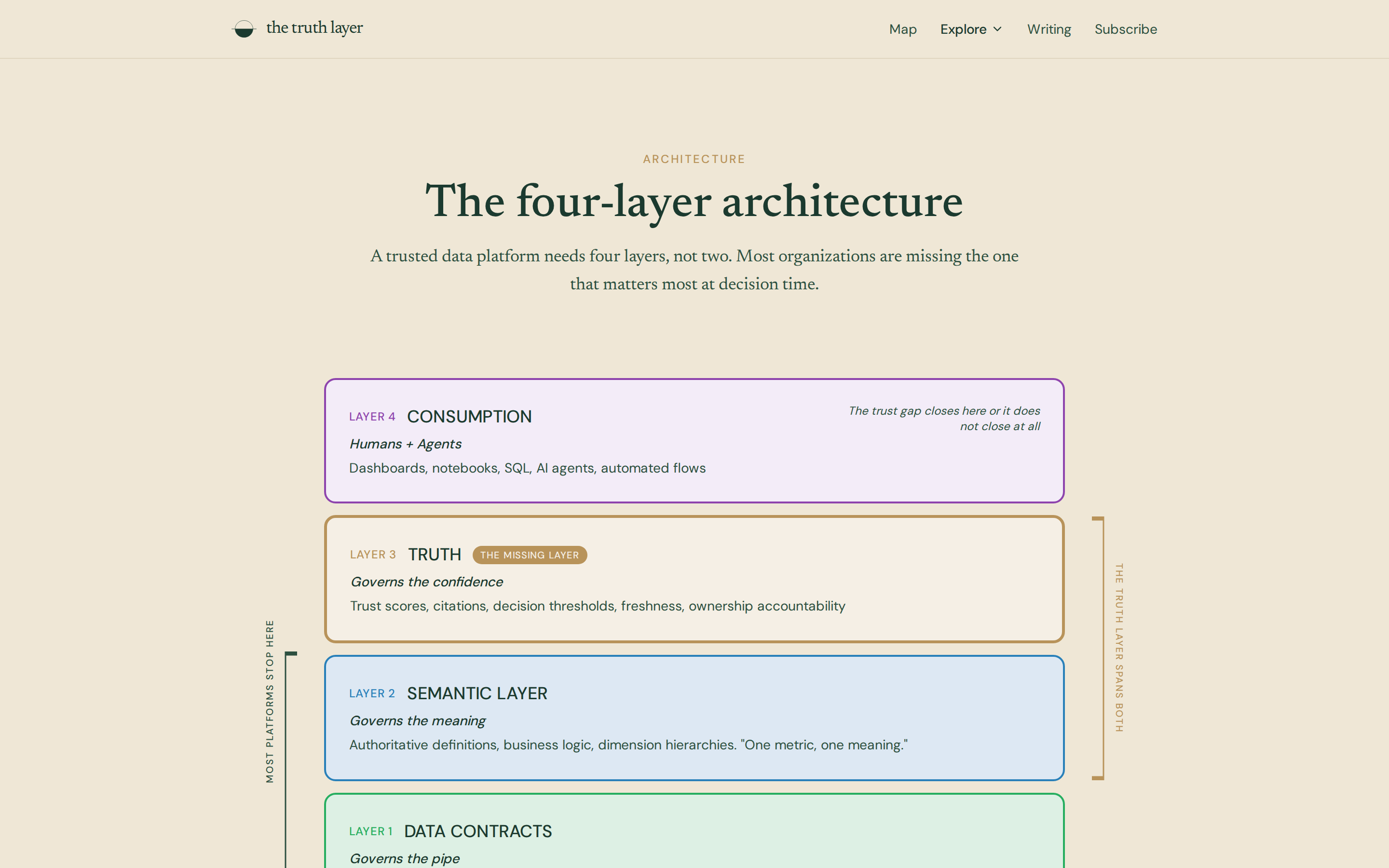
The four-layer architecture page. Consumption, truth, semantic and data contracts stacked, with truth marked as the missing layer. 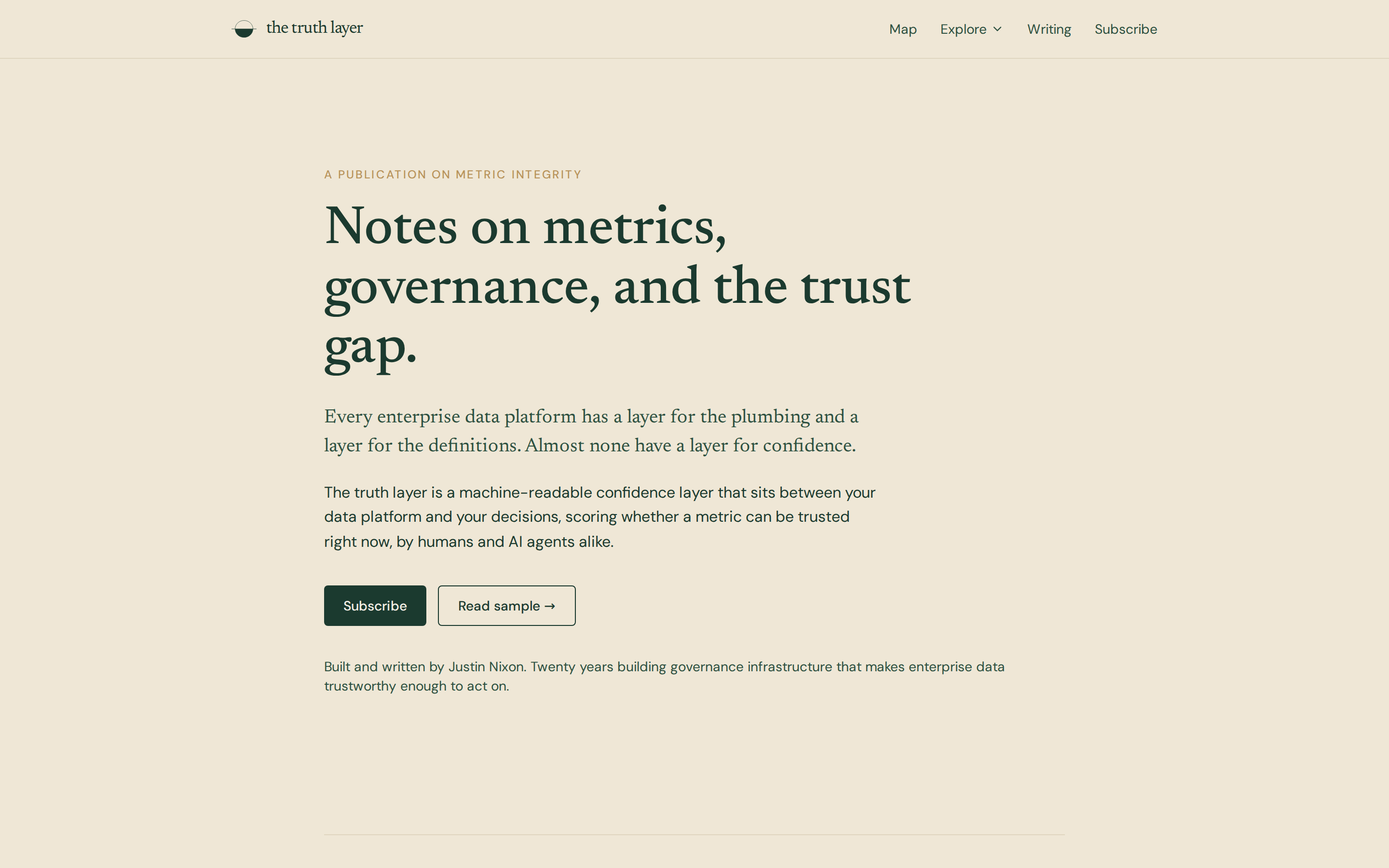
The home page as it stood in June 2026, before the Instrument restyle. Notes on metrics, governance and the trust gap. 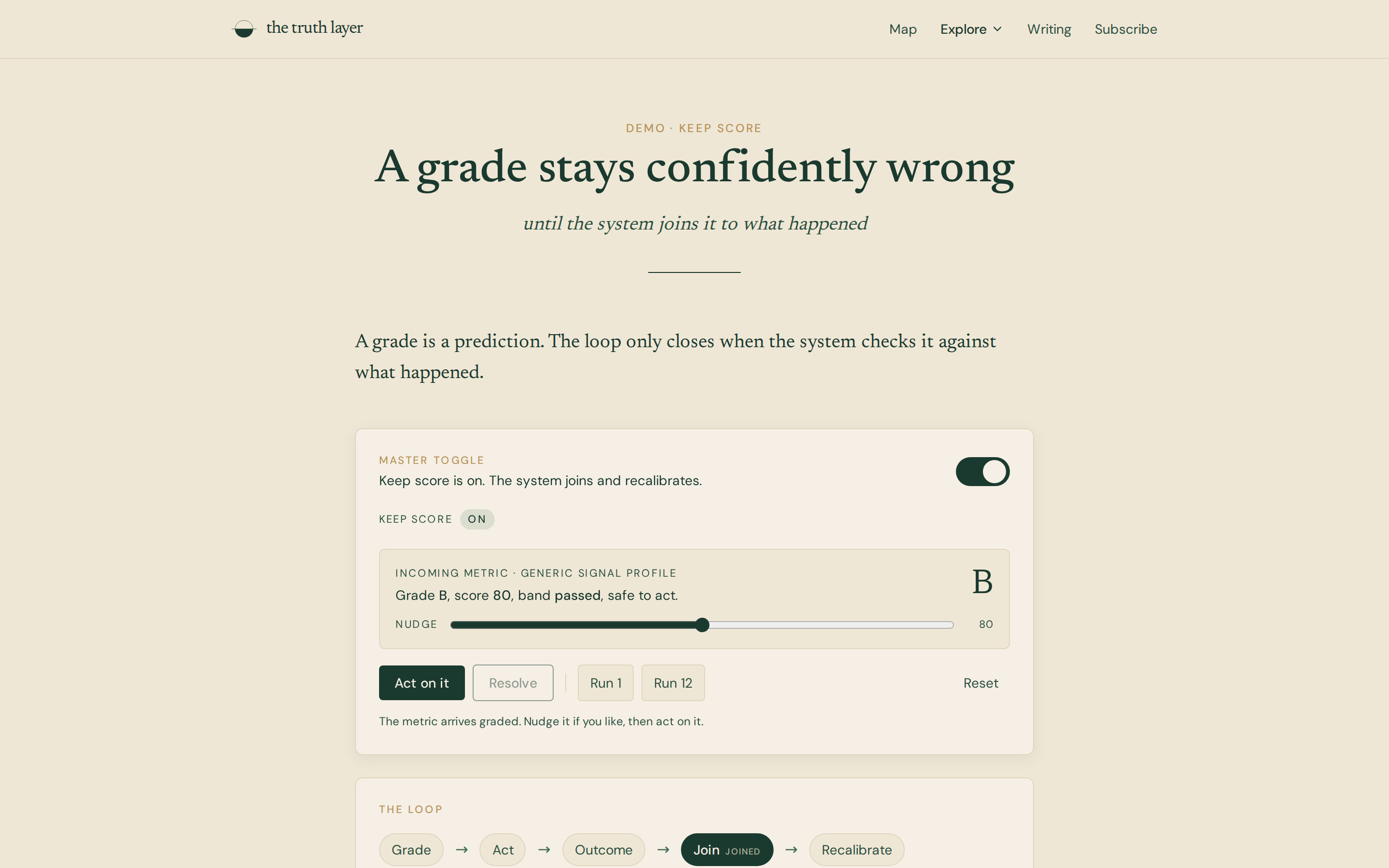
Keep score. A grade is a prediction, and the loop closes only when the system joins it to what happened. 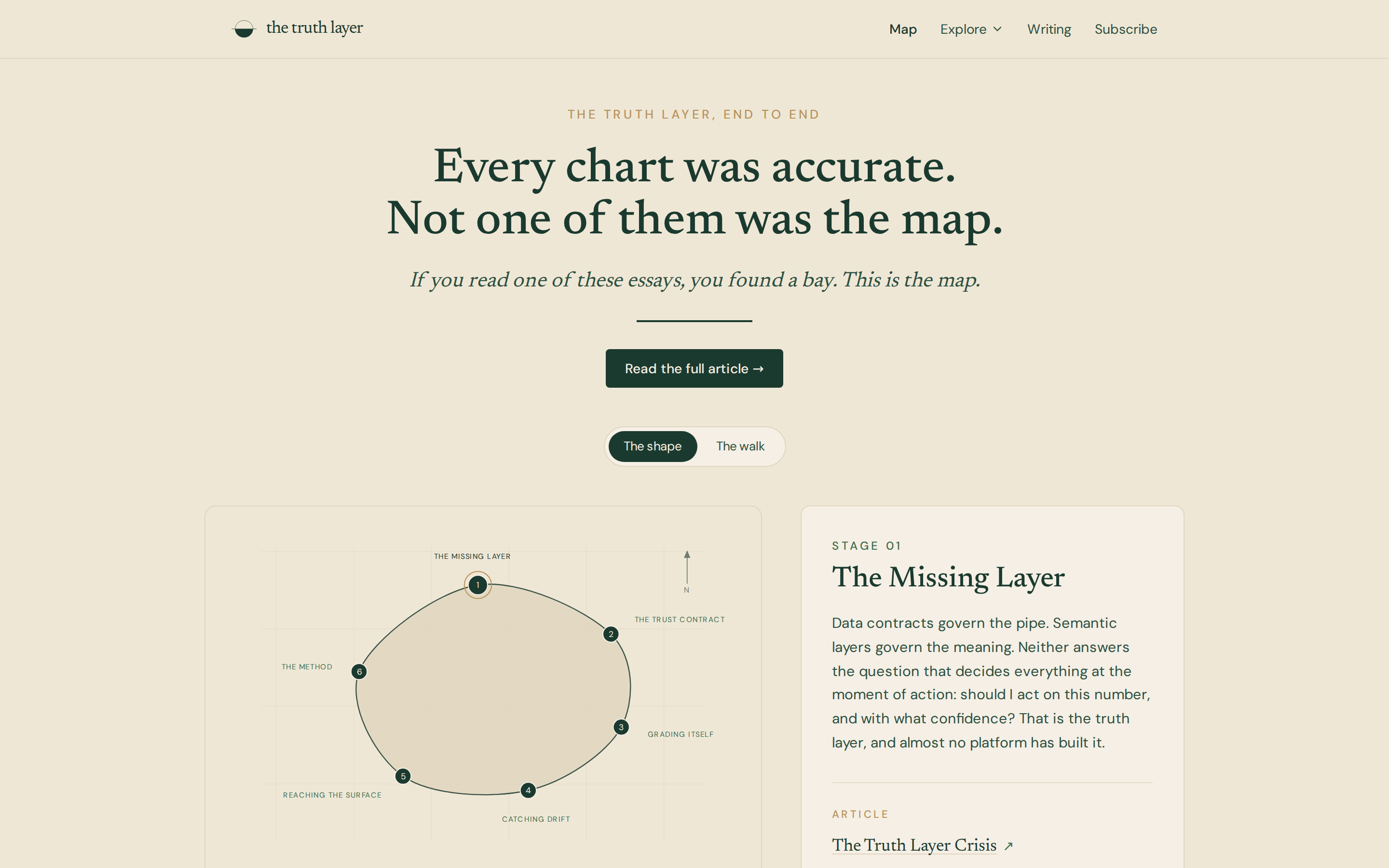
The map. Every essay charted as one coastline with six stages, from the missing layer to the method. 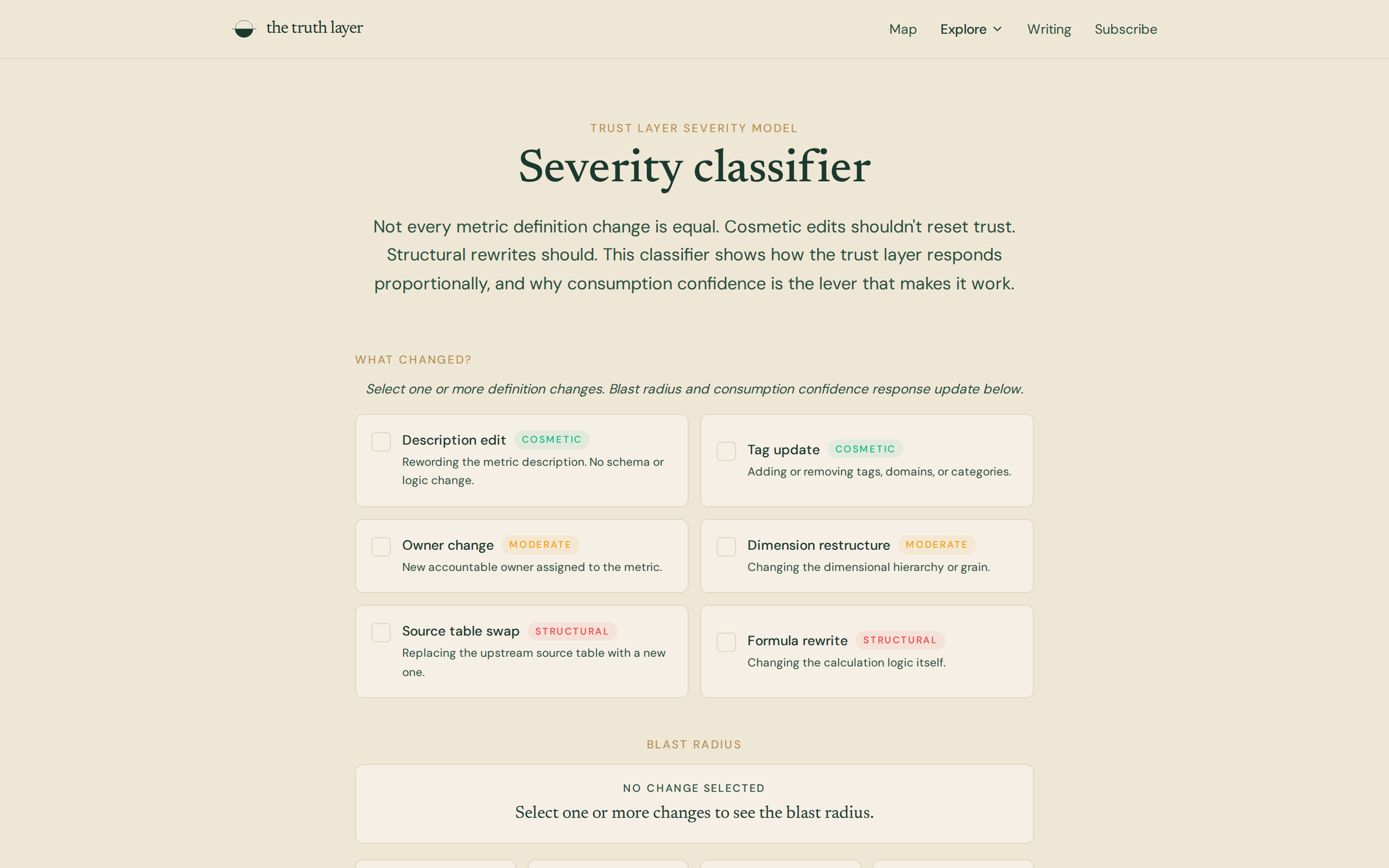
The severity classifier. Definition changes from cosmetic to structural, and how far each one should move trust. 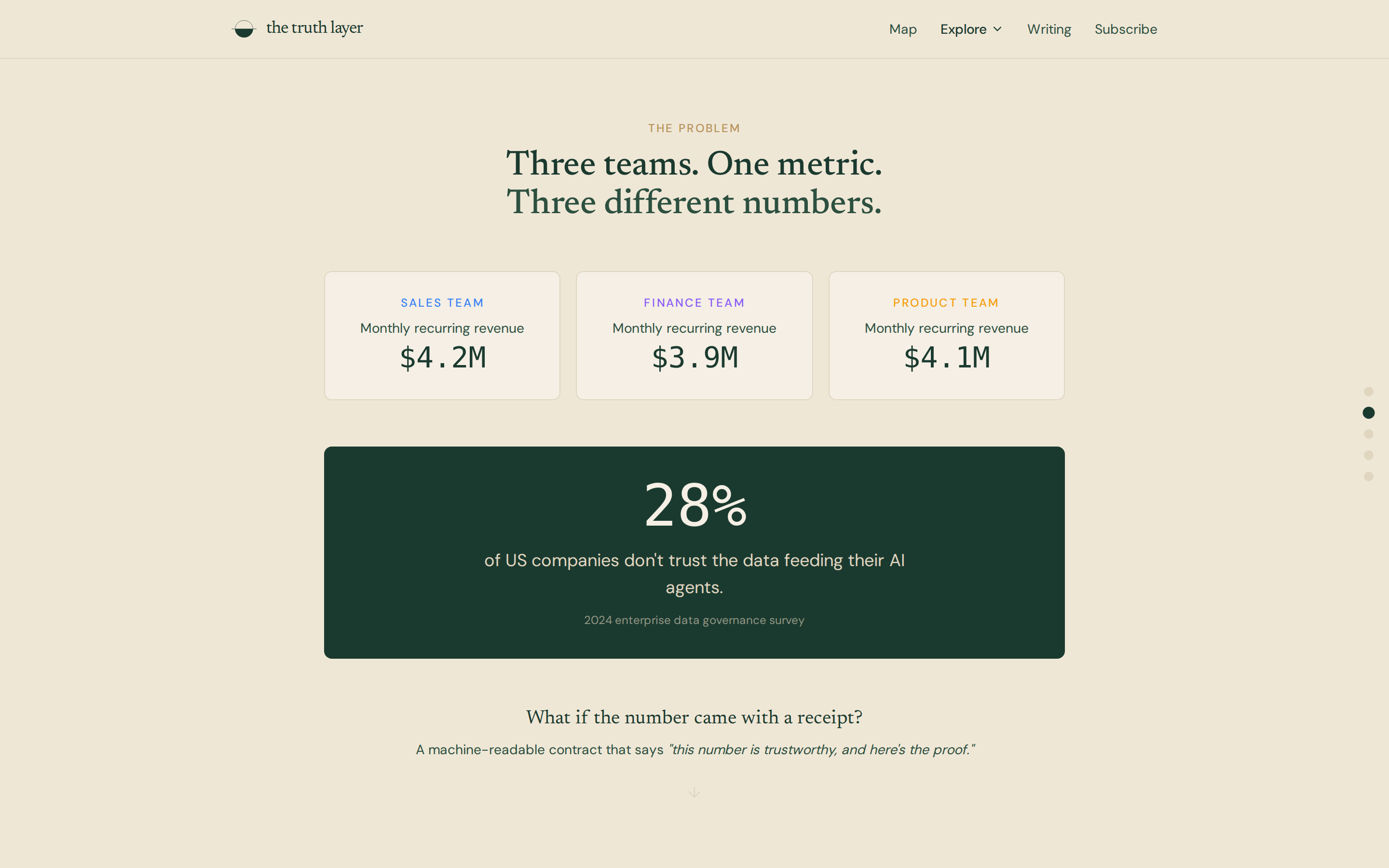
The trust contract explainer opens on the problem. Three teams, one metric, three different numbers. 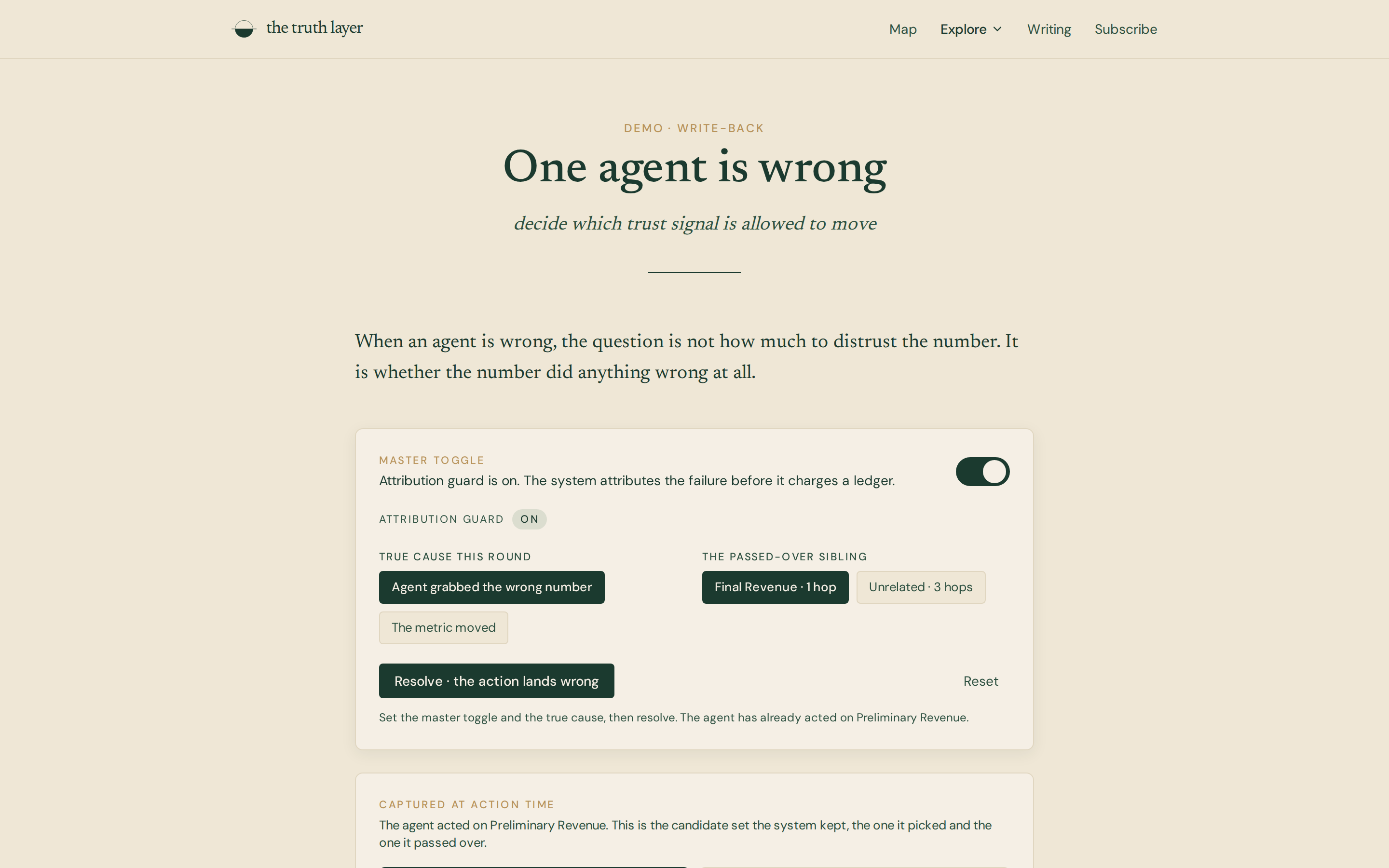
The write-back page. When an agent is wrong, decide which trust signal is allowed to move, with an attribution guard on. 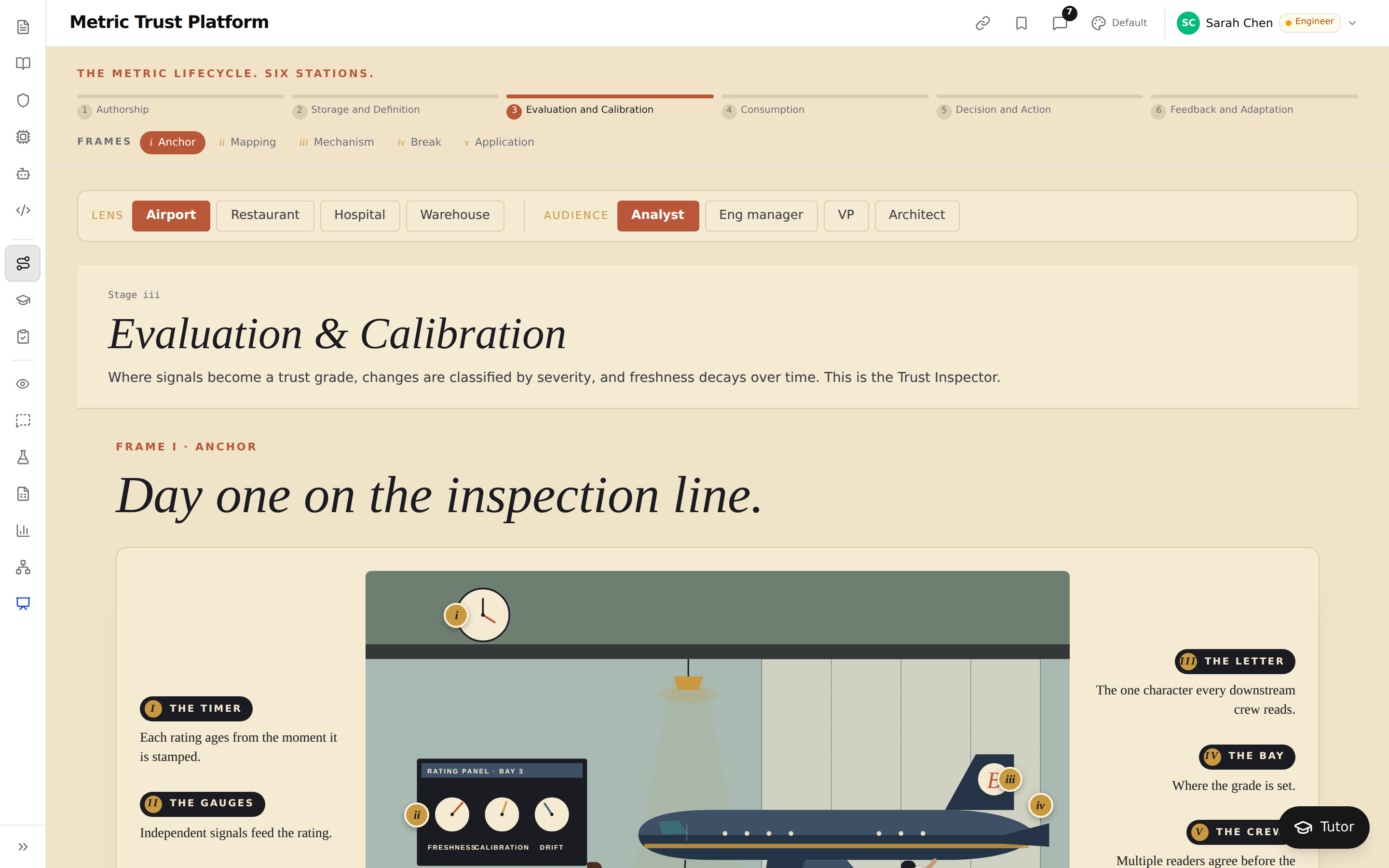
The Trust Inspector analogy walk. Stage three, evaluation and calibration, told through the airport lens for an analyst, day one on the inspection line. 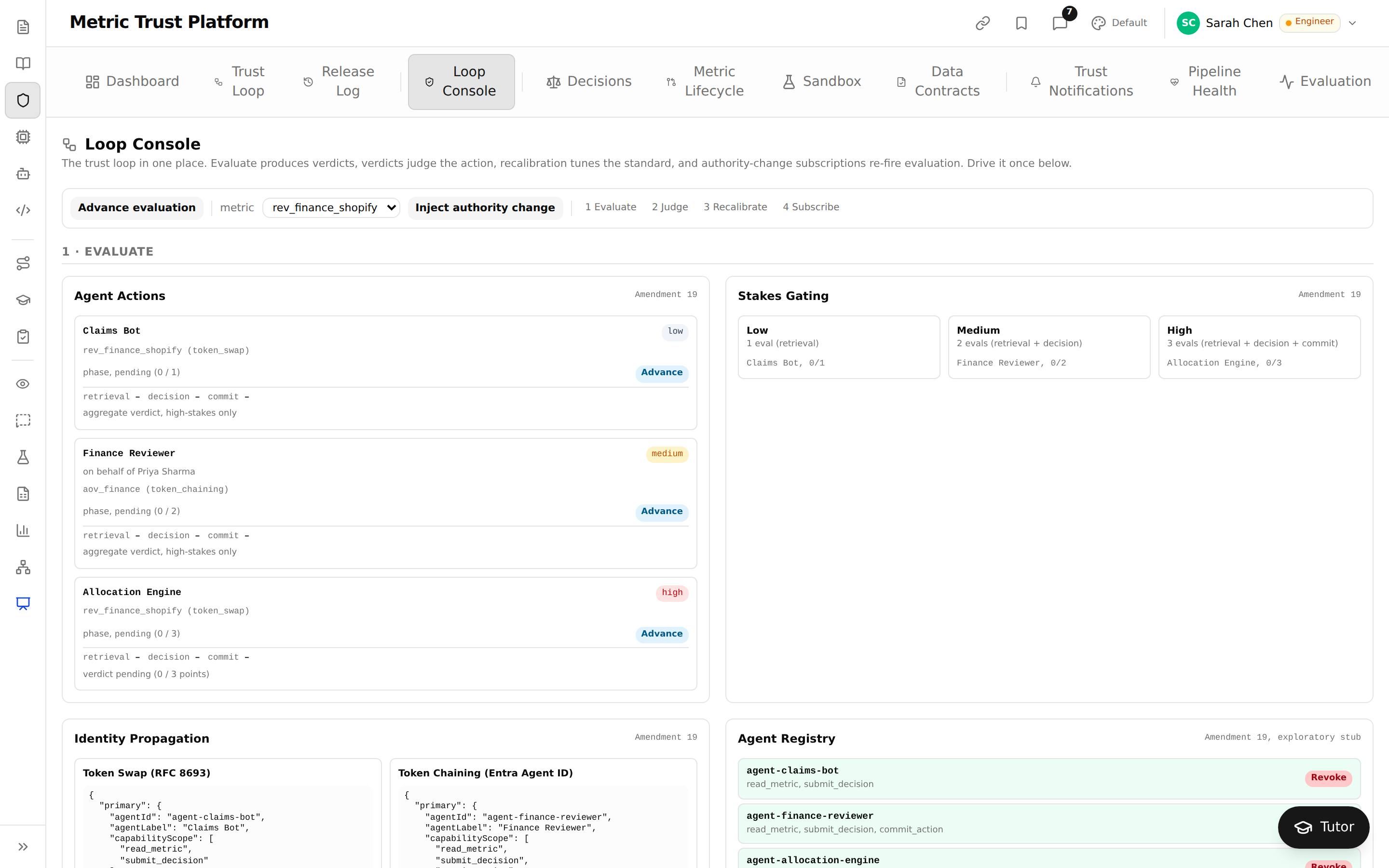
The Loop Console. Evaluate, judge, recalibrate and subscribe in one place, with three agents gated by stakes. 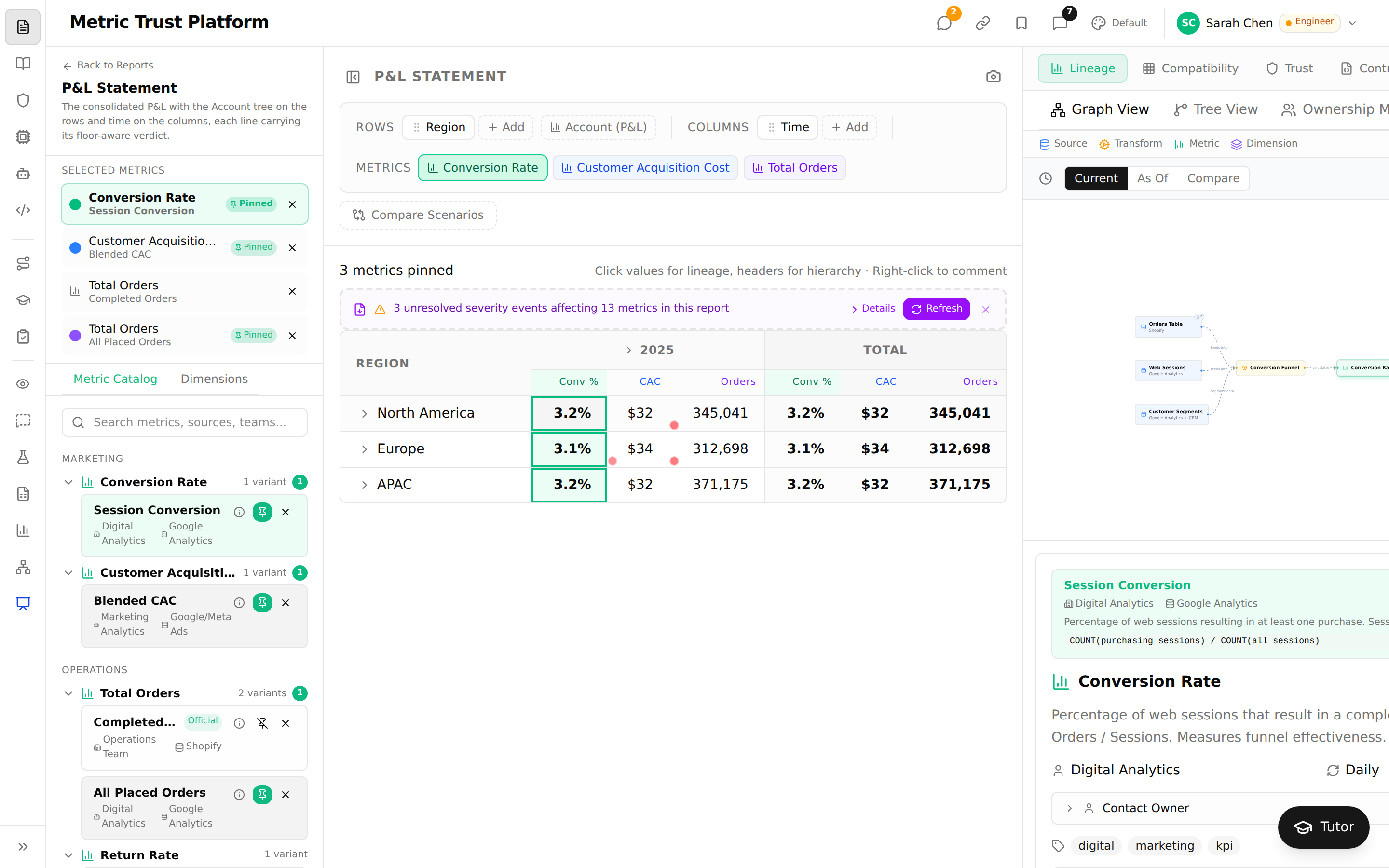
A P&L statement report with three pinned metrics, each cell carrying its verdict, and the lineage graph open on the right. 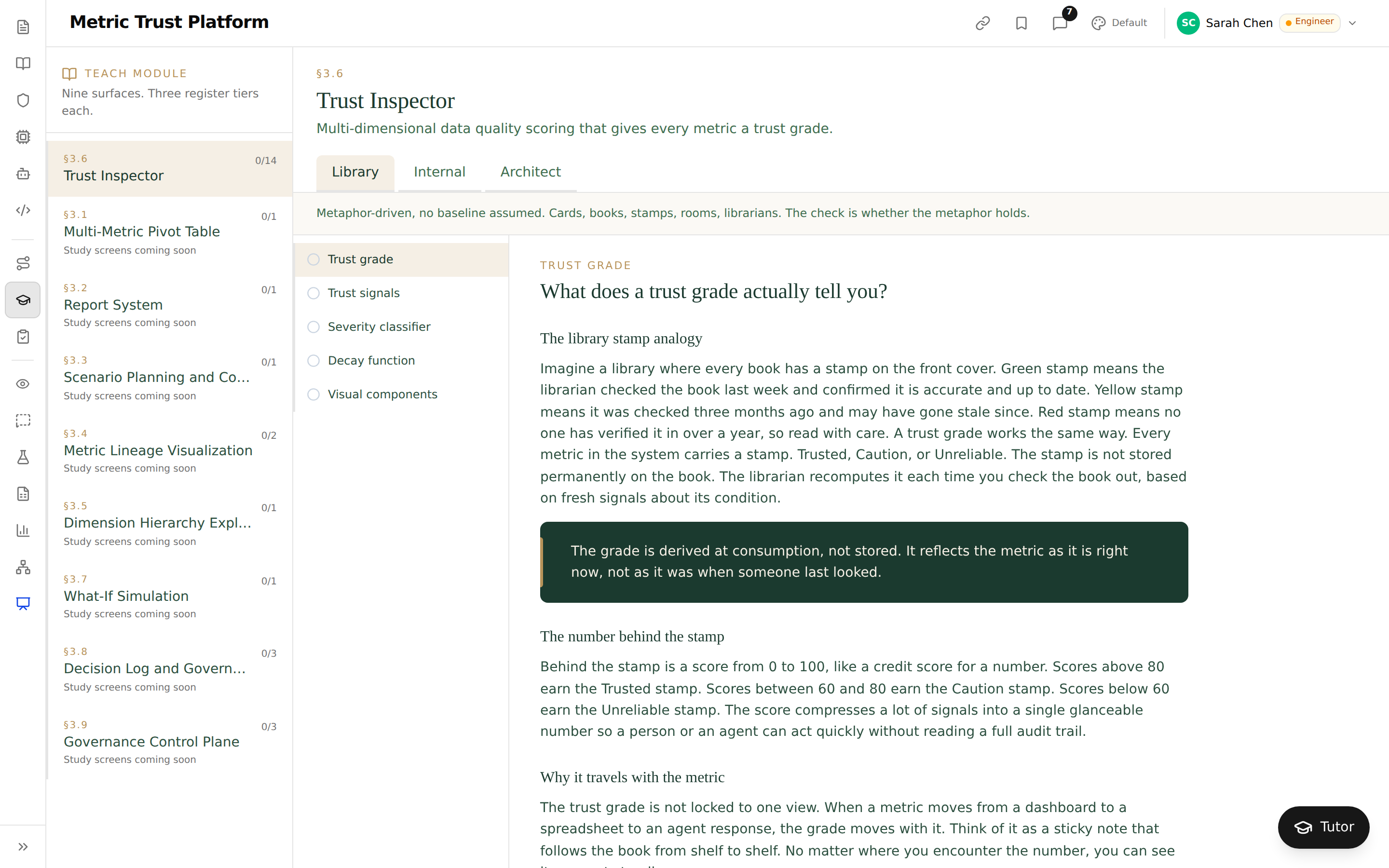
The Teach Module. Nine surfaces, three register tiers each, here the Trust Inspector explained through the library analogy. 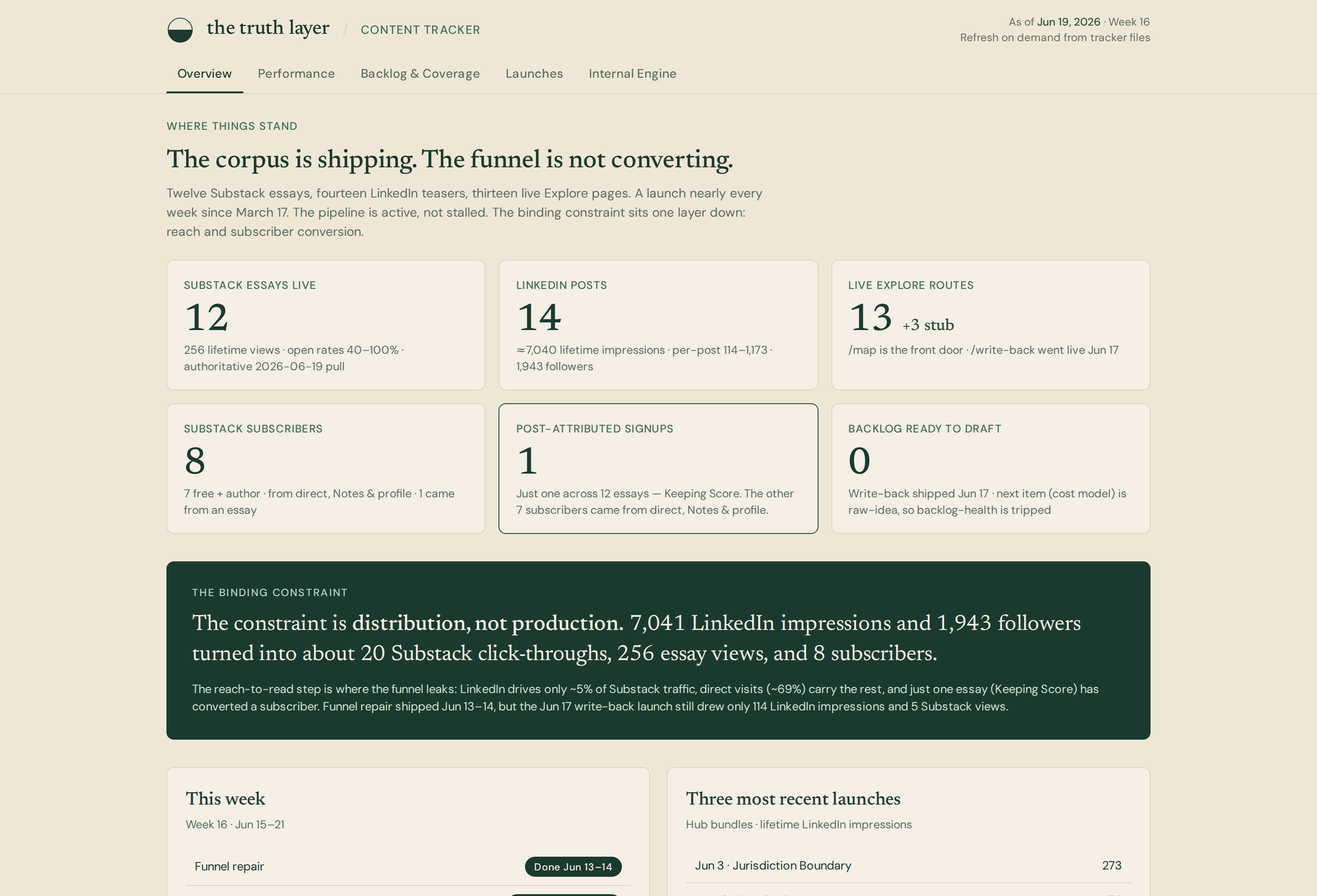
The content tracker in June 2026. The corpus was shipping and the funnel was not converting, which named distribution as the binding constraint. 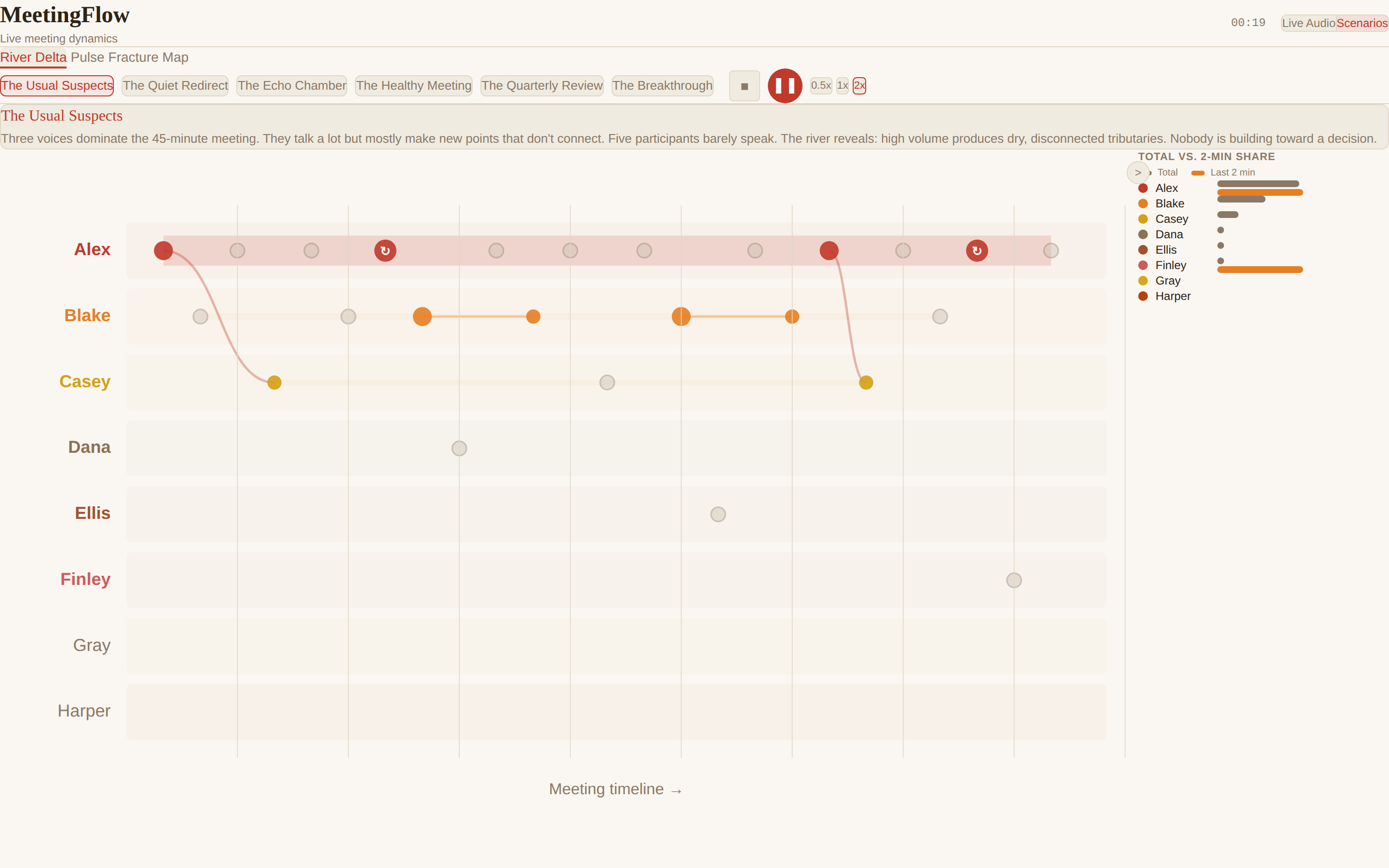
Meeting Magic in March 2026. The River Delta lens on the Usual Suspects scenario, three voices dominating and five barely speaking. 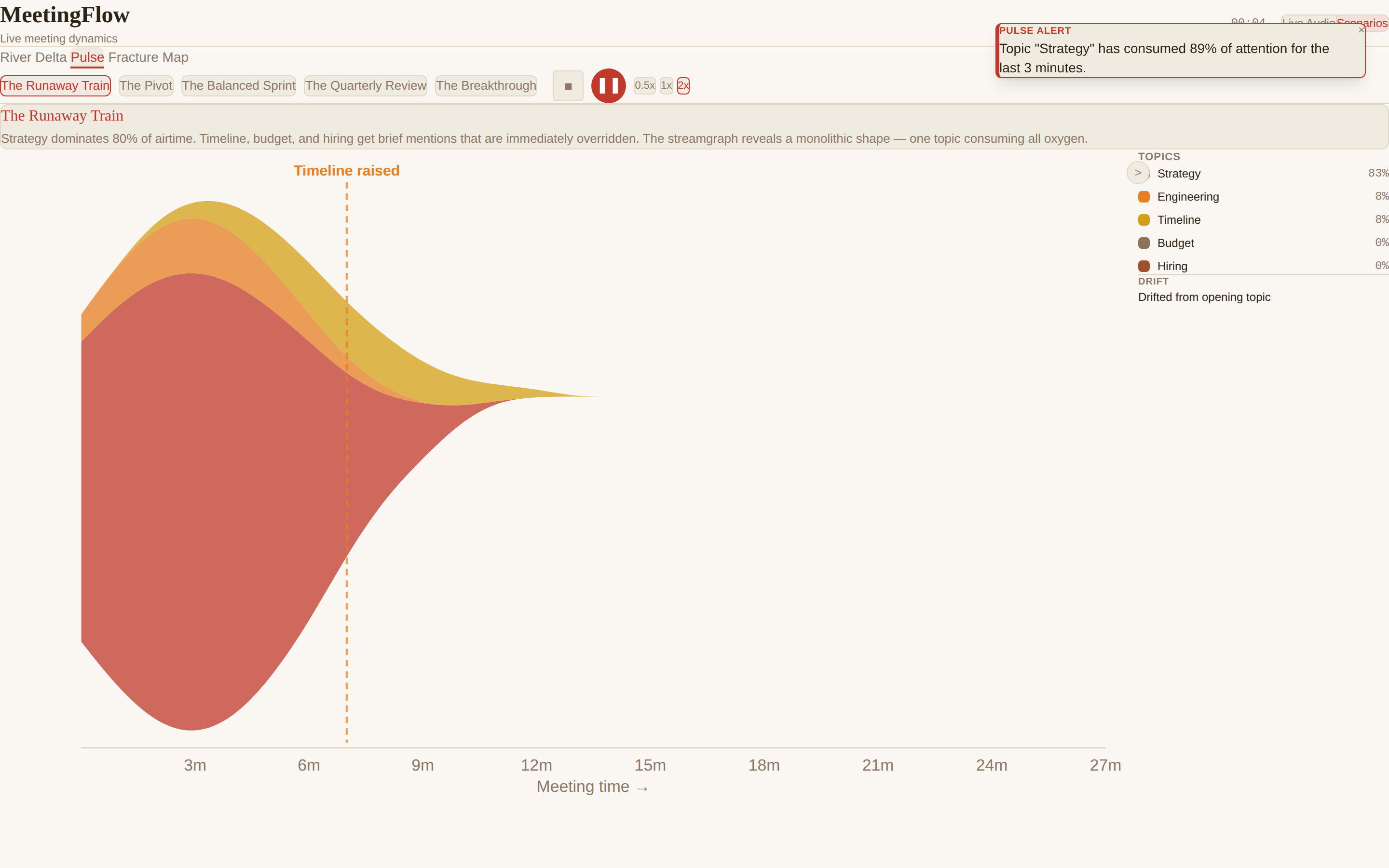
The Pulse lens on the Runaway Train scenario. One topic consumes the airtime and a Pulse alert fires at 89 percent attention. 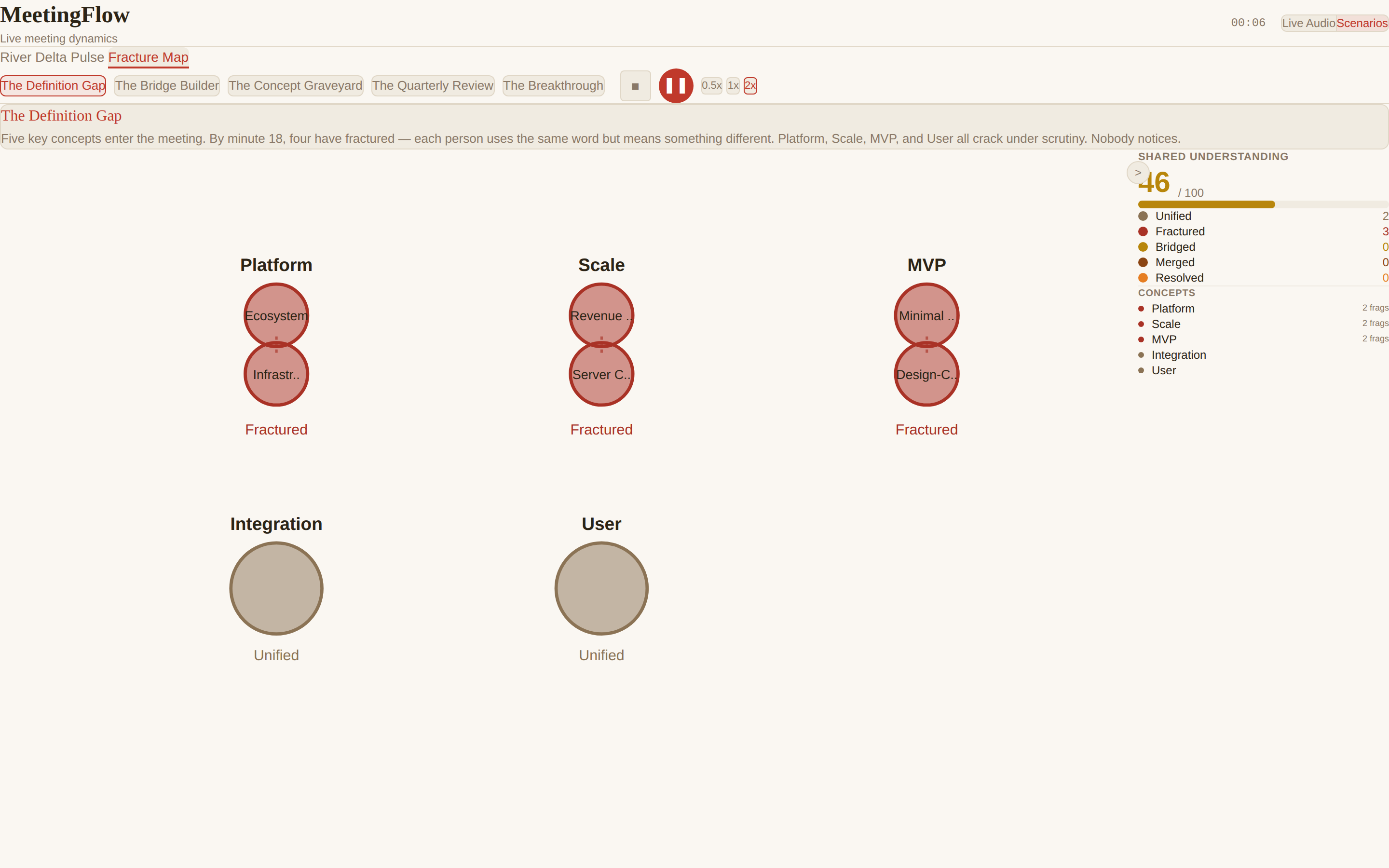
The Fracture Map on the Definition Gap scenario. Four of five concepts have split into two meanings and nobody notices. 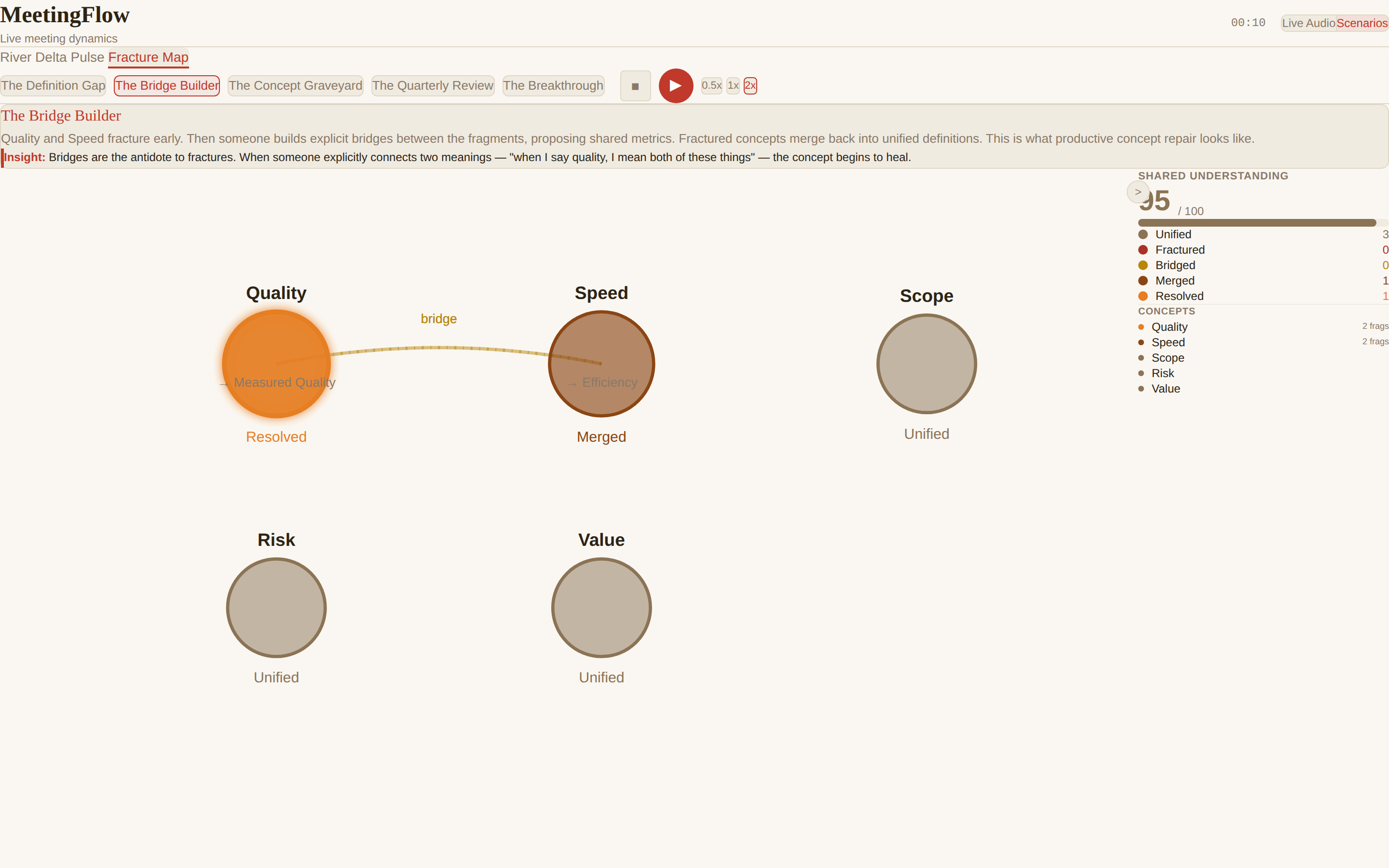
The Fracture Map on the Bridge Builder scenario. Someone connects two meanings and the fractured concepts merge back together. 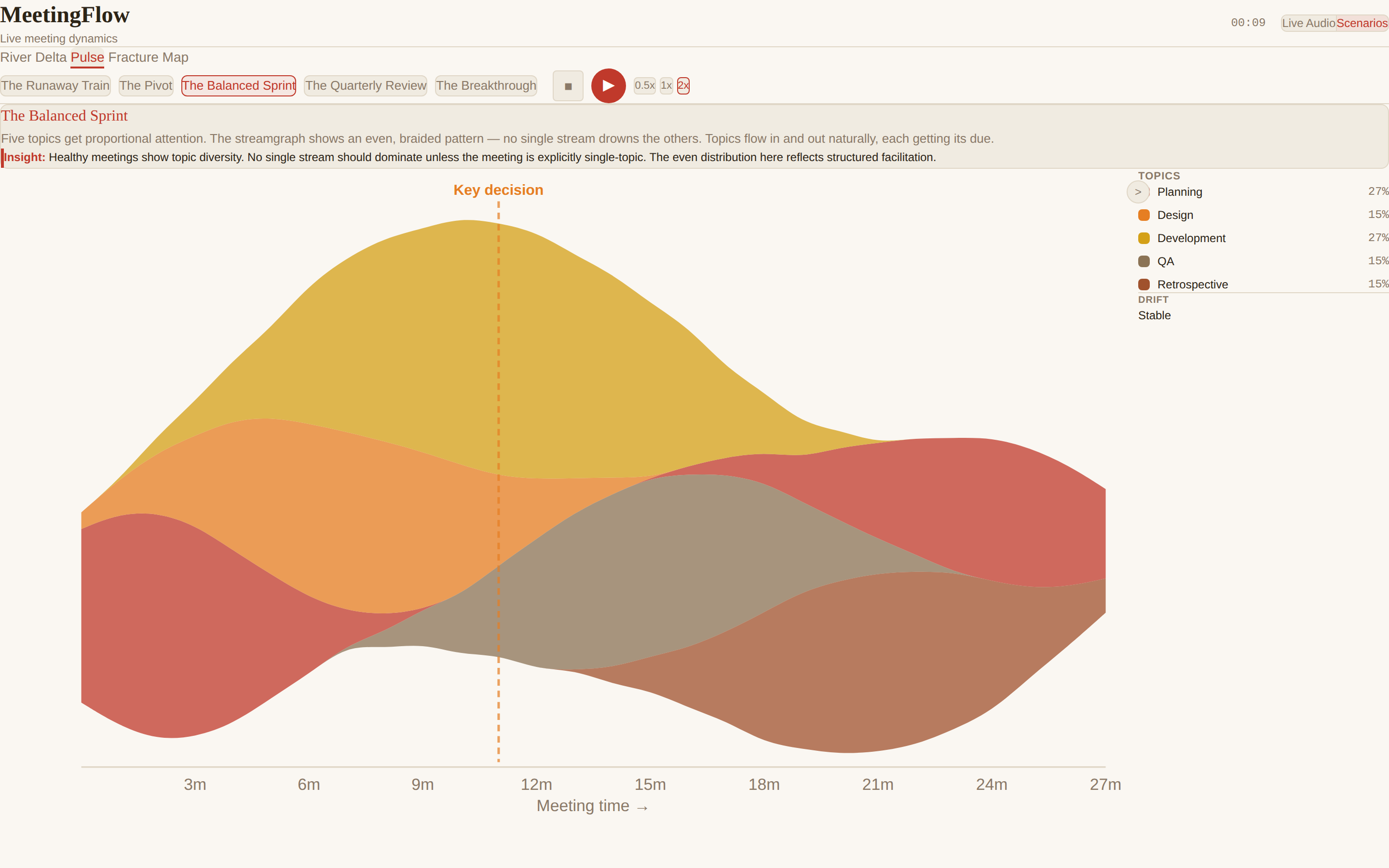
The Pulse lens on the Balanced Sprint scenario. Five topics braided evenly, no single stream drowning the others. 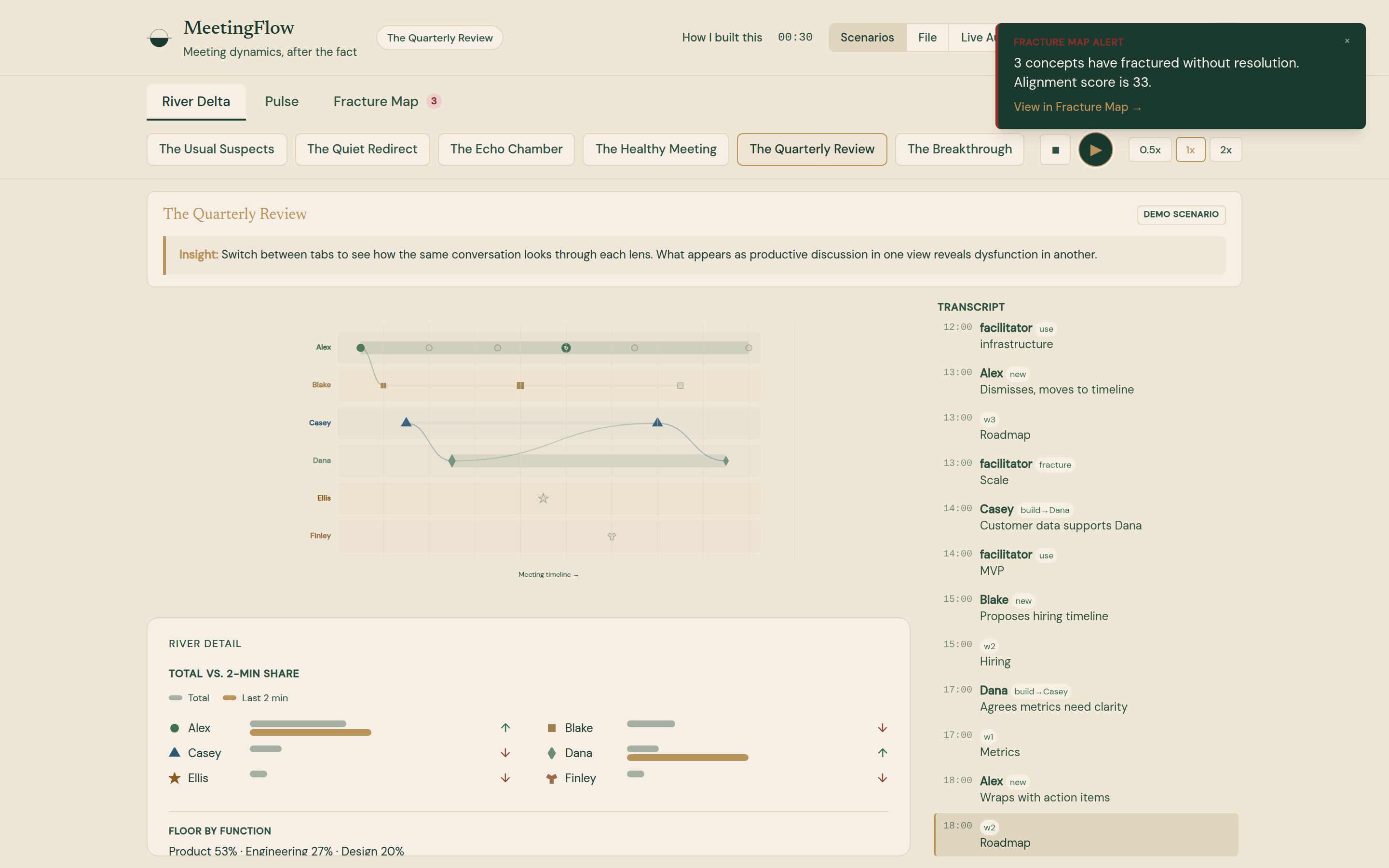
MeetingFlow in June 2026, retrothemed. The River Delta lens on the Quarterly Review scenario with the transcript streaming on the right. 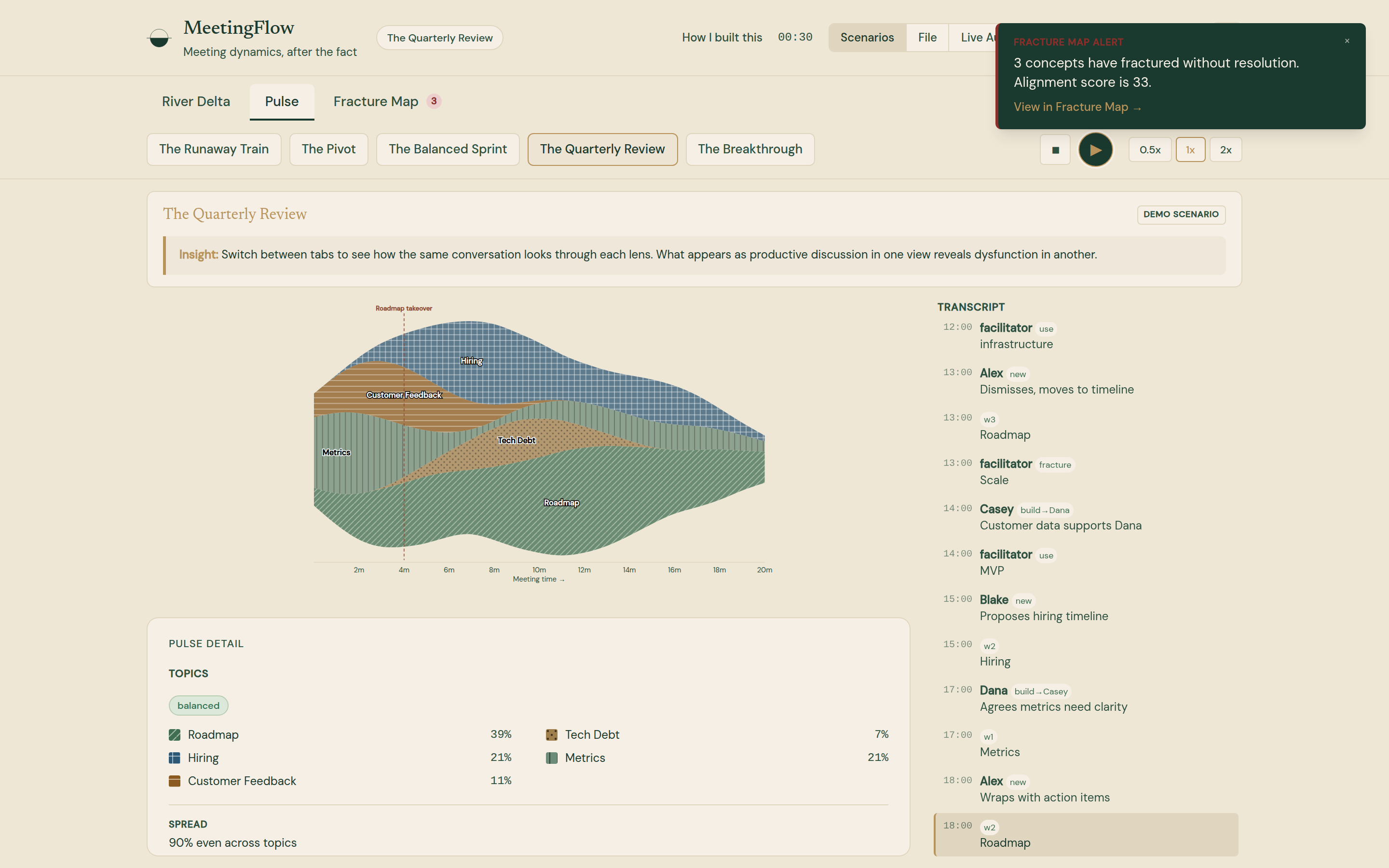
The Pulse lens on the Quarterly Review. Topics as patterned streams, with the roadmap taking over at the four minute point. 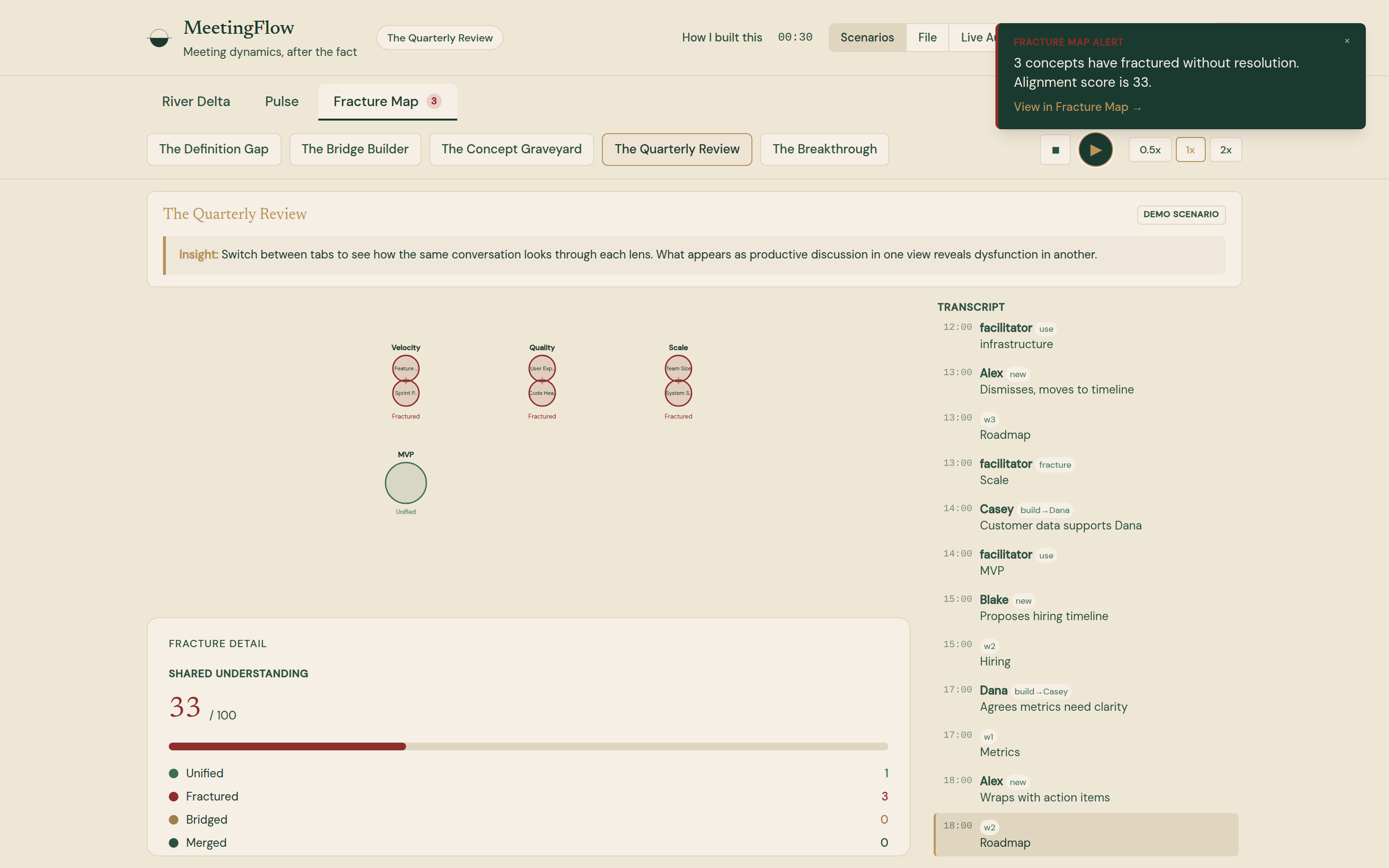
The Fracture Map on the Quarterly Review. Three concepts fractured without resolution and a shared understanding score of 33. 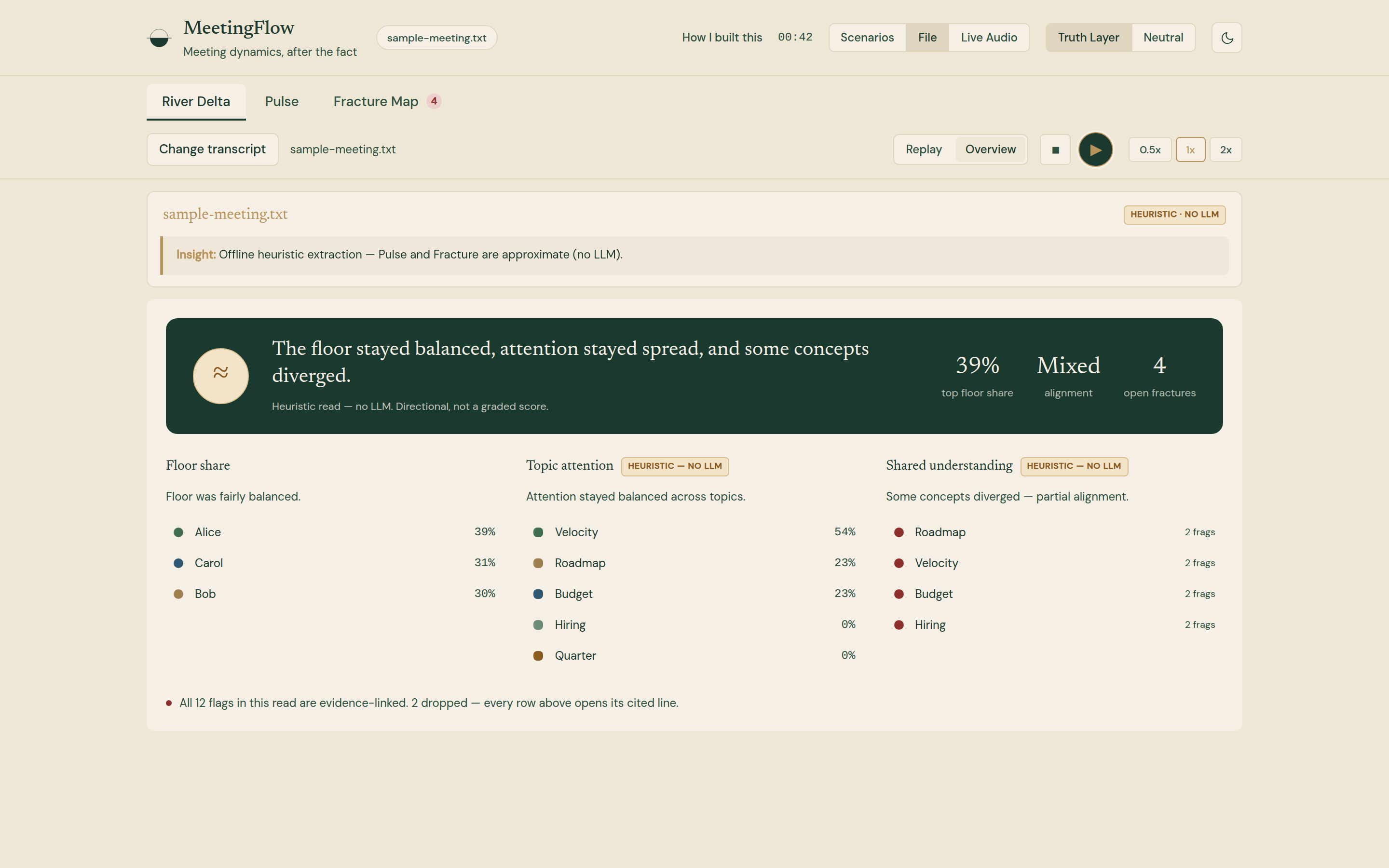
File mode overview after dropping a sample transcript. Floor share, topic attention and shared understanding, badged as a heuristic read with no LLM. 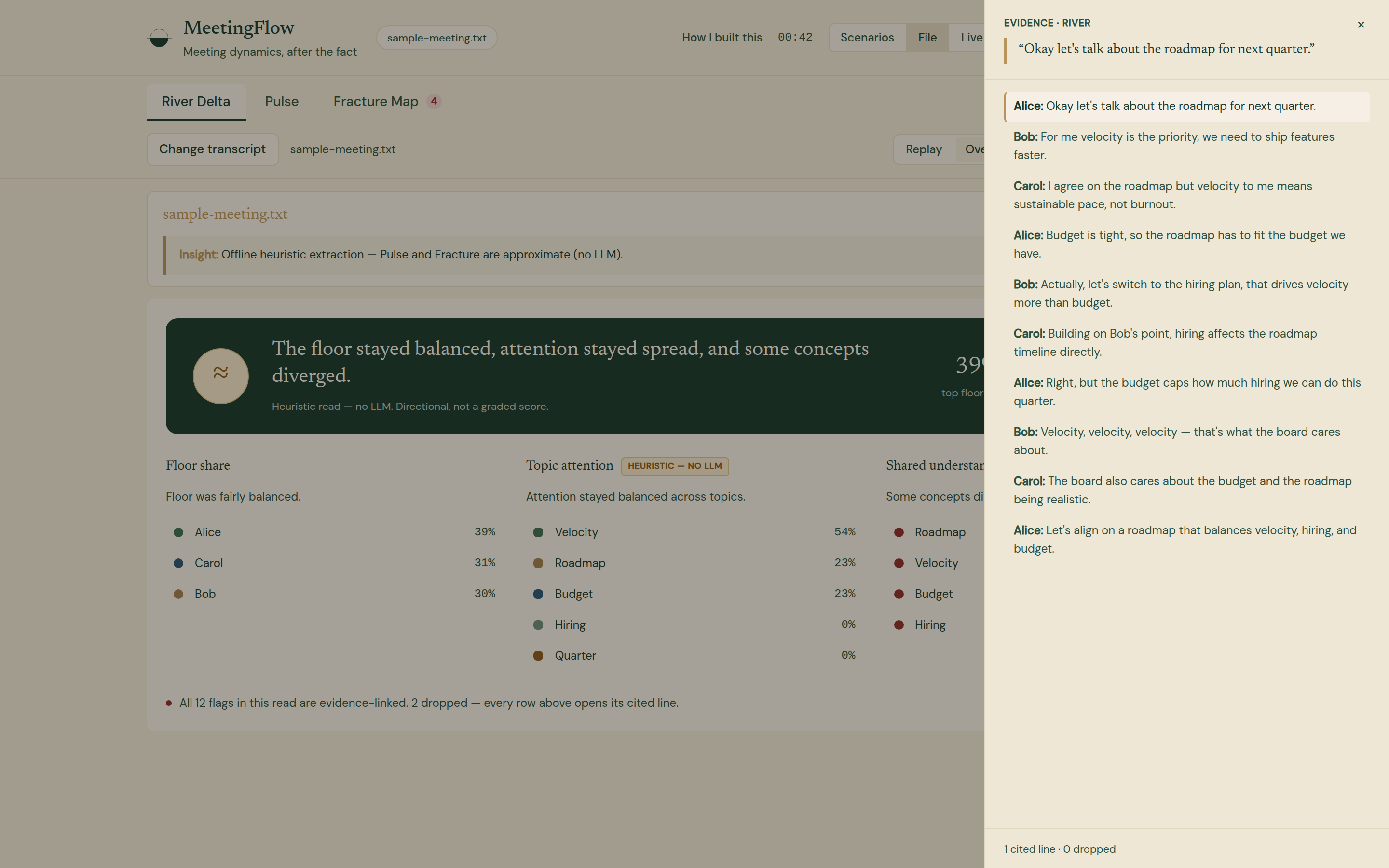
The evidence drawer. Every flag opens to the transcript lines behind it. 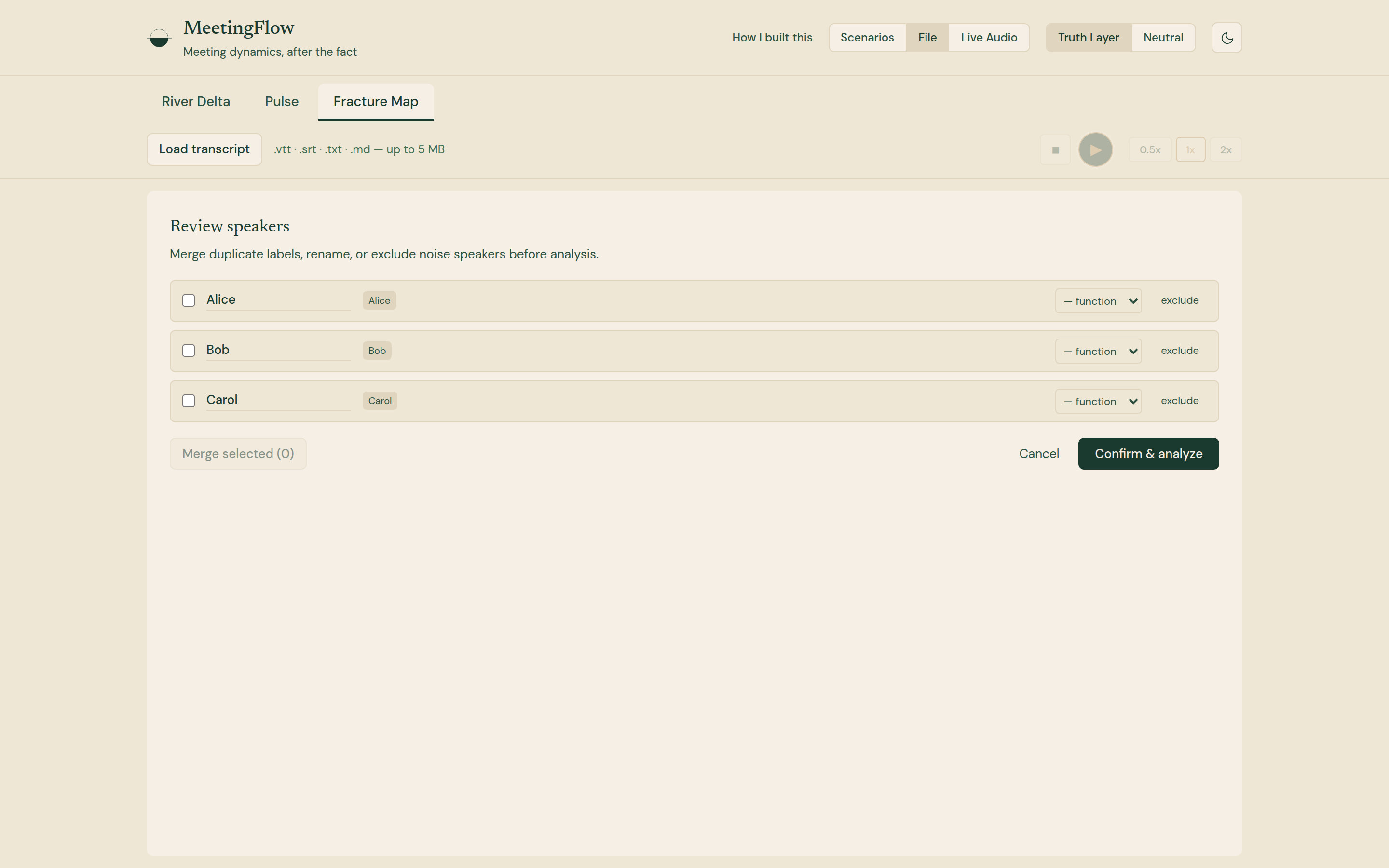
Speaker review before analysis. Merge duplicate labels, rename or exclude noise speakers. 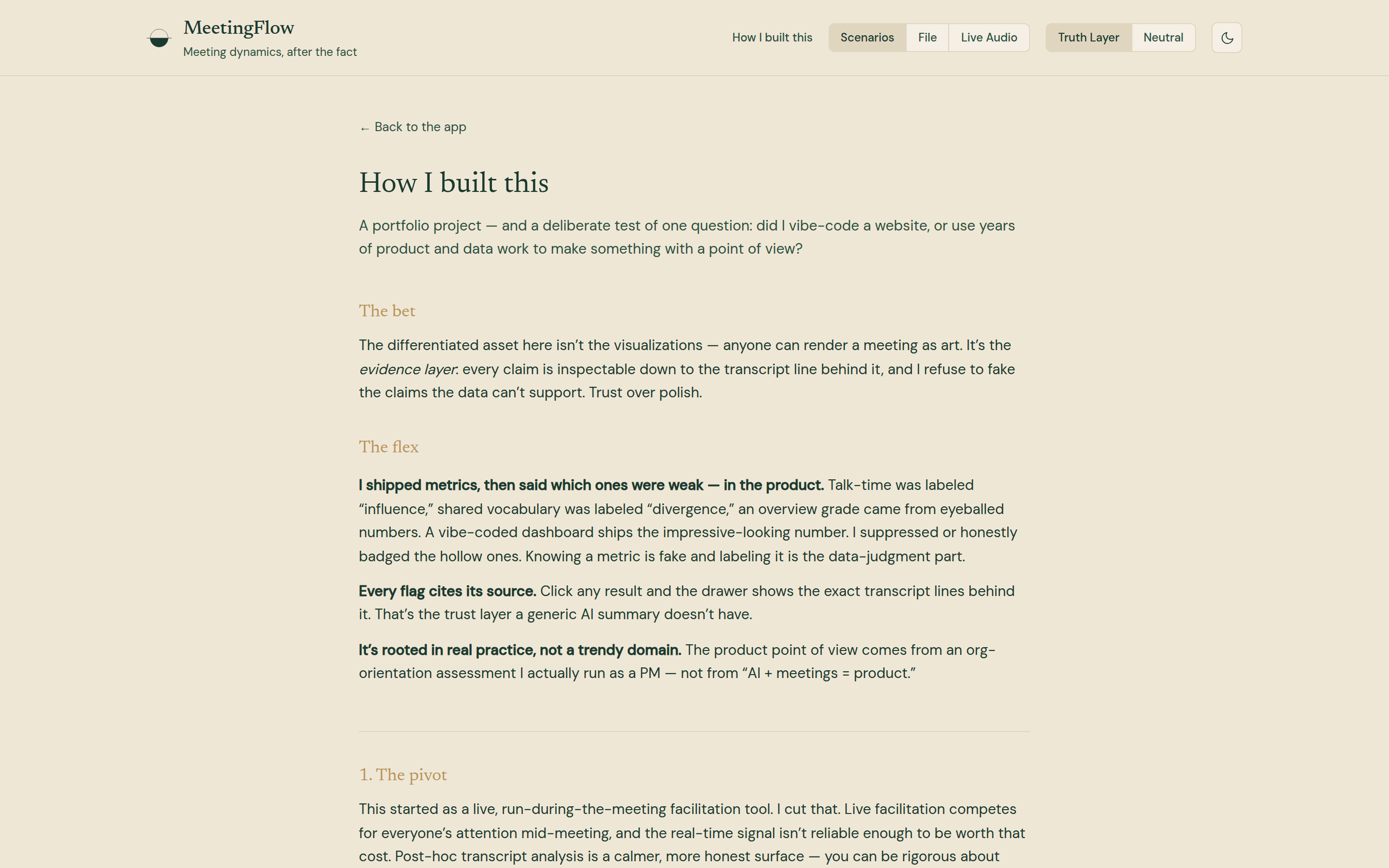
How I built this. The in-app essay on the bet, the flex and the pivot from live facilitation to post-hoc analysis. 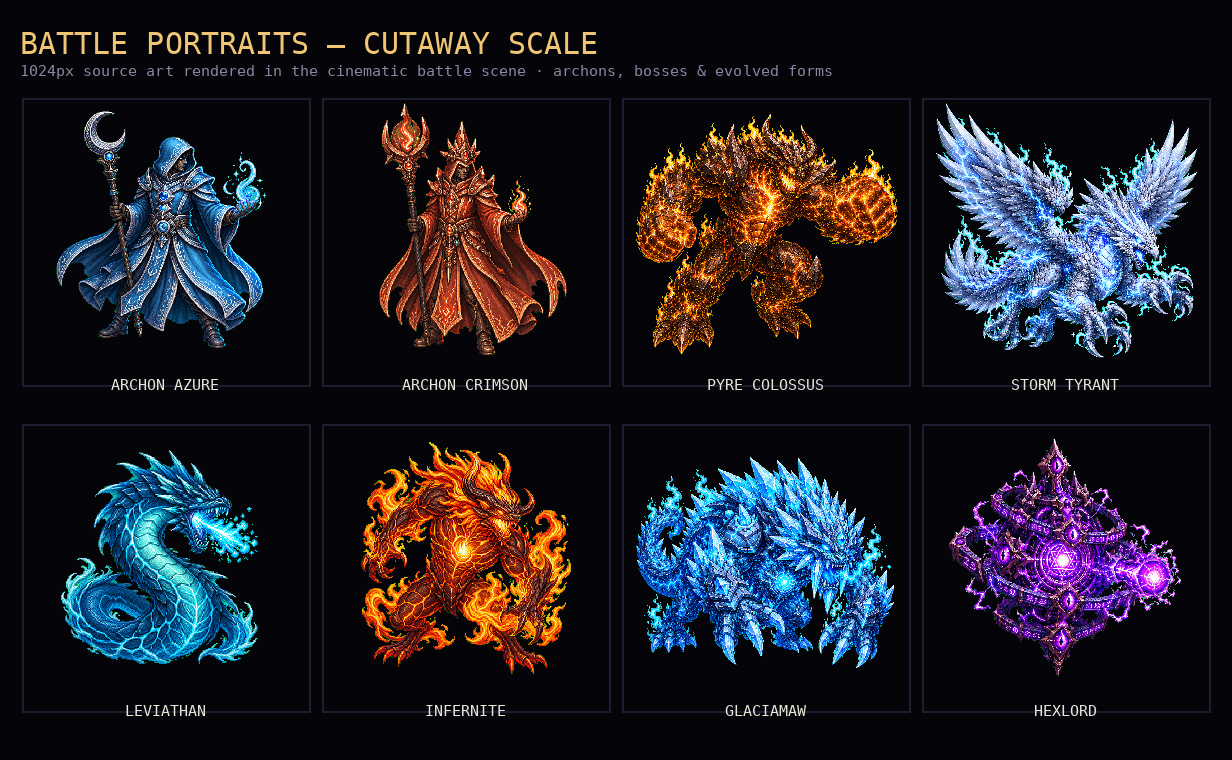
Testgrounds battle portraits at cutaway scale. Archons, bosses and evolved forms rendered for the cinematic battle scene. 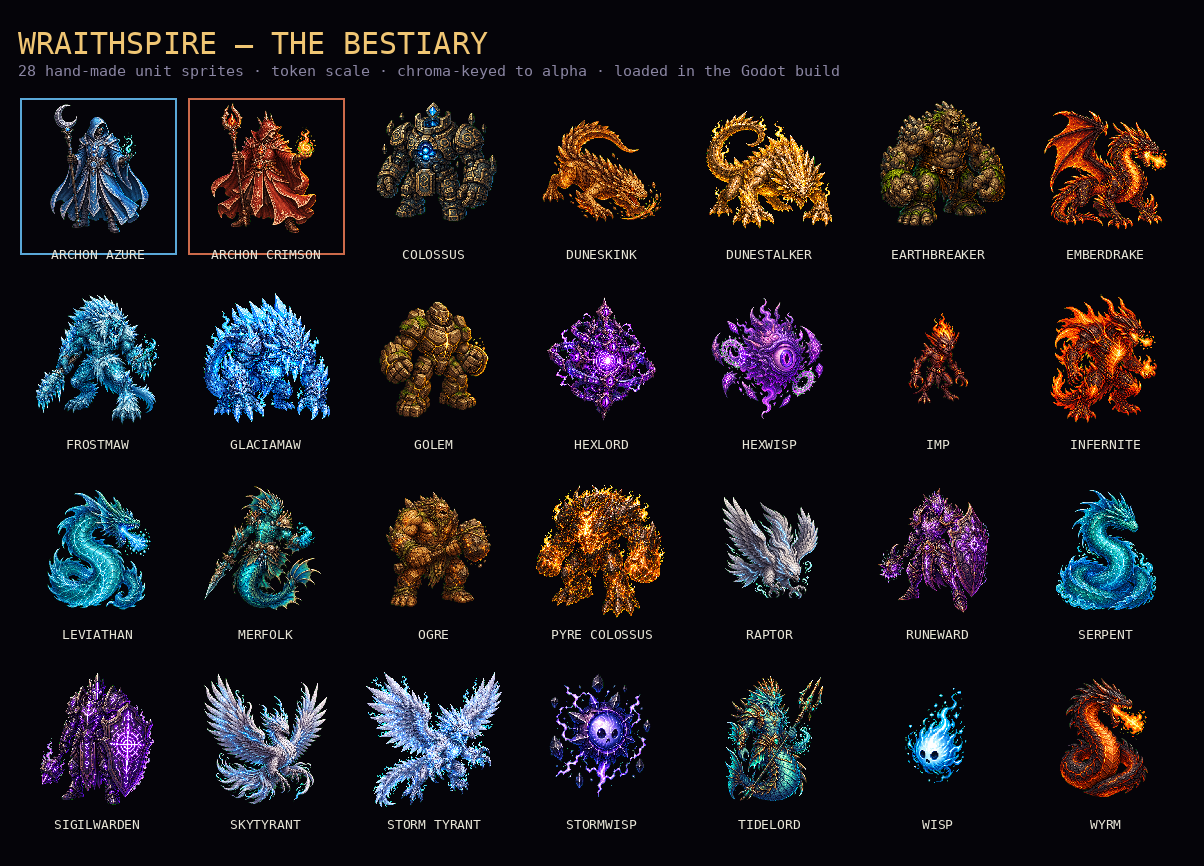
The Wraithspire bestiary. Twenty-eight hand-made unit sprites loaded in the Godot build. 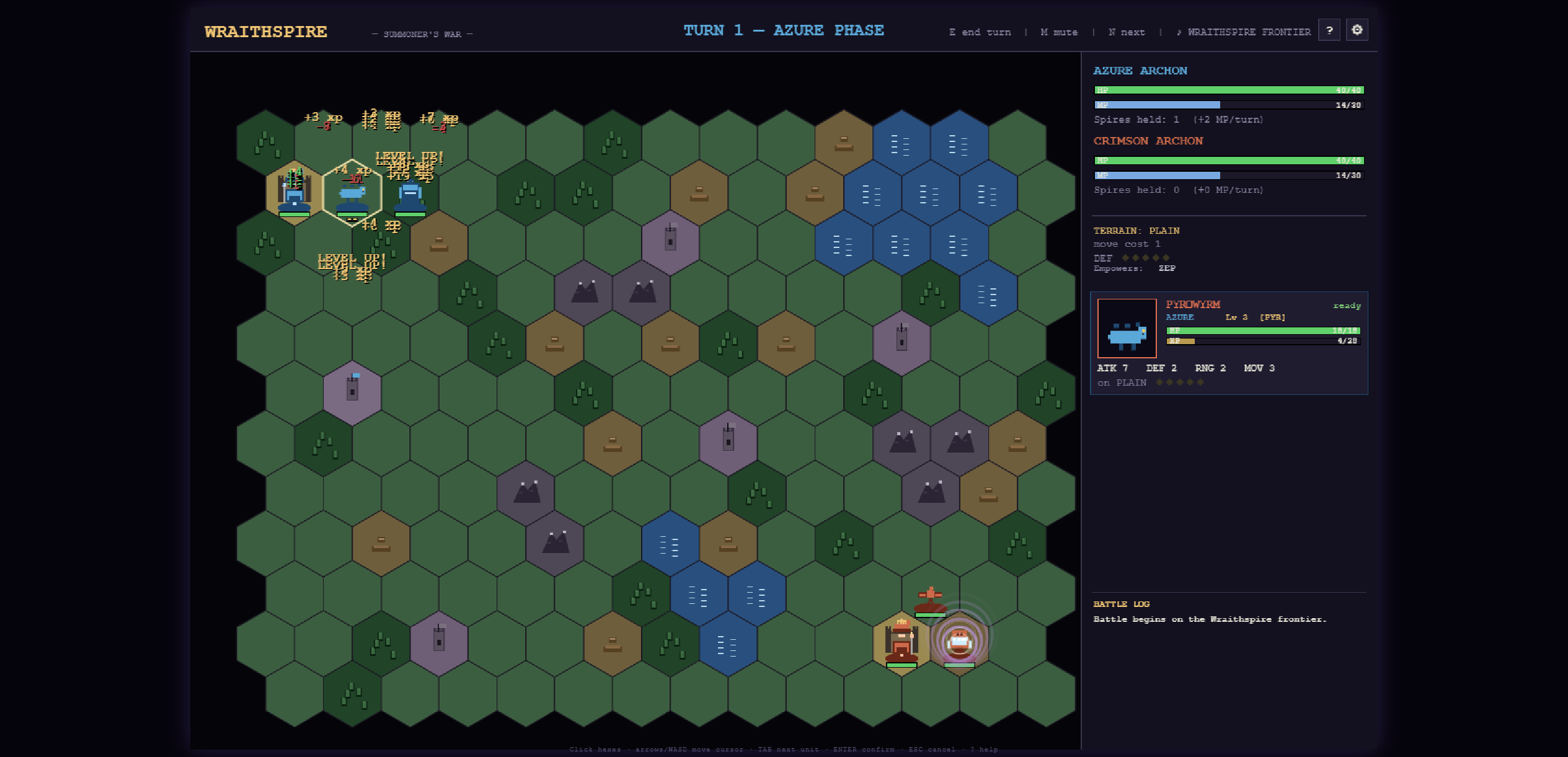
The Wraithspire board. Turn one of a skirmish on the hex frontier, with the archon panels and a unit card on the right. 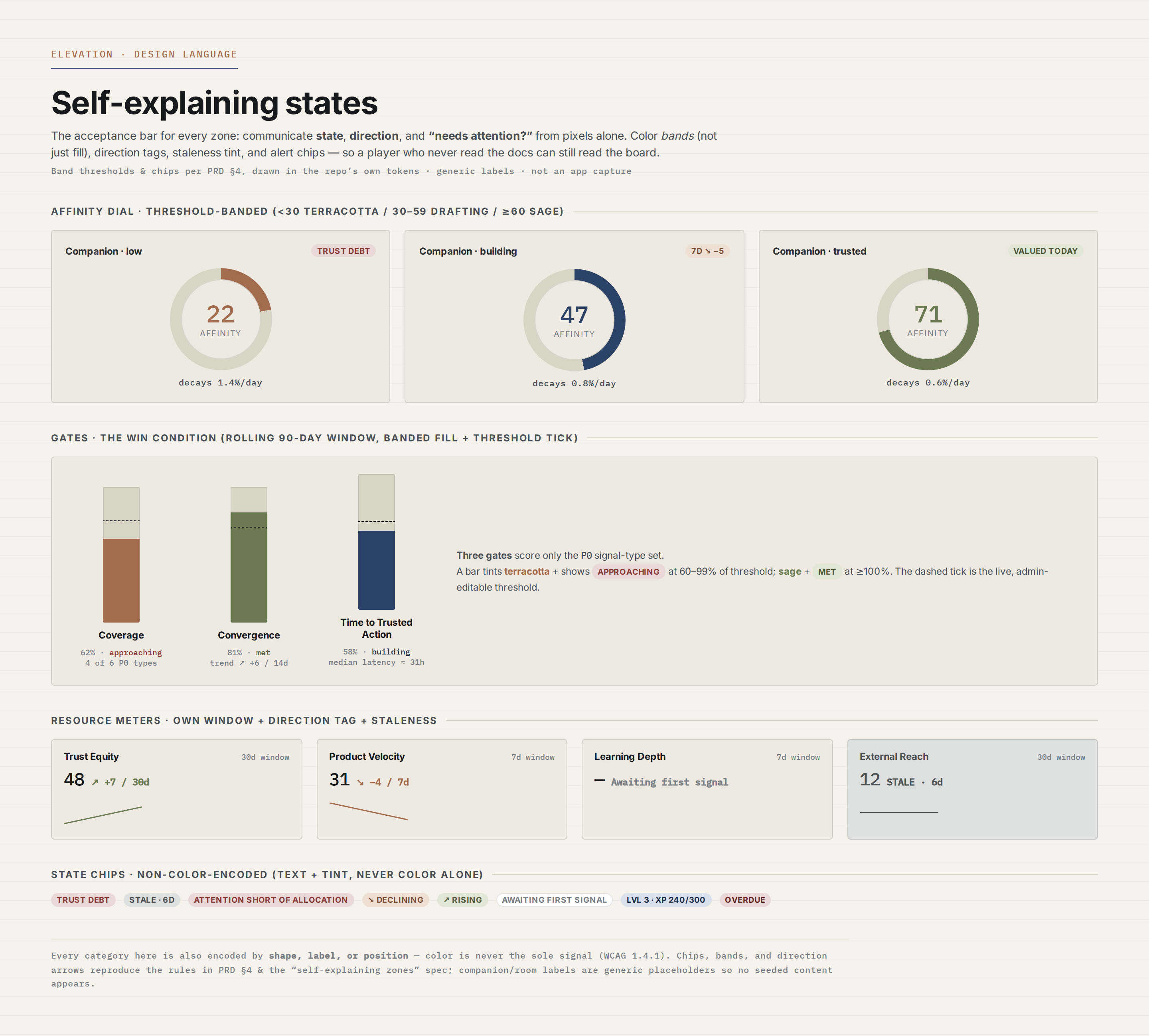
Elevation design language. Self-explaining states, where colour bands, direction tags and chips let a player read the board without the docs. 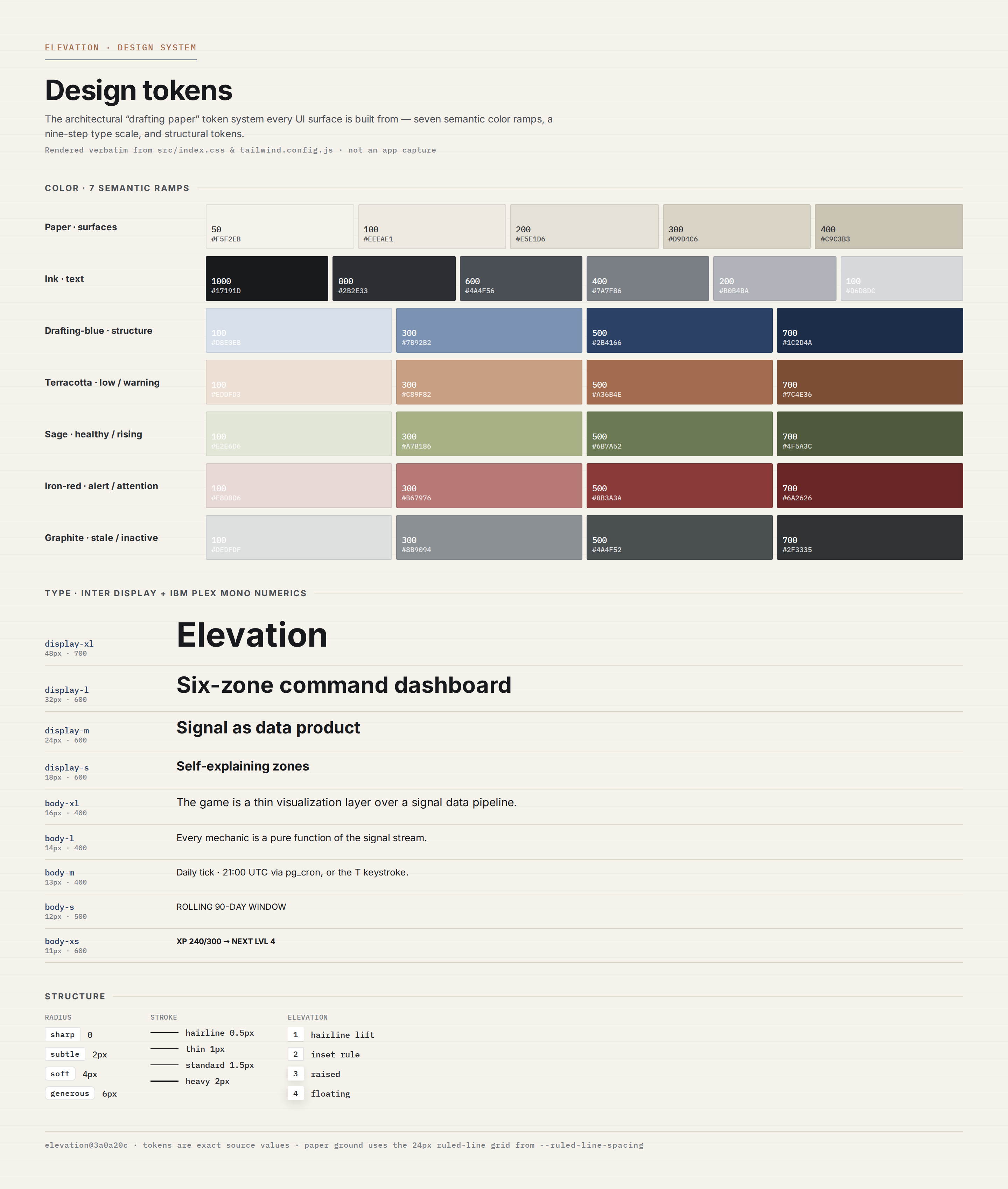
Elevation design tokens. Seven semantic colour ramps, a nine-step type scale and the structure tokens, rendered straight from source. 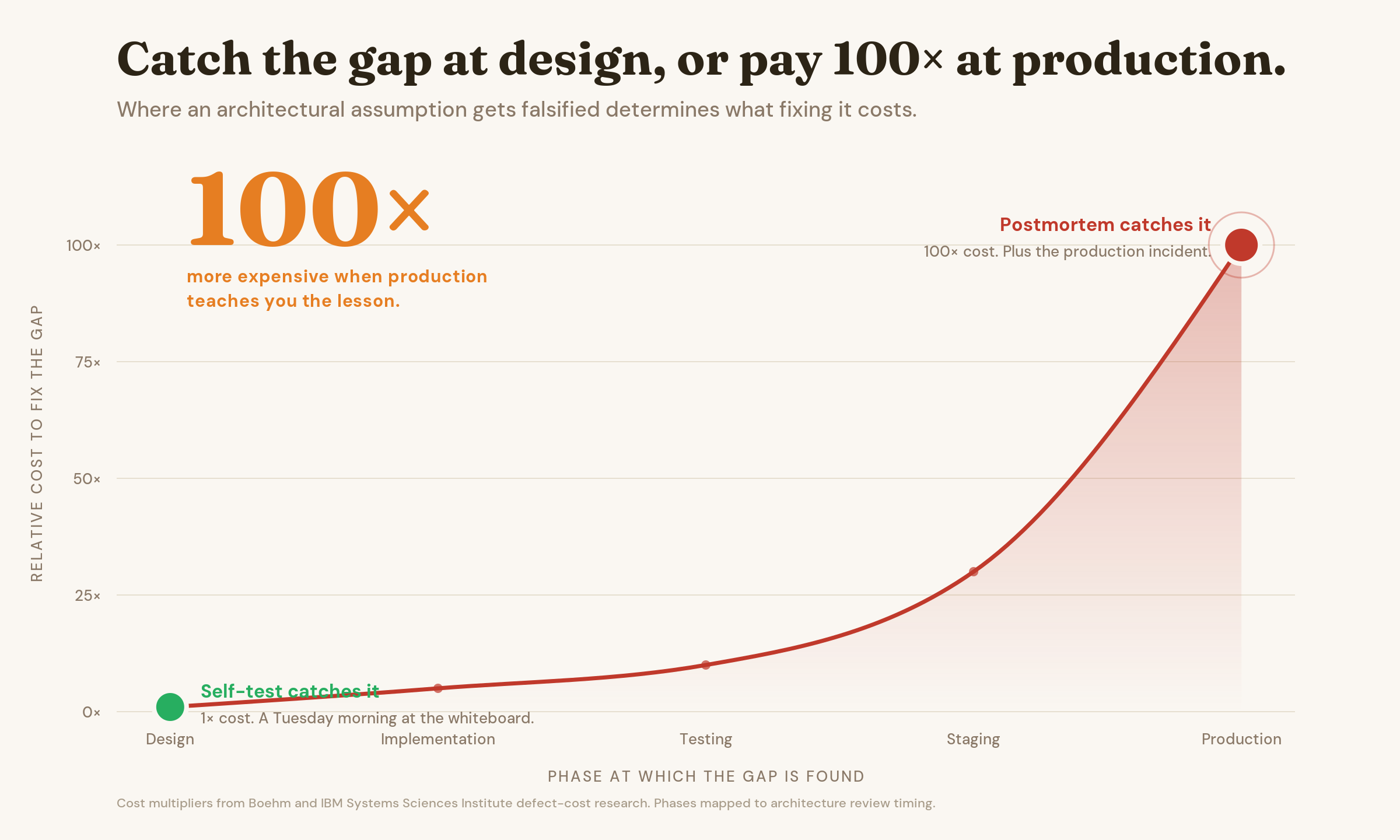
Catch the gap at design, or pay a hundred times at production. The cost curve behind the self-test argument. 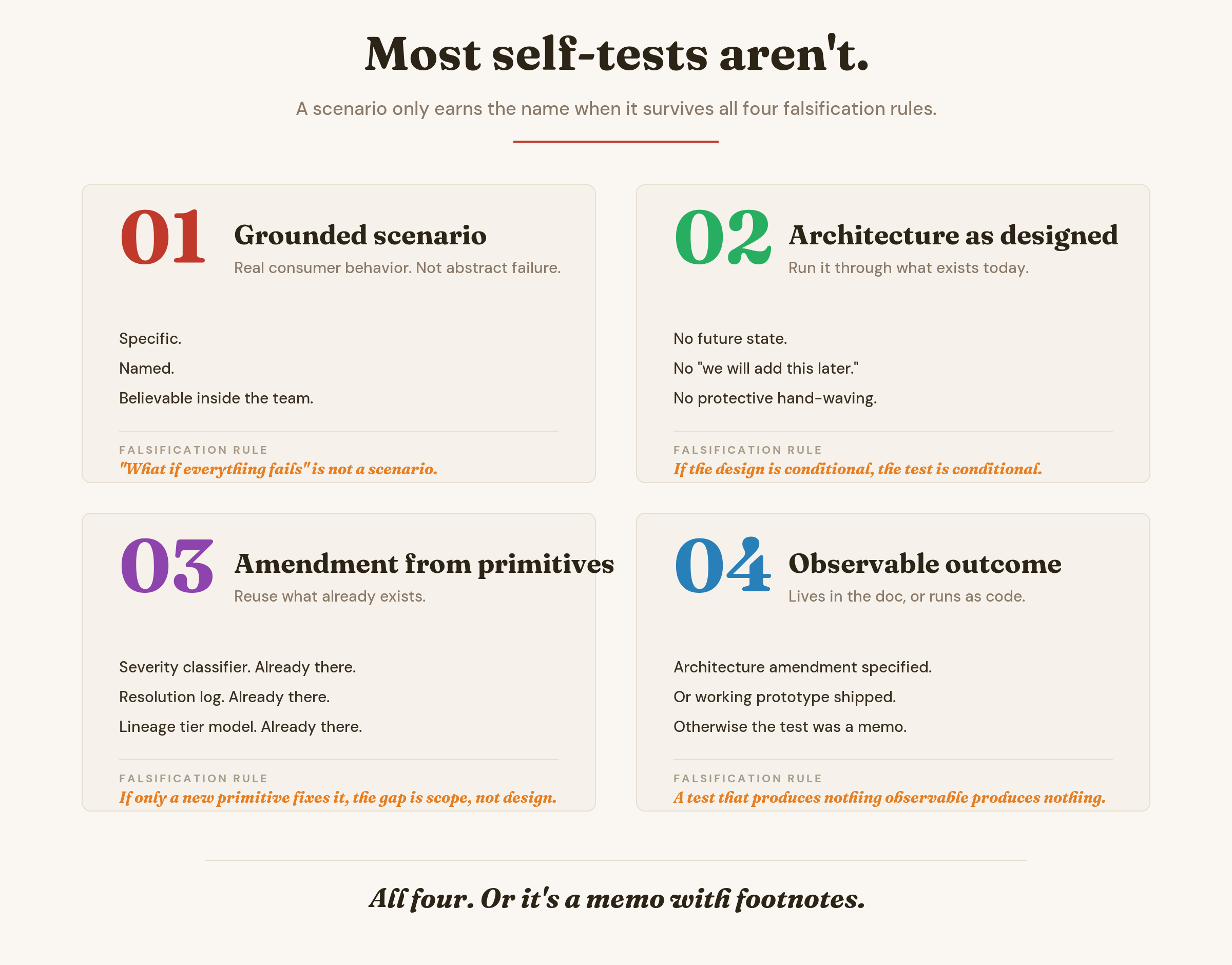
Most self-tests are not. The four falsification rules a scenario has to survive to earn the name. 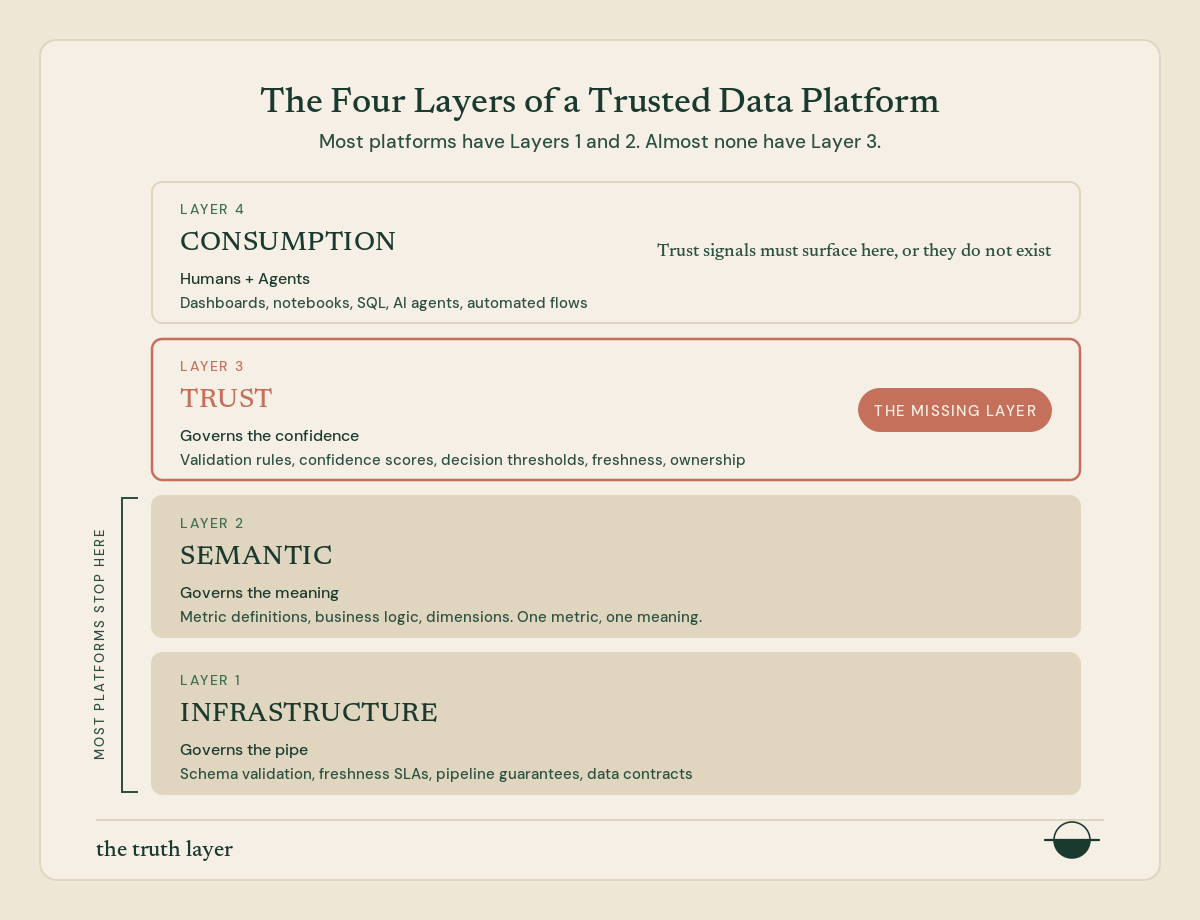
The four layers of a trusted data platform as a social card. Most platforms have layers one and two, almost none have layer three. 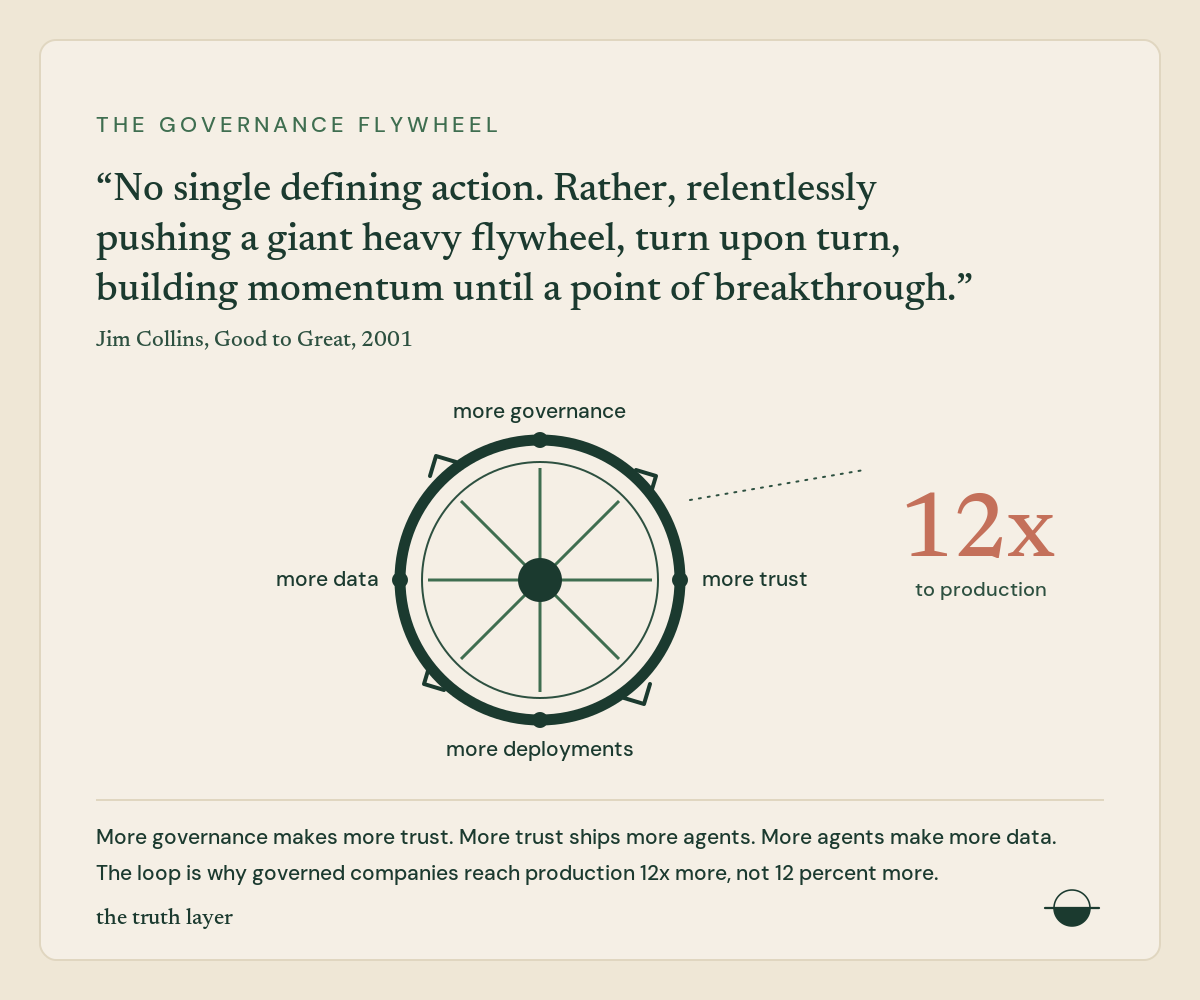
The governance flywheel card. More governance, more trust, more deployments, more data, and a Jim Collins line on momentum. 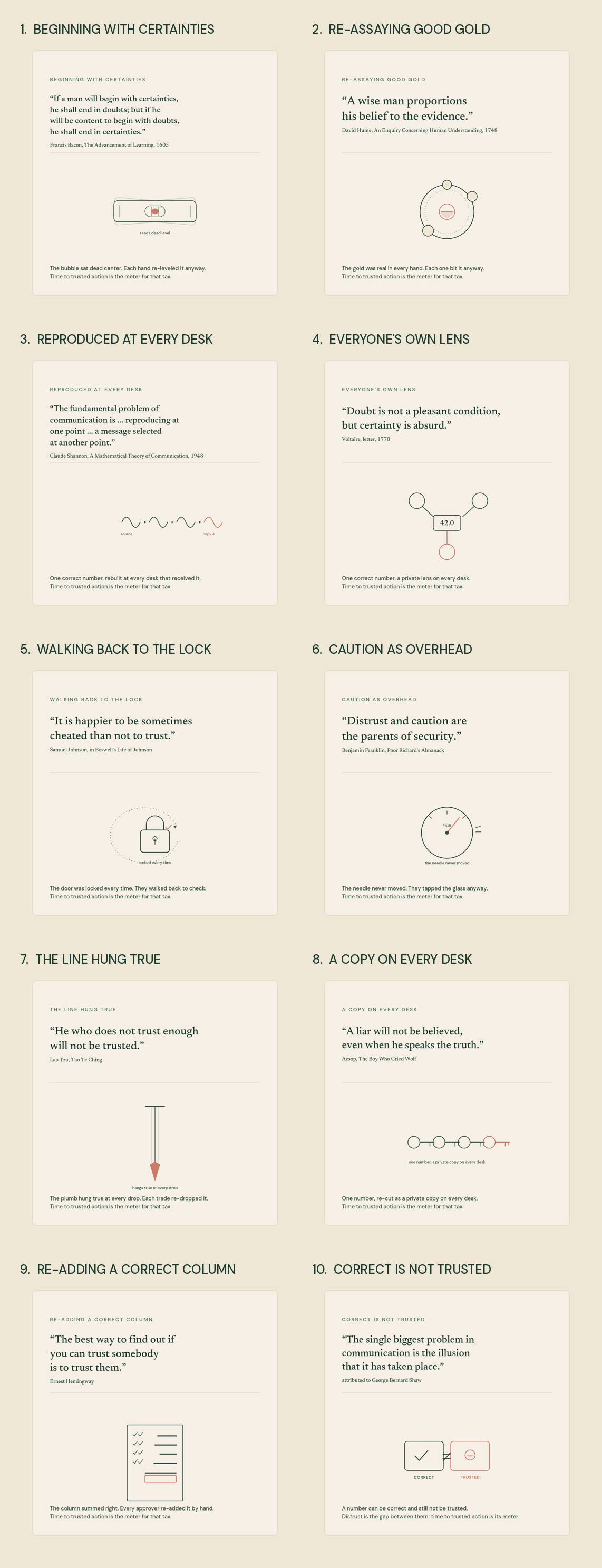
The hero contact sheet for The Cost of Distrust. Ten candidate scenes, each pairing a classical quote with a small line drawing and the line that time to trusted action is the meter. 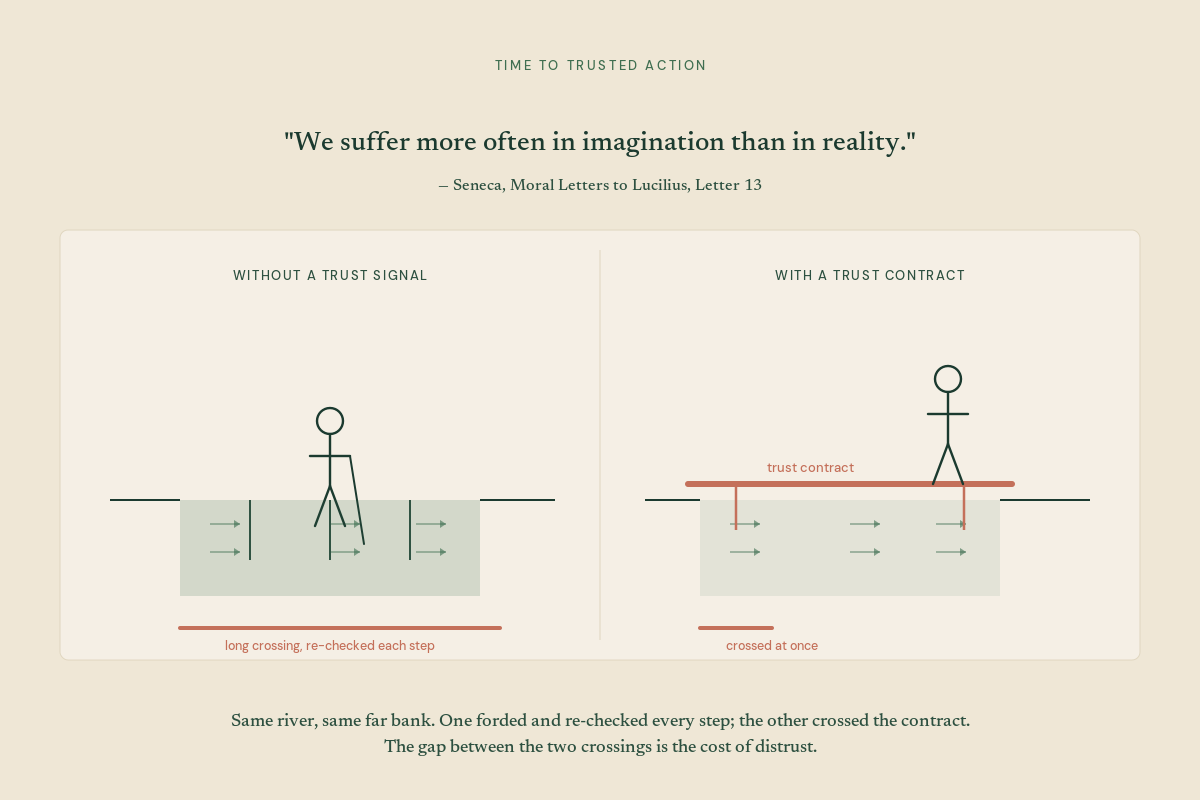
The chosen hero scene for The Cost of Distrust. One figure fords the river re-checking every step, the other crosses on the trust contract.
The flywheel
A thread in Chat became a build in Code, and a build became a launch. Each chain below is read from the record, one real event after another.
A commute thread became the learning pipeline, then a weekly launch
- The commute learning system
- Commute learning pipeline
- Weekly content launches, weeks 21 to 31
- Declared in Advance: Why Agent-to-Agent AI Breaks Query-Time Data Governance
The daily sessions were designed in Chat, built as a pipeline in Code, and the first launch to run through the migrated weekly flow shipped on 2026-07-22.
A strategy thread became the explainer, then the atlas
- Metrics as trust infrastructure
- Trust-layer explainer + onboarding journeys
- Atlas corpus + explorer
Metrics as trust infrastructure was argued out in Chat, then landed as the onboarding journeys and the architecture atlas.
A prototype thread became the product
- Trust Inspector prototype-to-product
- Trust Inspector foundation
- Trust Inspector Live v3.0: governance loop, dispute repricing, observed signals
- Verdict on Vercel, multi-tenancy v4.0 to v4.2
Trust Inspector went from a Chat plan to a foundation, to the live v3 governance loop, to Verdict deployed with real tenancy.
A skill thread became the storyboard engine
- Narrative-viz / Kniberg storyboard engine
- Storyboard narrative + whiteboard engine
- Storyboard studio + scenarios + embed
The Kniberg style whiteboard idea was shaped in Chat, then built as an engine and a studio with scenarios.
A content thread became the public site, then the latest launch
- The Truth Layer public surface
- thetruthlayer.dev site + interactive routes
- Site navigation, the catalog, the Instrument restyle
- Graded for Obeying: Who Picks the Threshold Your AI Agent Acts On
The Truth Layer public surface was planned in Chat, built and restyled in Code, and carries the September 2026 launch.
By type
Headliners
Week 31 sessions
Subjects: Post-Commit Correction Gate, and Sessions That Start From Canon; Lineage Comes From the Pipeline, and Unknown Counts Against; Friday W31. Two sessions decided, and the build batch drained the queue from 34 unbuilt rows to 11..
Graded for Obeying: Who Picks the Threshold Your AI Agent Acts On
Published on linkedin, site, substack.
Trust Inspector Live v3.0: governance loop, dispute repricing, observed signals
Phases 17 to 23 took the prototype from a seeded demo to a live system: RBAC and governance persistence, the ingestion funnel and declared trust signals, live database and API connectors with observed signals, an agent in the loop, dispute repricing (exclude, do not discount) and the v3.0 tech-debt close, tagged 2026-08-05. The magnitude includes the GSD planning corpus under .planning/ that drove every phase.
Rendered the brand-locked visual library for every piece
Built the signature eyebrow + named-author quote + literal-metaphor + bridging-caption visuals in the locked Truth Layer brand, rendered with real fonts to PNG. Includes hero variant sets and contact sheets (10 cost-of-distrust heroes), supporting diagrams, and re-renders of pre-brand-lock article art.
The commute learning system
A standing daily/weekly learning ritual (AI/ML, architecture, industry trends, case studies, Friday synthesis) run on the commute that compounded into real capability: sharper systems thinking, a durable body of synthesized notes, and the architecture-and-writing reasoning behind the public Truth Layer thesis. The habit, not any single session, is the win.
Spec-first design & TDD implementation plans
Every milestone was specced and planned before code: 22 design specs and 25 TDD implementation plans (plus a balance audit) under docs/superpowers/ — 17,447 lines of plans and 4,209 of specs, ~47% of all line-volume in the repo. The plan-first, test-first cadence is the defining practice of this build.
thetruthlayer.dev site and the published truth-layer corpus
Originated the claims and vocabulary for the public thesis and stood up the external presence: the thetruthlayer.dev interactive explainer and a published corpus mirrored as 41 entries (15 LinkedIn posts, 13 Substack pieces, 13 site updates) spanning March to June 2026. This project owns claim origination and vocabulary; publishing execution runs in the separate Cowork project. The standing constraint is distribution reach, not production.
Ran the weekly Truth Layer content kickoff as a standing ritual
Executed the six-layer kickoff repeatedly through week 18: pulled live analytics, re-ranked the backlog against the coverage map, and closed each week on one decision (a selected topic with angle and Explore route, or a deliberate distribution week when the funnel was the binding constraint).
Metrics as trust infrastructure
Developed the thesis that a metrics layer's next phase is trust infrastructure, every metric carrying a machine-readable trust contract (validation, lineage, confidence signals). Produced a direction document, a three-gate adoption model, and the positioning to align leadership and engineering on the bet.
Personal skill and coaching ecosystem
Built and maintained a custom skill stack for PM work and content: pm-coach (modular seven-file) plus a stress-test harness, doc-review, the writing profile, narrative-viz, the storyboard engine, ground-floor, systems-lens, capability-scout, and the Substack and LinkedIn drafting skills. Closed the period with a usage audit that found no native invocation telemetry and flagged trigger collision with installed pm-ops plugin skills.
Judgment and outcomes
Caught the shallow clone before it became the story
The first feature log was built from a clone that only reached back to early June, so a nine line commit looked like a 392,000 line seed import and the March to May work vanished. Rather than publish the arc as it appeared, I unshallowed the history, found 876 real commits back to March, and rebuilt the log from them.
Killed the headline volume deck
The first Wrapped deck led with commit counts and line totals. A three persona audit, product, engineering and design, read them as noise. The rebuild led with the bet and the outcomes, showed the actual prototypes, and demoted volume to footnotes. This site keeps that rule.
Attributed the planning corpus instead of hiding it
The project knowledge corpus, the specs and the handoffs are the largest single body of writing in the repo. Rather than fold them into a generic docs bucket, each is attributed to the product it planned, which is why the Verdict milestones lead on magnitude. That’s stated on the page rather than implied.
Recorded a failed launch as a failure
The Stale by Design launch reached 213 lifetime LinkedIn impressions with one engagement, a 0.47 percent rate and the worst of any hub launch. The record says so plainly, and the comparison rules that came out of it, same age windows only and accruing impressions, now govern every launch readout.
Raised a production outage alarm, then withdrew it
Closing Verdict v4.2, the deploy check claimed production could be behind on migrations. Preview and Production share one database and every migration was already applied. The alarm was wrong and the withdrawal is in the record beside it, because a false alarm left standing costs more than one admitted.
Tried Cowork for the daily sessions once, and ruled it out the same day
The sessions needed a surface that could read and write the repo. One Cowork run showed it couldn’t push, even after a permission grant and a bypassed hook. Rather than keep a surface that contradicted the operating rules, Code took the sessions from the next day.
Froze the Chat knowledge mirror
Keeping a Claude.ai project in sync with the repo had become a weekly export ritual that still drifted. The mirror was frozen as a point in time copy, strategy conversations stayed in Chat, and current state lives only in the repo.
Treated four leaked API keys as public and rotated them
Four keys were found shipping in the Verdict client bundle. Rather than argue that the deployment was password gated, I treated them as public, rotated every one, and taught the bundle leak scan to catch the key prefix so the next one fails the build.
Outro
Seven months, five surfaces, one thesis. The site, the essays and the three deployed products all say the same thing in different registers. A number should carry its own warrant. Rather than count the output, I’d point you at one of the live demos and at the judgment list above, where the record says what went wrong and what changed. The record is the point. The sections above are derived from it, the two hand picked lists are checked against it id by id, and nothing here was written first and backfilled.